Oak Alleys of St. Francisville

Rosedown Plantation oak alley

Rosedown is located on Highway 10, near the intersection with Hwy. 61, and about 1/4 mile east of St. Francisville, Louisiana. The avenue of oaks, the formal gardens, statuary, and landscaping at Rosedown are fine examples of the influence of classical European garden styles on Louisiana plantations. Rosedown was established in the 1830s by Daniel and Martha Barrow Turnbull, and it stayed in the hands of their descendants until the 1950s.
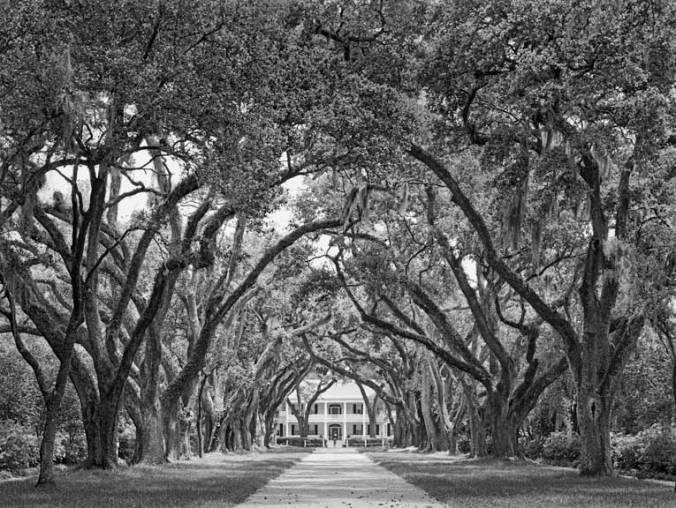
Rosedown oak alley, center view

Rosedown oak alley, center view

The plantation encompasses approximately 374 acres outside of St. Francisville and is one of the most intact examples of a working plantation complex from antebellum Louisiana. It represents the lifestyle of a wealthy planter more accurately than many other surviving plantations. The centerpiece of the grounds is the alley of live oaks leading to the front portico of the home. The alley is approximately 150 years old.
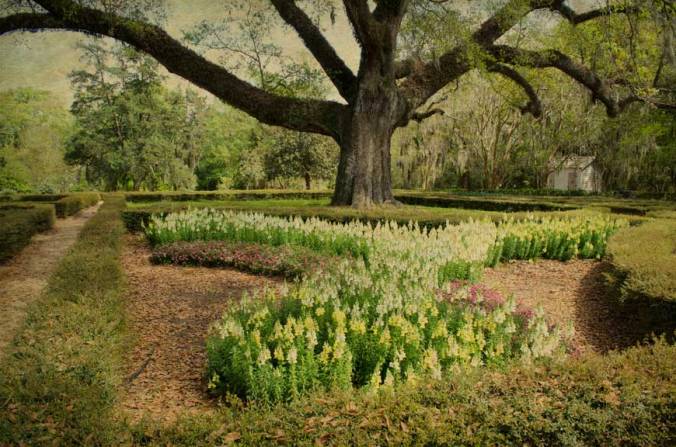
Oak-in-gardens-Afton-Villa

Oak in gardens, Afton Villa

In 1828, Daniel Turnbull and his wife Martha visited Versailles and other post- Renaissance gardens in France, Italy and England on a tour of Europe. On returning home, they began to landscape the grounds at Rosedown to resemble the extravagant gardens they had seen throughout Europe. The gardens became Martha Turnbull’s passion.

Beginning in 1836, she kept a daily garden diary detailing the planting and management of the gardens—the most extensive first-hand account available of nineteenth-century plantation life and gardening in the Deep South. Her diary entries end in 1894, a year before her death at the age of 87. It was discovered in the mid-1990s in the attic of a Turnbull family descendant.
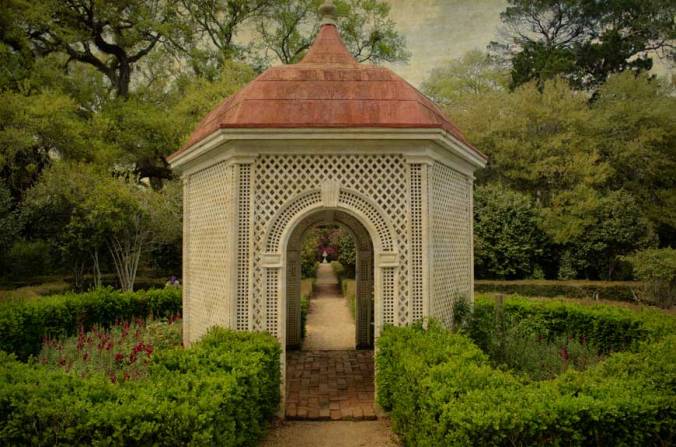
Afton-Villa-garden-study

Afton Villa garden study 1

The diary has been transcribed and annotated by preservationist and LSU professor emerita of landscape architecture Suzanne Turner (The Garden Diary of Martha Turnbull, Mistress of Rosedown Plantation – LSU Press). It contains not only insights into the role of kitchen and pleasure gardens in the lives of plantation families but also “reveals the portrait of a courageous and resilient woman who survived the death of two sons and husband prior to the Civil War and her perseverance during Reconstruction by growing and selling food as a truck farmer.”

Rosedown plantation and its gardens are now a Louisiana state park and are open to the public for a fee.

Afton Villa oak alley

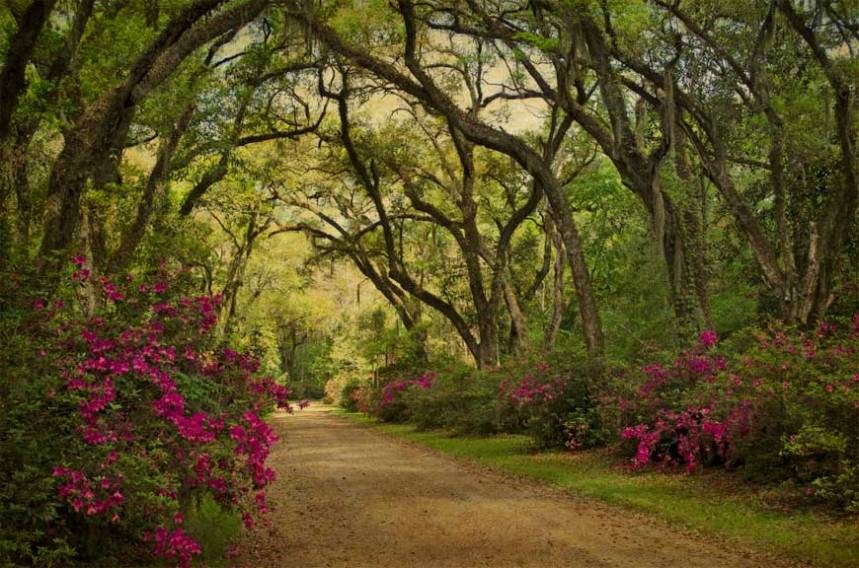
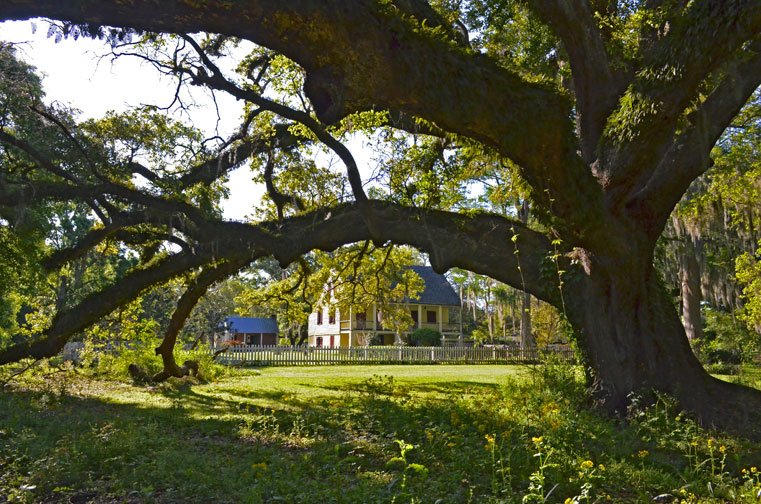
There are more than 250 live oak trees planted in the loosely arranged alley lining the half-mile-long curved entrance road to Afton Villa Gardens. Since other alleys are generally planted in evenly spaced rows, this design style is the most unusual alley of oaks that I’ve photographed in Louisiana.
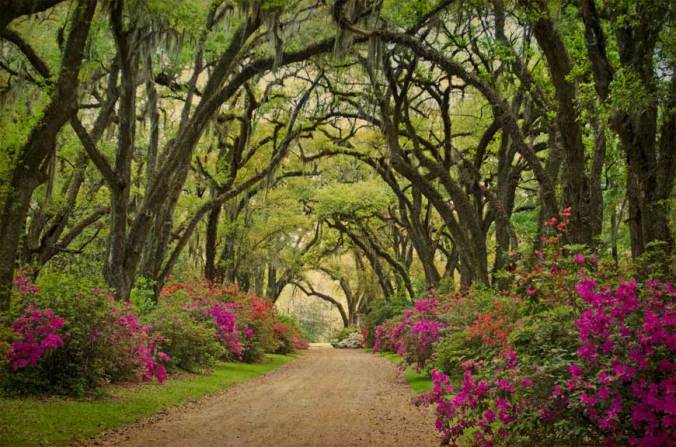
Afton-Villa-study-11

Afton Villa oak alley, view toward front gate

The oaks are interspersed with tree-high azalea bushes along the length of the alley, and in March and April, their blooms flood the alley with color. The gardens are also noted for their daffodils, which cover an entire sloped hillside of the grounds.
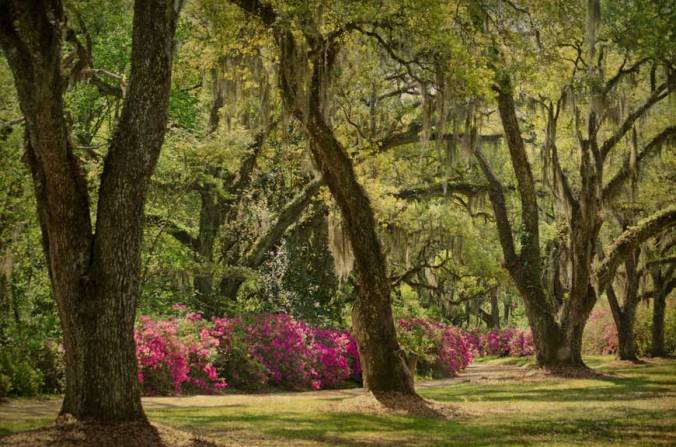
Afton Villa oak alley toward end of alley

Afton Villa oak alley toward end of alley

The plantation home at Afton Villa burned in the 1960s, but the gardens are still maintained and open to the public in the spring (March to June) and fall (October to December). The plantation name was taken from the song title, “Flow Gently Sweet Afton,” a favorite tune of Mary Barrows, daughter of David Barrows, who owned the plantation in the 1800s.

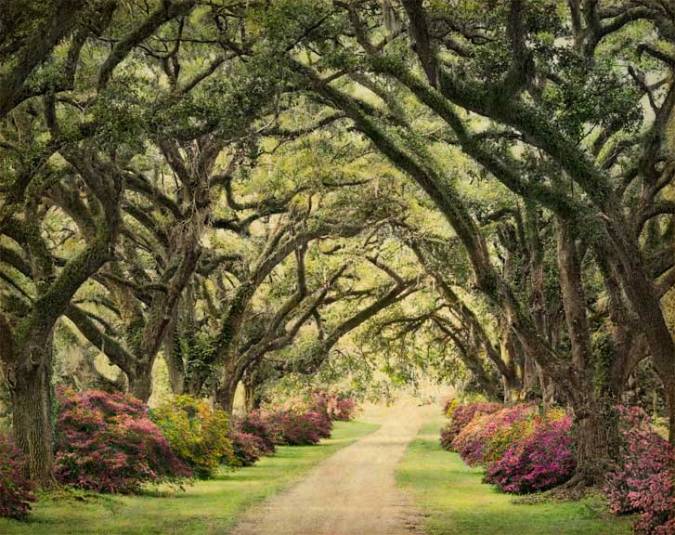
The Oaks Plantation oak alley
The_Oaks_Plantation_Alley_blog_color-2

The Oaks Plantation oak alley, view from gate

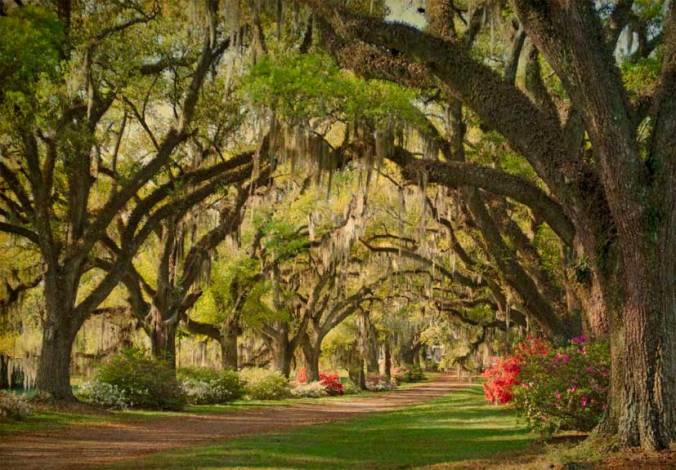
Located on Hwy 61, less than one half mile north of St. Francisville. The alley of oaks is planted in an unusual L-shape from the entrance road off Hwy. 61 to the front porch of the house. The trees are approximately 120 years old and were likely planted around 1888 when the home was built by Judge Thomas Butler.
The-Oaks-color-study-3

The Oaks oak alley, view from dogleg turn

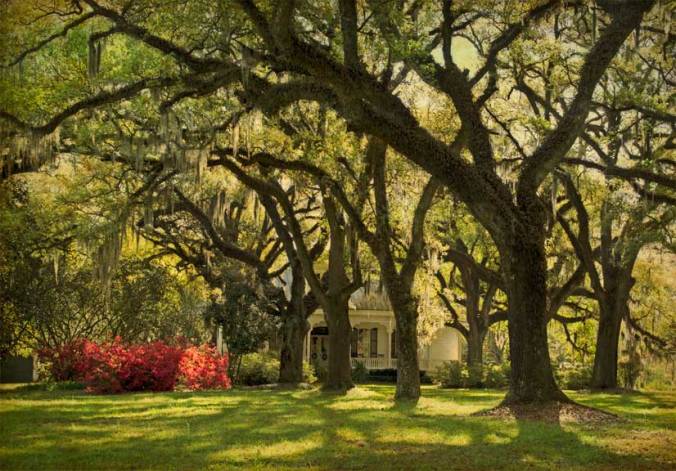
Recovering from Civil War and Reconstruction, Thomas Butler built a new house for his family in 1888. The house style he used is now termed “Carpenter Gothic” in tribute to the powered saws and turning lathes of the late 19th century. The style, popular at the time, contained gingerbread trim, dormer windows, and turrets.
The Oaks Plantation oak alley and home

The Oaks Plantation oak alley and home

The home stayed in the Butler family until the last member died in 1973. At that time, The Oaks Plantation and home were purchased by the current owners, Irwin and Betsy Daniel.

The Oaks is a private residence and not open to the public.
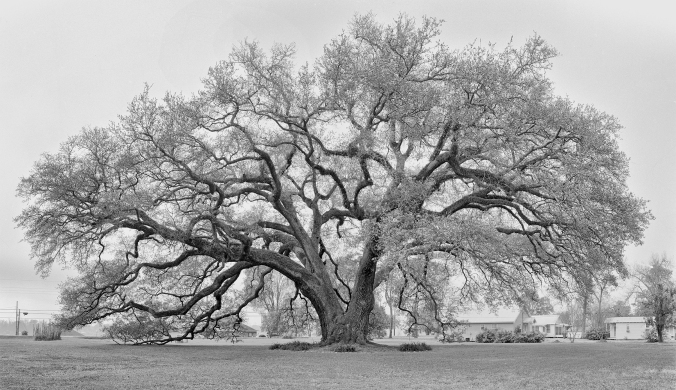
New Roads – Randall Oak, Langlois Oak, and Francois Samson Oak

Old oaks and new azaleas – New Roads and St. Francisville, LA

Cyndi and I recently returned from our annual azalea-season swing through South Louisiana, that time each spring when for a colorful month or so, azalea blooms burst like multicolored confetti across yards, gardens, and parks from New Orleans to New Iberia and north from Natchez, Mississippi, to Nacogdoches, Texas.

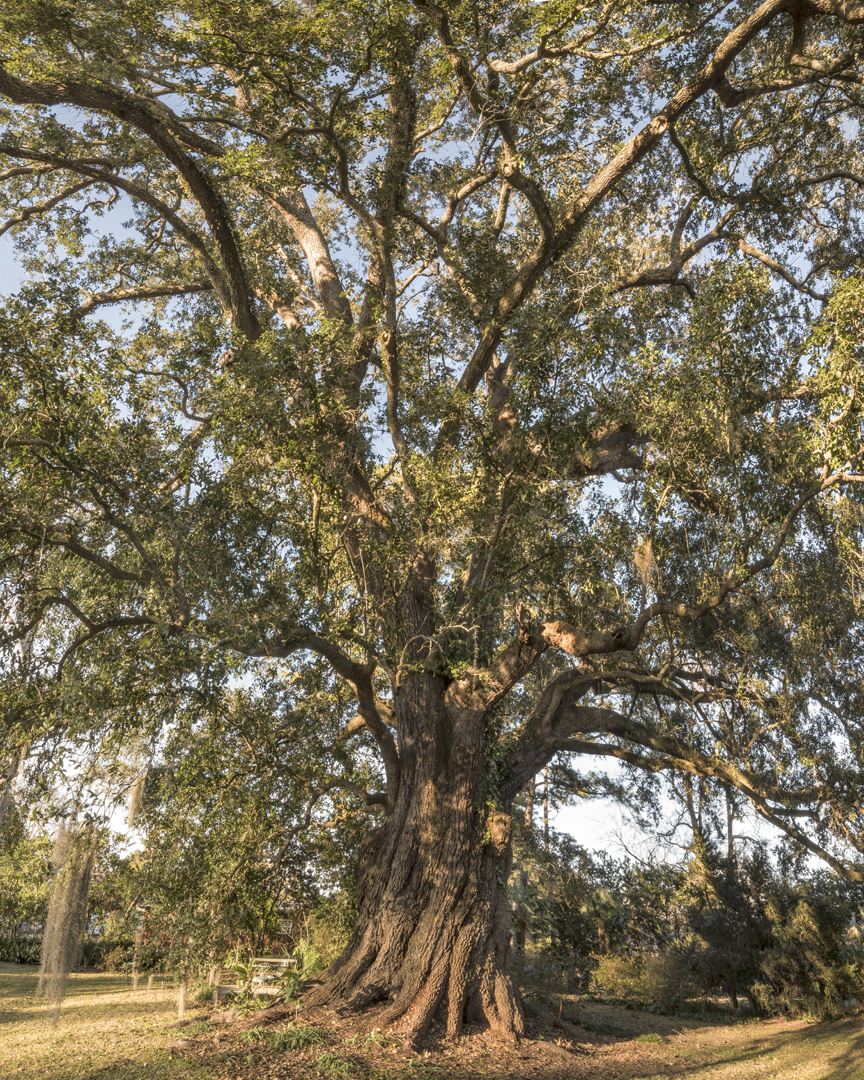
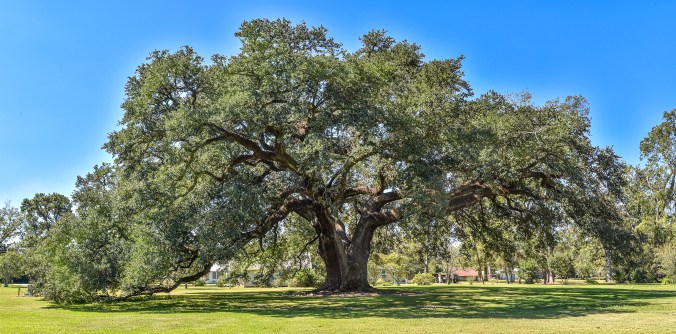
After a brief stop at Jefferson Island and Avery Island, where we revisited the old oaks at both locations, we spent several days in the St. Francisville and New Roads areas. We revisited and measured the Randall Oak in New Roads (36’ 5” in circumference) and met its current owners, Madeline and David Breidenbach. I’ve written about the Randall Oak before (post from May 24, 2014), but wanted to revisit this magnificent tree, spend time walking its perimeter, standing under its enormous branches, and photographing it.

Randall oak pano 1 copy

Because of its girth, The Randall Oak deserves to be one of the officers of the Live Oak Society (possibly next time they revisit that list). To my knowledge, there are less than 20 live oaks with girths of more than 30 feet in Louisiana and the South. These are trees that were already mature when Europeans first began settling what became America, and as such, should be recognized as national heritage trees. (I’ll focus on these oaks specifically in a later post…)

Randall oak 1 copy

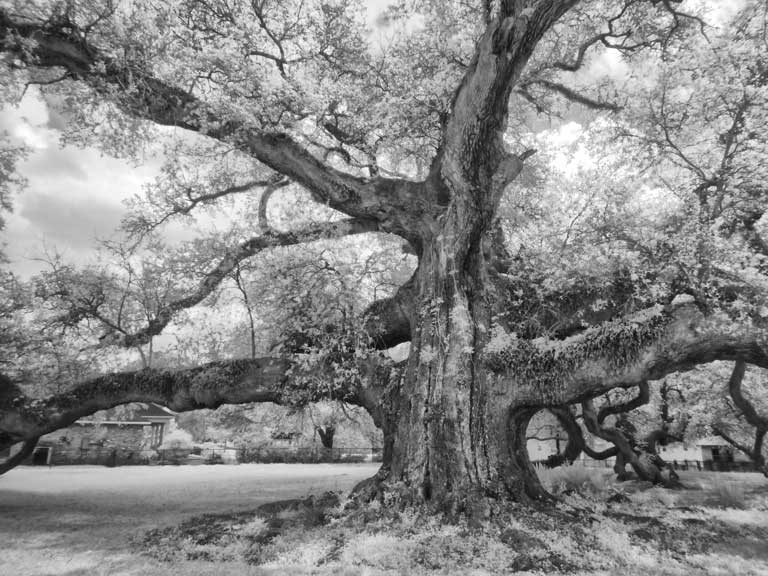
In the historic heart of New Roads, we met Randy Harelson and Richard Gibbs, owners of the LeJeune House on Main Street. There we photographed the Francois Samson Oak that grows behind their home and spent a pleasant time discussing the local history and oak trees. With a girth of nearly 29 feet, the Francois Samson Oak is one of approximately 62 oaks registered with the Live Oak Society in Pointe Coupee Parish.

                        Francois Samson Oak

Harelson is the author of the book, New Roads and Old Rivers, Louisiana’s Historic Pointe Coupee Parish (LSU Press). It’s a wonderful review of Pointe Coupee’s rich history, beautifully illustrated with color photos by Richard Sexton. It’s a lovely book, created through the fund-raising efforts of the Pointe Coupee Historical Society  (we purchased an autographed copy from Randy before we left).

New Roads is the parish seat of Pointe Coupee. The first settlement there can be traced back to 1822, a little later than the French and German settlements along the Mississippi River above New Orleans. Since its founding, New Roads has been the hub of an agricultural community that produced sugar cane, cotton, pecans, and other crops. Since the 1900s, New Roads has become a resort community where people from across Louisiana come to enjoy the tranquil waters of False River.

Actually, the river is an ox-bow lake formed when the Mississippi River changed its course sometime in the distant past, choosing another path for its main channel. As a result, there are numerous old live oaks growing in the rich alluvial soil that lines the river’s banks, like the Langlois Oak (located on the west bank of False River north of downtown; girth 27 feet, nine inches.

Langois Oak, New Roads, LA

                                                  Langlois Oak, New Roads, LA

Taking the new John James Audubon Bridge, we crossed the Mississippi near New Roads to St. Francisville. There we explored the azalea-festooned oak alleys at Afton Villa Gardens and The Oaks Plantation, where we were fortunate enough to catch the azaleas near the peak of their spring bloom, bursting with brilliant pinks, rust-reds, magentas, and soft whites.

Afton Villa oak alley and azaleas

                                                    Afton Villa oak alley and azaleas

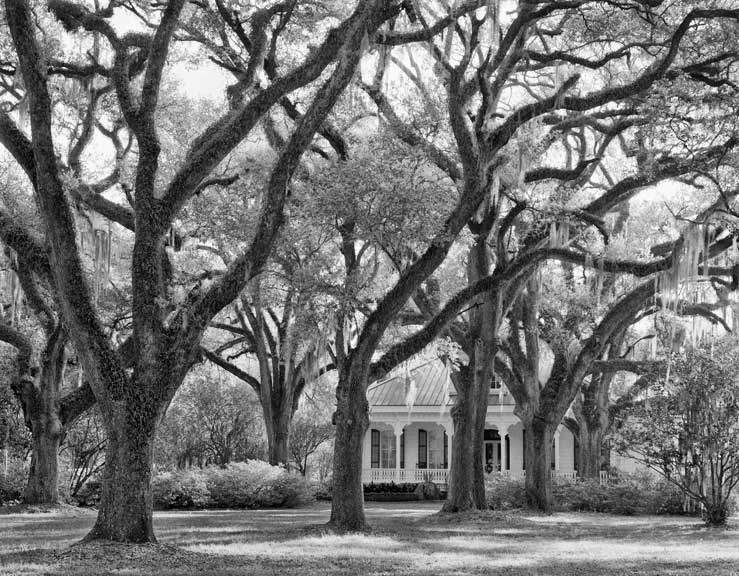
We spent a bright morning at the Oaks Plantation where with the permission of owners Betsy and Irv Daniel, we photographed their alley of oaks that leads from the front gate off Hwy 61 around a dogleg turn then to the porch of their historic Gothic Victorian home built around 1888.

The Oaks Plantation, oaks and house

                                             The Oaks Plantation, oaks and house

(Next post – More about The Oaks and Afton Villa)

The Randall Oak, New Roads, Louisiana

DSC_2605-Pano-Edit copy 2

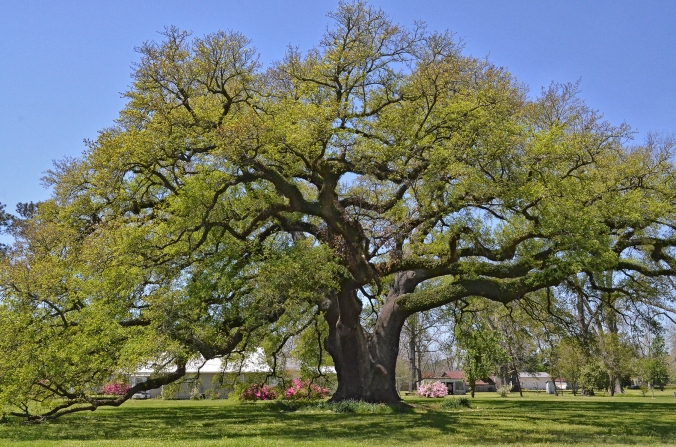
Along Louisiana State Highway 1 traveling toward New Roads, not far from the west bank of False River, the alert driver can spot one of the largest and most beautiful live oaks in the state—the Randall Oak. Located in the front yard of the home of David and Madeline Breidenbach, this massive species of Quercus virginiana has a circumference of approximately 35 feet, eight inches, a height of 68 feet, and a crown spread of 156 feet. Continue reading

The Evangeline Oak, St. Martinville

Evangeline_1099Each year, thousands of tourists visit St. Martinville, Louisiana, in search of the roots of Cajun culture—to experience the food, music, and to visit the places associated with the story of Evangeline. The Evangeline oak is undoubtedly the most famous oak in Louisiana, though oddly it’s not a very old or exceptionally large tree. And according to some sources, it’s the third oak in the St. Martinville area that has been designated as the “oak under which the Cajun lovers Emmeline and Louis were reunited” after their long separation when the Acadians were exiled from Canada. (Emmeline and Louis are reported to be the real-life characters upon which Longfellow’s fictitious Evangeline and Gabriel were modeled.)

Evangeline_9458The Evangeline Oak is located on the edge of Bayou Teche at the foot of East Port St., next to the Old Castillo Bed and Breakfast (which I can personally state is very haunted—but that’s another story!).
The Gabriel Oak, a lesser known and larger tree, is located in the Longfellow Evangeline State Historic Site, a wonderful historic park well worth visiting, just a mile or so north of St. Martinville on Hwy. 31. The park showcases several historic buildings and gives a broader realistic view of the historic period of the Cajun settlement of Louisiana.

Gabriel Oak, panoramic view

Gabriel Oak, panoramic view

Gabriel Oak, view toward Maison Olivier Creole cottage

Gabriel Oak, view toward Maison Olivier Creole cottage

In the St. Martinville graveyard next to the Catholic Church of St. Martin de Tours, you can find a tomb for Evangeline, topped with a bronze metal statue. The grave bears both the name Evangeline and Emmeline Labiche, but in actuality, the tomb is empty. The statue is modeled after Dolores Del Rio, the Hispanic movie star, who played Evangeline in the 1929 silent movie adapted from Longfellow’s poem. The statue was a gift from the movie cast and crew to the people of St. Martinville after filming was completed.

So what’s true and what’s fiction about the Evangeline story?

The details of this “folk tale” of Evangeline are extracted from two sources—the epic poem by the American poet Henry Wadsworth Longfellow published in 1847, and a subsequent story written in 1907 by Judge Felix Voorheis. The judge, a St. Martinville resident, recounts a story by his grandmother in which she claimed to be the adoptive mother of a girl named Emmeline Labiche. Voorheis claims that it was Emmeline’s life story that Longfellow had heard and reshaped into the poem of Evangeline.

Longfellow’s poem, published under the title, Evangeline, A Tale of Acadie, describes the betrothal of the fictional Cajun girl named Evangeline Bellefontaine and her beloved Gabriel Lajeunesse. The poem recounts their separation when the British forcibly removed the Acadian people from the present-day Canadian provinces of Nova Scotia, New Brunswick, Prince Edward Island and part of the state of Maine—an area also known as Acadie or Acadia.

In Longfellow’s poem, the Acadians were resettled in small numbers in cities across the Eastern seaboard, and Evangeline searches from city to city for her Gabriel. She eventually gives up, settles in Philadelphia, becomes a nun and works at a hospital. Years later, she finally encounters Gabriel again—though he’s now a sick old man. In the poem, he dies in her arms and within a short time, she follows him to the afterlife. In the mid-1800s it was the perfect Romeo and Juliet tale and was hugely popular.

In Judge Voorheis’ account of Emmeline Labiche, the separated lovers reunite not in Philadelphia but in St. Martinville, under a live oak tree whose branches stretched over the dark waters of Bayou Teche. The reunited lovers embrace passionately but then Gabriel (whose actual name was Louis) remembers that he is already married. Eventually, Emmeline (Evangeline) goes insane and dies.

The “Great Expulsion” or Le Grand Derangement (1755–1764) as it was known historically, occurred during the French and Indian War as part of the British military campaign against New France. The British deported approximately 11,500 French Acadians to weaken the resistance to their rule. In the first wave, Acadians were deported to the British colonies (the original 13 colonies of the U.S.). During the second wave, they were deported to Britain and France, from where many migrated to Louisiana. (source: Wikipedia)

A good reference for a more factual history of this area and its settlement by the Acadians can be found at the St. Martinville website.

Goose Island “Big Tree” Oak, near Rockport, Texas

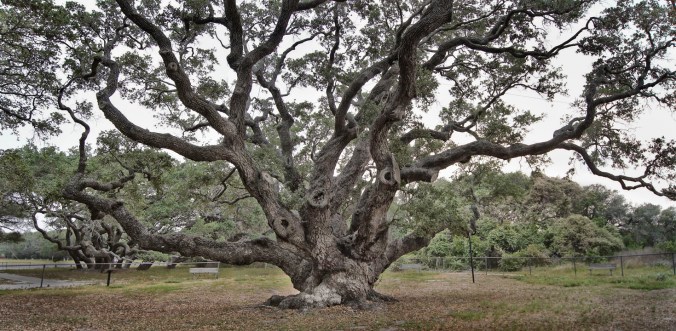
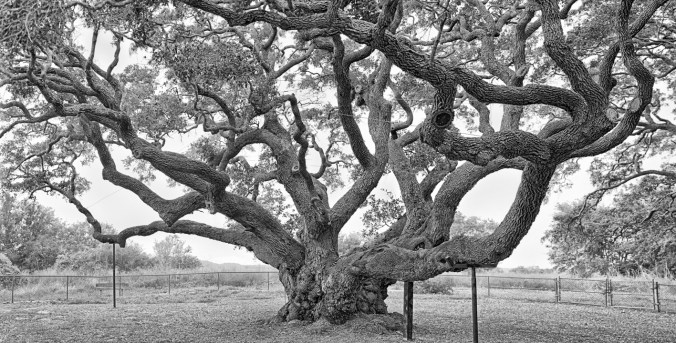
Goose Island panoramaGoose Island Oak

In 1966 the Goose Island Oak (the Big Tree) was named National Champion tree in the category of Southern live oaks (Quercus virginiana), in American Forests’ National Big Tree Registry. At the time, it was measured at 35.1 feet in circumference, was 44 feet high, and had a crown spread of 89 feet. It’s also known locally as the Texas Big Tree, the Lamar Oak, and the Bishop’s Oak. For years, the Goose Island Oak held the National Champion position and was even touted to be the largest live oak in the world. However, by the various methods of measuring and earning points to determine “Champion” trees, it is certainly in the top 10 largest live oaks in the U.S., but not the largest.

The Seven Sisters Oak in Lewisburg, Louisiana, and the Middleton Oak in Charleston, South Carolina, (the Live Oak Society’s President and First Vice President) have both been determined to be larger. (To calculate a tree’s total point value, American Forests uses the following equation: trunk circumference (inches) + height (feet) + one-quarter average crown spread (feet) = total points.)

In 2000, an as yet unnamed live oak in Brazoria County, further up the Texas coast, was measured by a Michael Lange, a federal wildlife biologist, who found it to be even larger than the Goose Island Oak. The Brazoria County oak, located deep within the San Bernard National Wildlife Refuge, and about 50 miles south of Houston, is now the Texas state champion live oak. (62’ high and 10’ 3” in diameter).


Goose Island Oak 1

Goose Island “Big Tree” Oak, near Rockport, TX

None of this information is meant to slight the Goose Island Oak, which is definitely an impressive and old tree. According to climatologists, the Big Tree has survived as many as forty to fifty major hurricanes, as well as numerous floods, droughts and wildfires. The Goose Island Oak has been linked in local history and legend to Indians and pirates. Local stories claim that the cannibalistic Karankawas Indians held councils under the tree (and maybe a cannibal picnic or two). It was also purported to have been a rendezvous site for both pirates and Comanche Indians.


Early European explorers, who supposedly visited the oak, may have included the Spanish explorer Cabeza de Vaca in 1528 and Sieur de LaSalle in 1684. The giant tree is located in Goose Island State Park, approximately 12 miles north of Rockport, Texas, on park road 13, very near the beach. Signs inside the park direct visitors to the tree. In nearby Columbus, Texas, at the intersection of Interstate 10 and state highway 71, you can find the third largest live oak in the state. It’s squeezed in between a private residence and a small business as you enter Columbus on 1218 Walnut Street. There are several old and beautiful live oaks throughout Columbus; a number of them reside in the cemetery across the street from the Columbus Oak.