More River Road Oak Allées – Evergreen Plantation

Pretty much everyone knows of the oak allée at Oak Alley Plantation in Vacherie – the Grand Dame of live oak allées on Louisiana’s historic River Road. It’s the classic, iconic, most visited, and most photographed allée of live oaks in the South. (Their new photo book documents this fact.)  But plantation country along historic River Road has several lesser-known oak allées that are, to this photographer, each as beautiful and memorable in their own way.

In this post, I’ll feature the first two of four other oak allées that a visitor can enjoy, all within approximately 15 miles (as the crow flies) of Oak Alley Plantation. One is accessible through a paid tour (at Whitney Plantation, Evergreen is now closed to visitors since 2020) and one can be viewed easily from the east bank side of River Road, on Hwy. 44 near Convent (the St. Joseph allée at Manresa House of Retreats).

The Two Oak Allées at Evergreen Plantation

Quarters mid-alle _6589

Quarters allée at Evergreen, view from mid-allée

The Quarters Allée is the older of the two oak allées at Evergreen Plantation. It’s the one that’s hidden from passersby on the west-bank side of River Road (LA Hwy. 18). To view and explore both of Evergreen’s oak allées, you must take a guided tour of the plantation, but the experience (and photo opportunities) are well worth it. (NOTE: Unfortunately, Evergreen Plantation is closed to tours for the foreseeable future, due to the Covid pandemic.  Researchers may visit their archives by appointment.)

In my opinion, the 90-minute guided tours at Evergreen are (were) the best that River Road has (had) to offer. One reason is the experience of walking through the historic slave community and stepping into some of the empty cabins.  Other River Road plantations may have one or two original slave cabins that date from the antebellum period.  Most have moved structures from elsewhere or built new structures to recreate the semblance of a slave community to help illustrate their tour narratives of the slave experience.

5 cabins_0364_filt

Six cabins, east row of historic slave quarters

At Evergreen, the original intact quarters community of 22 cabins have been preserved and maintained from the 1830s to the present day. These cabins were lived in first by enslaved individuals and then plantation workers through the Civil War, through emancipation, reconstruction, and the Great Depression, until the early 1950s when its inhabitants were finally moved out.

Old alley_1415_color-sm 2

Older oaks with Spanish moss, at the front of the quarters allée, mid-day light

The quarters allée begins with a group of a dozen older oaks growing behind the overseer’s house, upriver from the main house.  These older oaks are roughly the same age as several large oaks growing along the front of the Evergreen property and flanking the parterre garden behind the manor house. These larger oaks were planted probably in the late 1700s or early 1800s when the first structures were built on this site.

Down the dirt road and past a cypress fence that separates the front and back of the plantation, the quarters oak allée proceeds into, and through, the center of the plantation’s slave quarters. In the heart of the quarters’ community, the presence of the past is almost tangible. Bordering the dirt road and inside the line of 22 slave cabins, approximately 72 oaks make up the quarters’ allee. The oak trees were planted circa 1860, according to Evergreen curator Jane Boddie. These trees were a functional part of the slave community and provided shade and protection from the elements for its residents.

DSC8141-HDR

Slave quarters and allée, mid-day sun

There is evidence that the majority of the quarters’ cabins were built during an 1830–1840 remodel and expansion of the plantation by Pierre Clidament Becnel. He purchased the property from his grandmother, Magdelaine Haydel, in 1830, and began an ambitious Classical Greek Revival renovation of his grandmother’s two-story Creole cottage home and outbuildings. Becnel added the signature front double-return staircase to the home and the Greek-Revival garconnieres, pigeonniers, kitchen, guesthouse, and privy around the main complex.

New alley-8510

Farm road allée at Evergreen Plantation, view from farm road gate.

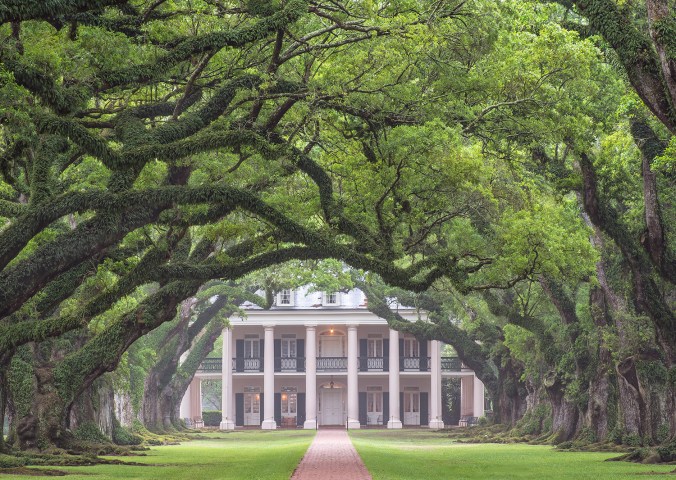
The Farm Road Allée – The second allée of oaks at Evergreen is located just upriver from the main house and overseer’s cottage and can be glimpsed as one drives past, going up or downriver past Evergreen’s grounds. The farm road entrance off of River Road presents the viewer with a dramatic half-mile long arched tunnel of live oaks lining the dirt road that leads to the farming operations at the rear of the plantation. The trees were moved from another nearby plantation and planted in the 1950s, making them about 70-80 years old.

New Alley_light rays_1860a_72

Evergreen farm road allée, afternoon light

The farm road allée was planted under the direction of Ms. Matilda Gray, who purchased Evergreen in 1944 after it had been abandoned in the early years of the Depression. Under Ms. Gray’s supervision, Evergreen was renovated to restore the buildings and grounds to their former beauty. After her death in 1971, her niece, Mrs. Matilda Stream, inherited Evergreen and has continued to maintain the historic property and protect it from encroachment by local industries.

Both of Evergreen’s oak allées can be explored currently only by historic researchers. Contact the plantation online at www.evergreenplantation.org or by calling 985-497-3837.


The Allée of St. Joseph, Manresa House of Retreats

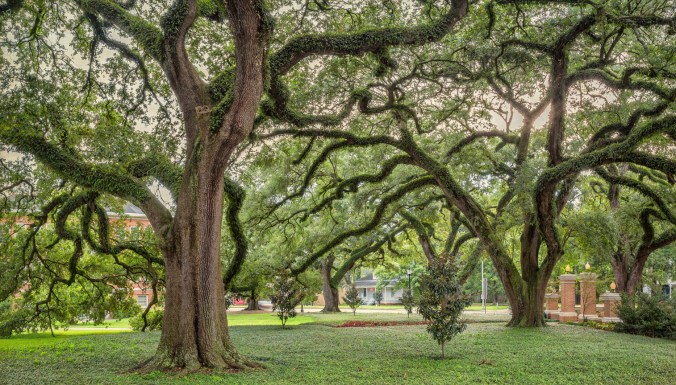
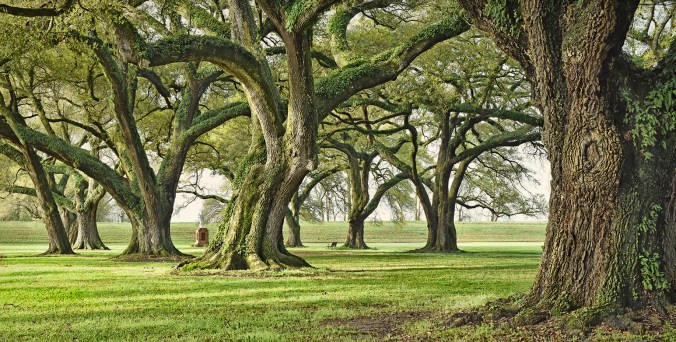
This is an update of a previous post… about the Allée of St. Joseph at Manresa House of Retreats in Convent, LA.  This allée of 100-plus-year-old oaks is located on the levee side of the east bank Mississippi River Road (Hwy. 44).  It’s directly across the highway from the main building (St. Mary Hall) and expansive grounds of the Manresa House of Retreats.  You can read a detailed history of Manresa in my blog post on the Jefferson College Oak. Manresa is just upriver from the parish business offices in Convent, the Parish seat of St. James the Baptist Parish.

Manresa panorama 6

Allée of St. Joseph, view from mid-allée toward levee, east row of oaks

Manresa was originally founded as the “College of Jefferson” in 1830 by a group of wealthy French Creoles, headed by Louisiana’s ninth governor, Andre B. Roman.  Prior to the Civil War, many wealthy Louisiana planters’ sons enrolled at Jefferson College to receive a classical education. The main building, with its Greek-revival design, survived the Civil War as a barracks for federal troops. The college was purchased in 1864 by Valcour Aime, estimated to be the wealthiest man in Louisiana at the time. He donated the property and buildings of Jefferson College to the Catholic Marist Fathers who again operated the facility as a college. In 1931, Jesuit priests took over the school and have maintained it since as a retreat facility for men.
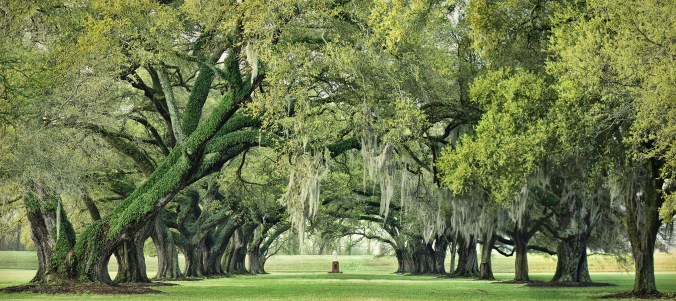
Manresa panorama #1

Allée of St. Joseph, view from mid-allée

The allée was planted around 1830 at about the time the main building was constructed around 1830; the largest tree in this alley is approximately 22’ in circumference. The allée is off the beaten routes of most tourists and is known mainly to locals, to retreat participants who come to Manresa devotedly once a year or more, and to occasional travelers passing along Highway 44 in search of restaurants or bridges to cross to the more trafficked west bank River Road.

Manresa is the site of ongoing non-denominational retreats for men hosted by Jesuit priests who own the once antebellum college.  The ambiance of the old trees and the contemplative silence of the retreat participants seems to create an atmosphere of introspection. I’ve made some of my favorite oak images under the limbs of this allée.

If you visit, you may see men walking the grounds on retreat, where they observe silence and reflect on their lives for several days at a time. The alley is named after St. Joseph (husband of Mary mother of Jesus). A second, younger allee, less than 50 years old, is just a few hundred feet upriver from the older alley. And there’s a shorter allée behind the main building with trees that appear to be as old as those in this allee.
Manresa panorama 8

The southern end of the allée with a statue of St. Joseph and the Christ child with the Mississippi River levee in the background.

 The Jesuits (Society of Jesus) are a Catholic order of priests founded by St. Ignatius of Loyola in 1540. He composed the Spiritual Exercises to help others follow the teachings of Jesus Christ.  The men who attend retreats at Manresa are asked to meditate or contemplate on aspects of the Christian faith and to use their time away from the “clamor and clutter of their daily lives” to listen more closely to God’s individual message to each of them.

3 trees and Ignatius House_2

Three oaks near the front of the St. Joseph Allée with the St. Ignatius House residence.

Manresa is a private facility, but visitors can walk among the trees on the riverside of the grounds.

The Oldest Oak Allées in Louisiana

In France, an allée refers to a road, or path, flanked by parallel rows of trees, shrubs, statues, or stones. In European landscape design, it is an ancient concept. Visually and emotionally, the allée emphasizes a traveler’s arrival at a specific locale. It indicates a formal approach to a notable place or structure (I use the French term allée instead of alley throughout this blog post).

_DSC0292-Pano copy

Oak Alley Plantation Oaks, view from 2nd-floor veranda, toward levee

The allée arrived in Louisiana by way of European immigrants who settled here in the late 1700s and 1800s. In time, German, Creole French, and American planters began to accumulate vast fortunes, dependent on slave labor to cultivate crops of indigo, sugarcane, cotton, and tobacco. Intent on publicizing their wealth to their neighbors, these planter barons would often landscape the grounds around their opulent plantation homes, planting allées and gardens mimicking formal gardens and parks of Paris, Lyon, and Marseille.

In Louisiana, an allée of magnificent native live oaks (Quercus virginiana) was regarded as a grand display of affluence as well as a sign of older, more established wealth, since the oaks could take decades to mature. On a practical level, an allée of oaks provided shelter and shade for a home. Along the Mississippi River, an allée of trees helped direct cooling breezes toward a plantation house, to reduce the intense heat of Louisiana’s summers.

In my 30+ years of travel across Louisiana in search of historic live oaks, I have photographed 16 mature allées that are still intact. Some are in obvious decline and others are even more magnificent now, in their full maturity.  The three oldest of these allées can be dated to the late 1700s and early 1800s. They include:

De la Ronde oak allee, study 1

De la Ronde (Packenham) Oak Allée, Chalmette

1) The De la Ronde Oaks (also known as the Versailles Allée of Oaks), were planted in 1783 on the 21st birthday of Pierre Denis De la Ronde in what is today the town of Chalmette. The allée of oaks (about 40 oaks remain) is often misidentified as the Packenham Oaks, after the ill-fated British General Packenham who led British forces and died at the Battle of New Orleans. The allée stretched between the De la Ronde plantation manor (called “Versaille” because of its extraordinary size and beauty for the time) and the Mississippi River. The plantation was one of several plantations that were the site of the Battle of New Orleans in Dec. 1814 and early January 1815.

Audubon Alley study 3_pano IR

Audubon Oak Allée, Zoo side of Magazine Street, New Orleans

2) The Audubon Oak Allée (also called the Foucher Allée) was planted by Etienne de Boré, sometime between 1776 and 1800. Etienne and his wife, Marie Marguerite, settled on a plot of land about 5 miles upriver from New Orleans where they began planting indigo around 1776 or 1777 (he changed to growing sugarcane around 1795). The original de Boré allée of oaks, according to historic maps, was much longer than the 28 oaks remaining today. It may have stretched as far as Naiad Street (the current St. Charles Avenue), but part of the land was cleared of its stately live oaks to make way for the buildings housing the Cotton Centennial Exposition of 1884.

According to Diane Weber, former grounds director for Audubon Zoo and Park, the de Boré plantation house would have been located where the sea lion pool is now in Audubon Zoo, and the oak allée would have led to it. The George Washington and Martha Washington oaks would have framed the view of the home. Although the George Washington Oak is deceased, the Martha Washington Oak still survives in the rhino habitat area at the zoo.

Alley center after rain_8x10

Allée of oaks at Oak Alley Plantation, Vacherie, LA

3) The allée of 28 live oaks at Oak Alley Plantation in Vacherie was supposedly planted beginning in 1836 during the construction of the manor house (according to the most current research). Oak Alley Foundation researchers believe that the allée was created by moving mature live oaks beginning with the first three pairs of oaks in front of the plantation house. However, this explanation doesn’t account for some of the larger trees growing farther from the house in each row of trees. At least three of the oaks are between 28 ft. and 30 ft. in girth, which would indicate a much older oak (my note).

The classic view of its Greek Revival mansion, framed by the quarter-mile-long tunnel of live oak limbs, is so well-known that it has become an “icon,” a symbol. No other allée that I’ve found in Louisiana is planted with such careful attention to the spacing and direction of its trees.  The north-south alignment of oaks seems planned to produce dramatic side-lighting both early and late in the day. This elaborate interplay between light and shadow is, in itself, a work of art.

Saving the Mr. Al Oak

In 2009, a 150-year-old live oak tree named “Mr. Al” was saved from certain death by a group of local citizens in the New Iberia area.

Mr. Al Oak

Mr. Al Oak after transplant, 2019

The story was published in several local newspapers, though, none of the reporters seemed to get all of the backstory correct. This post is intended to set the record straight on how the old oak was saved, who was involved, and what it means for other communities and individuals attempting to save a historical oak in their town or city.

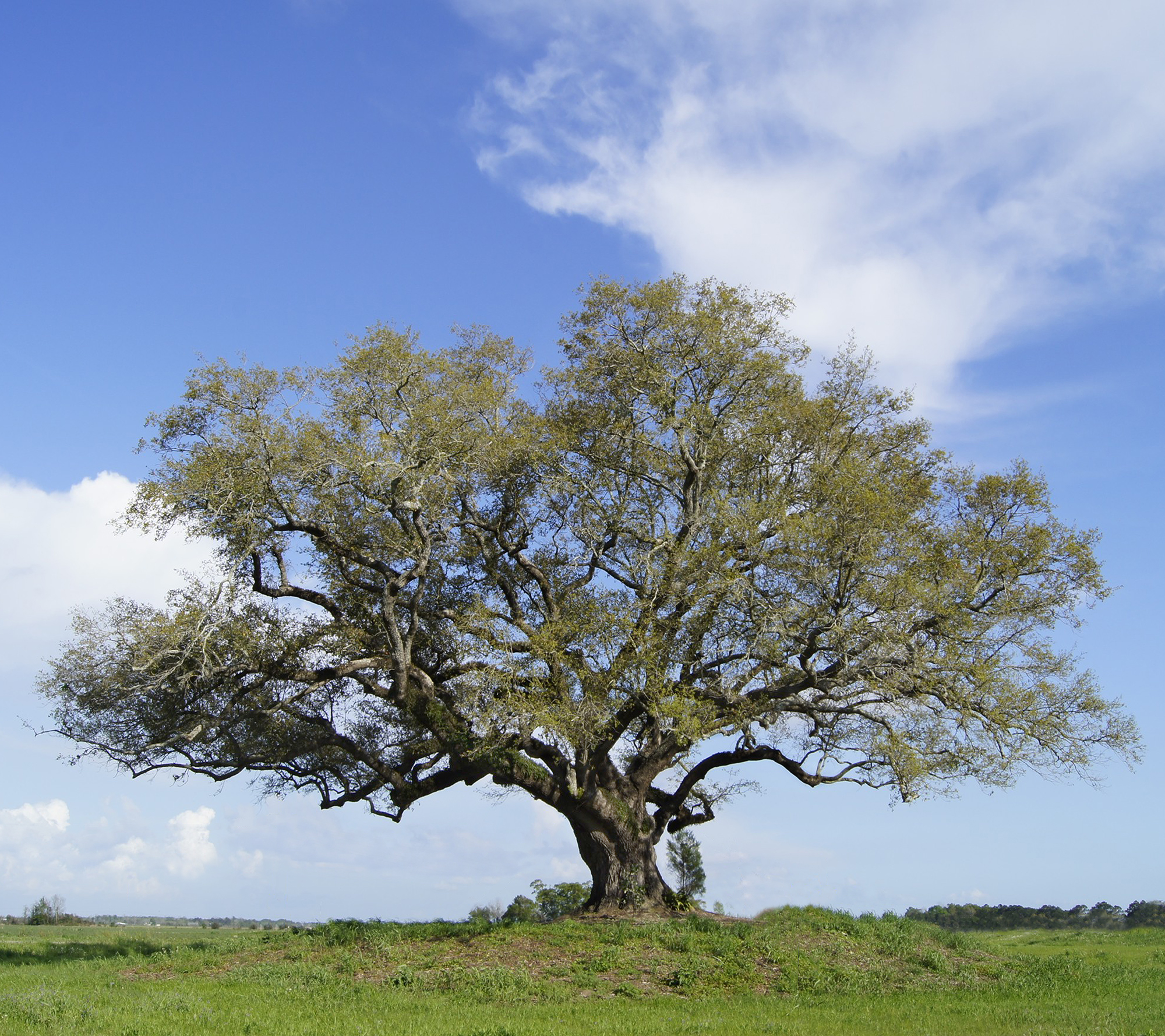
Mr. Al was growing alongside LA Hwy. 90 (the old Spanish Trail) near New Iberia, Louisiana, next to property owned by Kelli Peltier. Peltier’s family had nicknamed the oak “Mr. Al” after her grandfather who grew up with the tree. The oak had a circumference of 20 feet 7 inches and a canopy spread of 104 feet in 2009. When Peltier learned that the oak was slated for removal by the state Department of Transportation and Development (DOTD) as part of a frontage road construction project, she began a search for help to save Mr. Al.  She found that help through Susan Hester Edmunds, then president of the Optimist Club of New Iberia.

If you’re not from Louisiana, New Iberia is located on Bayou Teche in the heart of Louisiana’s “Cajun Country.”  It’s known locally as the City of Live Oaks and has several 100-plus-year-old specimens of Southern live oaks (Quercus virginiana) growing in and about the town.  New Iberia is also known as the location for several mystery novels by writer James Lee Burke.

Mr. Al Oak, infrared study, 2018

According to Edmunds, the Optimist Club usually plants a tree every year as part of its Arbor Day celebration. When she told the group of the plight of Mr. Al, they decided, instead of planting a tree, to pass a resolution in support of saving a venerable tree.  Susan Edmunds worked closely with Kellie Peltier to create an email and letter-writing campaign to solicit wider support. They began a petition and gathered signatures appealing to the DOTD and state officials to spare Mr. Al from removal. The DOTD was sympathetic but was limited in its choices by rights of way laws and strict rules about future expansion plans to convert state Hwy. 90 into  Interstate Highway 49.

Peltier gained further support from the Live Oak Society who reached out to former Louisiana governor, Mike Foster, who lives near New Iberia in Franklin.  The DOTD engineers and administrators finally devised a plan to save Mr. Al.  According to a February 13, 2009, letter from Gordon E. Nelson, Assistant Secretary of Operations for the DOTD to the New Iberia Optimist Club, the state proposed to construct a cul-de-sac at each end of the service road and leave the old oak growing in the middle.

Unfortunately, this first option didn’t work out and the DOTD came up with a plan “B.” They hired a company that specialized in transplanting large trees. In May of 2011, the large tree movers dug up Mr. Al along with its 400-ton root ball and moved it a mile and a half to the intersection of Highway 90 and Weeks Island Road. (you can see photographs of the move here.) They also put in place a plan to provide transplant care for the tree for several years to ensure the tree survived the move. Mr. Al’s new home was outfitted with an on-site well and irrigation system to water the old tree twice a day and guide wires to help stabilize the huge oak until it reestablished its root system.  Following its transplanting, Mr. Al received regular inspections by local arborist, Jim Foret, who carefully watched the tree’s rate of seasonal leaf shed and growth to ensure it settled well into its new home.

It’s now been more than nine years since Mr. Al was moved and the oak appears to be healthy and strong. According to Foret, the tree has root growth far outside the original root ball and, if there are no other significant natural events, such as severe wind storms or lightning, Mr. Al could live another 150 years in his new location.

Mr. Al Oak, in 2013

Mr. Al’s story is important, both for Louisiana live oaks and local communities who believe that preserving century-old oaks is important to local culture and history.  If people wish to save an important oak tree in their community, the first step is to get help from local groups and media. Start a petition; contact local and state politicians. Gather support from as many people as you can and let your local decision-makers know the importance of the tree to your town’s cultural identity. You can save that old tree.  (Much of this post comes from the recollections of Susan Edmunds combined with news articles on the move of the old oak.) .      – BG


Jefferson College Oak, Convent, LA

Ignatius Oak_5128

Jefferson College Oak, view looking upriver toward the property line

I recently located two historic live oaks that are in the 30-foot-plus girth size and have never been registered with the Live Oak Society.  This blog entry focuses on the one whose history I was able to partially piece together.

The first oak, which I’ll call the “Jefferson College Oak” for the purpose of this blog, has a circumference of 32 feet 1 inch, and is located on the upriver property line of the Manresa House of Retreats, located in Convent, Louisiana, on the east bank Mississippi River road (Hwy. 44).

Manresa Oak_0737-Pano

Black-and-white infrared photo of oak, view toward River

Convent, originally named Baron when it was first settled between 1722 and 1729, has been the parish seat of St. James the Baptist Parish since 1869. It’s an old historic town that today has only a few hundred residents.

Manresa oak_5134

Oak – view toward Manresa Retreat grounds

Manresa was originally founded as the “College of Jefferson” in 1830 by a group of wealthy French Creoles, headed by Louisiana’s ninth governor, Andre B. Roman.  These founders wished to provide an intellectual foundation for their sons and heirs and so the College of Jefferson reflected their views and values toward architecture, gentlemanly instruction, and secular liberal arts studies. These wealthy Creole founders’ views mirrored those found in late eighteenth- and early nineteenth-century Paris.* They were not the same views as those in the American colonies of the northeast. In the words of the founders, they wished to establish an institution of higher learning “where our children will find the means of completing their course of studies without leaving their native land.”

Jeff_College_01473a

Library of Congress 1938 photo of Jefferson College’s main building

Jefferson College was chartered in 1831 and opened its doors in February of 1834 with 62 students, comprised primarily of the sons of wealthy Louisiana planters. In 1842, the main building was destroyed by fire and though rebuilt, the college never reached its potential. It closed in 1848 and the buildings were sold at a sheriff’s sale. It reopened again briefly between 1853 and 1856 as “Louisiana College.” Then, in 1860, when on the verge of collapse, it was purchased and saved by Louisiana’s wealthiest sugarcane planter, Valcour Aime, who had supported the school from its beginnings.

Aime had a chapel added on the downriver side of the main building, supposedly to honor his only son, Gabriel, who had died of yellow fever in 1854. Between 1862 and 1864, the school was occupied by Federal troops, and in 1864, Aime transferred the property to the Marist Fathers of France, who reopened and renamed the school, “St. Mary’s College of Jefferson” that same year. It operated until 1927. Then, in 1931, the Jesuit Fathers of New Orleans purchased the college and renamed it Manresa House of Retreats, a non-denominational Jesuit retreat center for men.

*Much of the information about Jefferson College referred to here was obtained from the website, “America’s Lost Colleges” http://www.lostcolleges.com/jefferson-college