Leighton Plantation Oaks

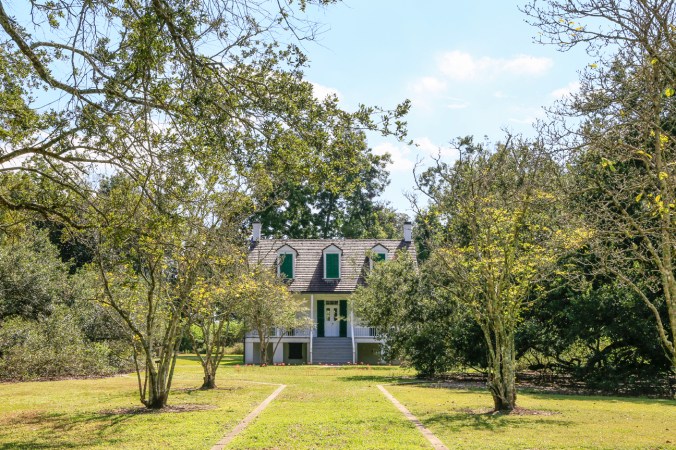
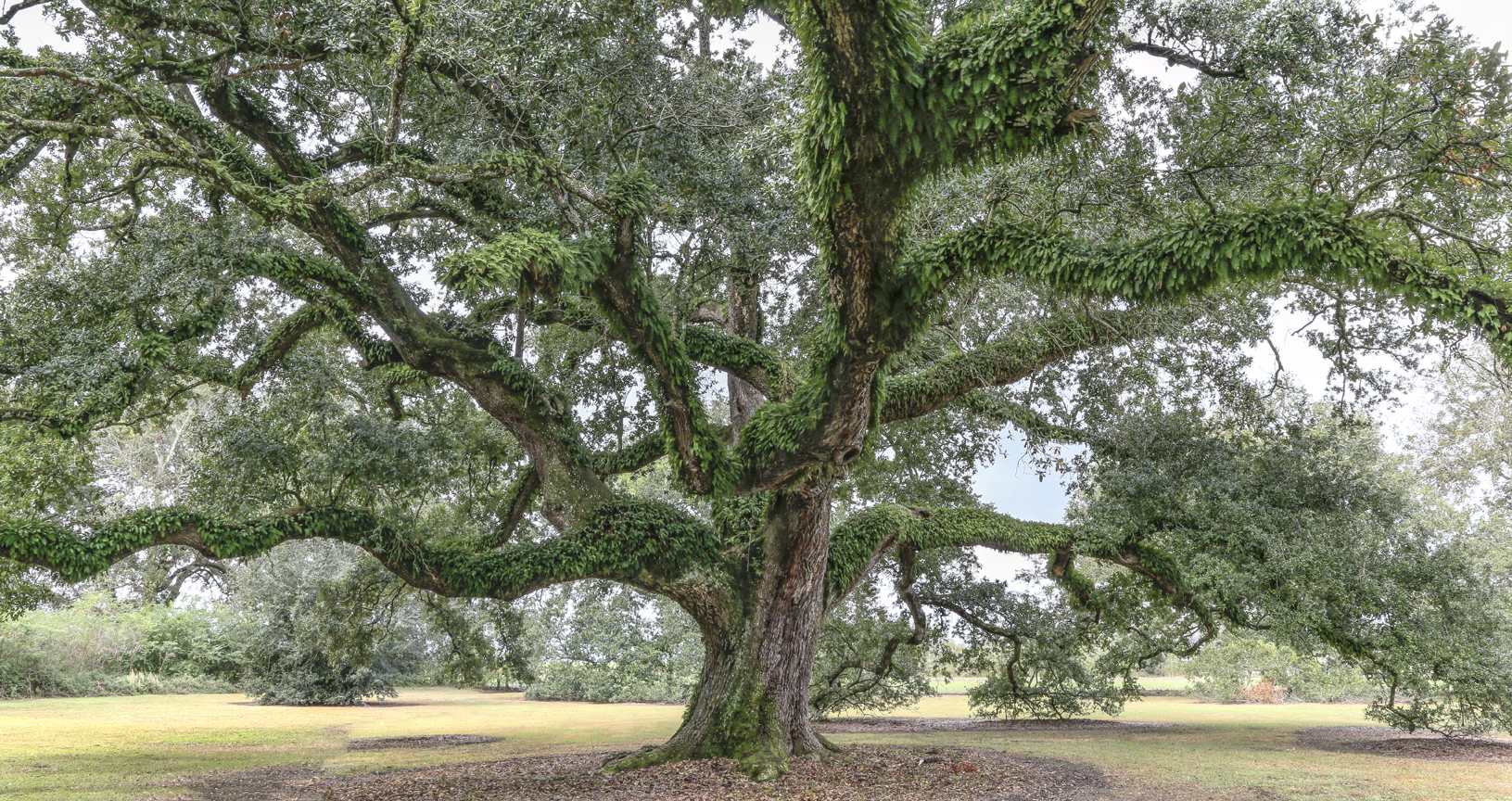
(The Leighton Plantation Oaks are located at 1801-1811 LA Hwy. 1 (St. Mary Street) about 2.5 miles north of downtown Thibodaux. The oaks are on the property between Leighton Road and Leighton Quarters Road. Turn onto Leighton Quarters Road to get the best view of the trees. The oaks range in age and size, the oldest and largest dating back to the early 1800s. There is a historic marker to Leonidas Polk at the St. Johns Episcopal Church in Thibodaux, and another (small and on the roadside) about a hundred feet north of the Leighton Quarters Road on the west side of Hwy 1.)

leighton-plantation-oaks-1

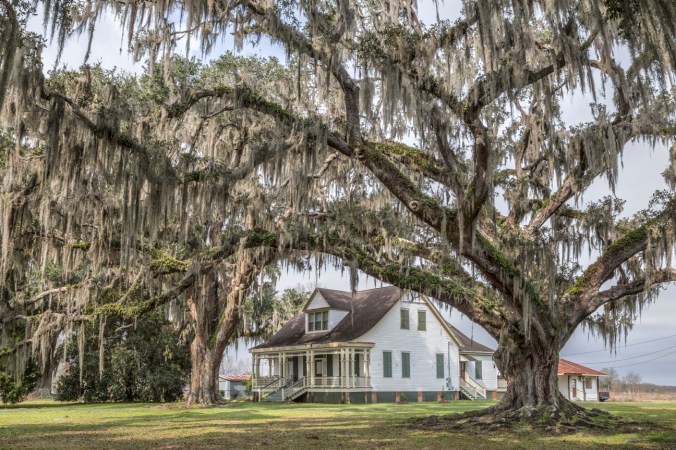
Oaks in front of current home at Leighton

There is a story that 22 of the oaks at Leighton Plantation belonged to the King of Spain in the late 1700s. As the story goes, the land grant for the property contained a stipulation that the King of Spain (Charles IV) could claim these “Royal Oaks” whenever he needed them for construction and repair of his royal navy. At the time, Spain was at war with England (1796–1808), and the wood from Louisiana’s live oaks was known worldwide to be strong enough to deflect an English cannonball.

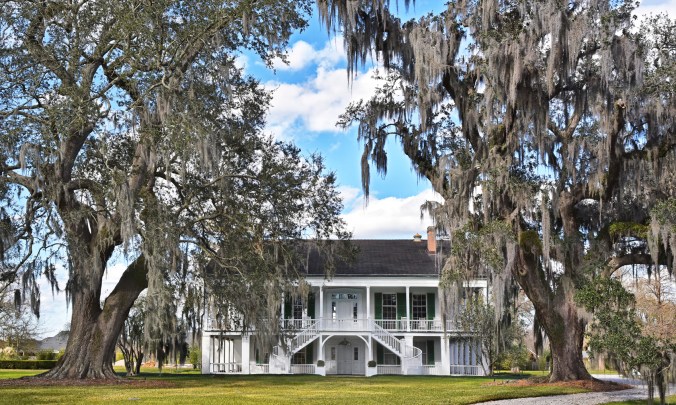
leighton-oaks-pano-5

Leighton Oaks and back entry road to home

In the early 1800s, Leighton Plantation was owned by Leonidas Polk (April 10, 1806 – June 14, 1864), an Episcopal Bishop and American Confederate General. Polk was a graduate of the University of North Carolina at Chapel Hill and of the U.S. Military Academy at West Point (1827). After graduation from West Point, he received special permission to resign his new commission in the U.S. Army and attend the Virginia Theological Seminary where he was ordained as an Episcopal priest. He went on to become Missionary Bishop of the Southwest in 1838 and was elected Bishop of the Episcopal Diocese of Louisiana in 1841.

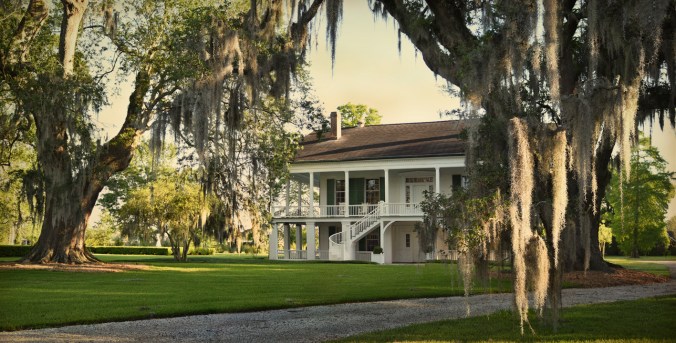
leighton-oaks-pano-study-2_layers

Oak grove behind the home, Leighton Plantation

Bishop Polk established Leighton Plantation to be closer to his work as he frequently traveled between Thibodaux and New Orleans where he administered the Louisiana Episcopal Diocese from Christ Cathedral, New Orleans’ first Protestant Episcopalian church. During his tenure as bishop, he personally established St. Johns Episcopal Church in Thibodaux, Christ Church in Napoleonville, the Church of the Ascension in Donaldsonville, the Church of the Holy Communion in Plaquemine, and Trinity Church in Natchitoches. Through his crusading evangelical efforts, the Protestant Episcopal religion made a significant foothold in the predominantly Roman Catholic Louisiana.

l_polk-stone

Historic roadside marker for Leonidas Polk

Bishop Polk strongly believed in states’ rights and that the South was a “distinct cultural entity.” So after Louisiana seceded from the Union in January of 1861 and the Civil War began, he resigned as Bishop of Louisiana and took command of Confederate forces in western Tennessee. His most notable contribution to the Army of Tennessee was his calm ability to inspire confidence and religious beliefs, earning him the nickname, the “Fighting Bishop.” Polk was killed in battle in June 1864 at Pine Mountain, Georgia.

This is a mirror post from the Lafourche Live Oak Tour – which was created through the generous support of the Bayou Lafourche Convention & Visitors Bureau. View more of this blog site and share it with friends at www.liveoaktour.com.

Khi Oaks and Theriot Plantation

(Khi Oak and Theriot Plantation Home are located at 3266 LA Hwy. 308 – 3 miles north of Raceland (toward Thibodaux) on LA Hwy. 308, or 12.5 miles from Thibodaux driving south. The Khi Oak is likely to be the largest oak on the property – which is the oak in the right foreground of the below photo.)

khi-oaks-6

The Theriot Plantation Home was built in 1891 by Alexander L. Theriot (pronounced tear-ee-oh). He was the son of Paul Justilien Theriot, who owned several plantations in the area, including the Home Place and Scudday Plantations. The Theriot home replaced an older residence at the location that was destroyed by fire.

khi-oaks-2

Khi Oaks and front gate of Theriot Plantation

There’s a bit of mystery associated with the name, Khi Oak.  A study of the home and property done by the Lafourche Heritage Society stated that it’s unclear whether the Wilsons intended the name “Khi Oak” to represent the entire grove of oaks on the property of just a single oak. All that’s known today is that William W. and Melva Wilson purchased the plantation home in 1971 and registered one oak with the Live Oak Society named “Khi Oak” with a size, at the time, of 18 ft. 7 in. in girth. Though, they also erected a wrought-iron gate at the entrance to their home that reads “Khi Oak.”

khi-oaks-3

Oaks and Theriot Plantation Home, view from north front corner

According to the Wilsons’ son, his parents came up with the name “Khi” oak from the name of his college fraternity. However, the Greek letter in question would be “Chi,” the 22nd letter of the Greek alphabet. It is also pronounced “Ki” with a long “i” like sky. So the Khi Oak name was possibly a simple misspelling. Whatever the case, there is a beautiful group of oaks surrounding the historic Theriot Home, and the home has been carefully restored by the current owners.

This post is from the Lafourche Live Oak Tour – which is created through the generous support of the Bayou Lafourche Convention & Visitors Bureau. View more of this blog site and share it with friends at www.liveoaktour.com.

Rienzi Plantation Oaks, Thibodaux, LA

rienzi-and-two-oaks

Rienzi Plantation house flanked by two giant live oaks

Rienzi Plantation Oaks—Two of the oaks on the grounds at Rienzi are registered with the Live Oak Society and one, named “The Pilgrimage Oak,” is one of the Live Oak Society’s original 119 member trees compiled by Dr. Edwin Lewis Stephens before his death. (Read about the Live Oak Society here.) Rienzi’s oaks were probably planted around 1800, making them at least 200 years old and possibly older.

pilgrimmage-oak-1

Pilgrimage Oak, study 1

About Rienzi Plantation—Around 1794, Henry Schuyler Thibodeaux received a Spanish land grant on Bayou Lafourche for property east of the Bayou where he built a home for his wife Félicité and developed a plantation he named Saint Bridget. In time, he accumulated more land including property on the west bank of the bayou.

rienzi-house-and-oaks-west-corner

Rienzi Plantation House and oak, west corner

Three Governors who lived at Rienzi—Besides being an area planter, Henry S. Thibodaux became the namesake for the city of “Thibodeauxville” when he donated land for development of the village center, now downtown Thibodaux. Henry S. Thibodeaux (he later shortened the spelling to Thibodaux) became a local Justice of the Peace, served in the Louisiana territorial legislature, and as a state senator. In 1824 while serving as president of the state senate, Thibodaux stepped in as the acting fourth governor of Louisiana when the third governor, Thomas B. Robertson, resigned to accept an appointment as a federal judge.

dscn1215

Jane Amundson Lafargue Oak, b&w study

Henry S. Thibodaux sold his plantation around 1814 to William Fields, a businessman and architect who is attributed with building the current plantation home. In 1824, William Fields sold the house and property to Henry Johnson, an attorney, and politician who was elected the fifth governor of Louisiana that same year, replacing acting Governor Henry S. Thibodaux. Eleven years later in 1835, Johnson sold the property to Thomas Bibb, who had been the second governor of Alabama from 1820 to 1821. It’s under Bibb’s ownership that the plantation was first called “Rienzi.” The name supposedly came from a novel and Wagner opera popular during the 1840s about a 14th-century Italian patriot.

reinzi-panorama-1

Rienzi Plantation House and two oaks, east corner

The next owner, Juan Ignacio de Egana, was possibly the source of a romantic legend which grew over time about the Rienzi home and the origin of its unusual design. The legend states that the house was constructed by Spanish architects at the request of Spanish Queen Maria Louisa as a possible retreat for her in the event of a Spanish defeat in the Napoleonic Wars. The legend states that her agent, Juan Ygnacio de Egana, took possession of the home, after Louisiana was ceded to France and sold to the United States, and lived there for nearly fifty years. (source: Wikipedia)

Architecturally, Rienzi’s design is unusual for plantation homes of the period. It has cruciform (crossing) hallways on both the first and second floor and brick walls throughout (inner and outer walls). Also, the walls of the home are aligned to the four cardinal directions. Since being purchased by the current owner in 2012, the home has undergone significant restoration and is not open for tours.

E.D. White Memorial Oaks, near Thibodaux


The E.D. White Historic Site is located close to the northern end of Lafourche Parish and is the furthest marker on the driving tour of historic Lafourche Parish live oaks. There are eight oaks on the grounds that are registered with the Live Oak Society. The oldest, the E.D. White Oak is more than 25 feet in girth. The tour materials claim that the old oak is more than 400 years of age.

gen_beauregard-oak-5

P.G.T. Beauregard Oak and home

The historic Creole-style raised cottage was built around 1790 by Edward Douglas White Sr., Judge of Lafourche Interior Territory and the seventh governor of Louisiana. The home is also where his son, Edward Douglass White, Jr. (who added another “s” to his middle name), Louisiana’s most famous jurist lived. E.D. White, Jr. served on the Louisiana Supreme Court, as a member of the U.S. Senate, and as a justice of the U.S. Supreme Court for nearly three decades, 11 of those years as chief justice.

_mg_6217

Front view of E.D. White Home

For many years the home was owned by the Thibodaux chapter of the Knights of Columbus, but in 1923 it was donated to the Louisiana State Parks and Recreation Commission. Today, the historic home and grounds are part of the Louisiana State Museum system, is on the National Register of Historic Places, and has been designated a National Historic Landmark. The house and grounds are open for free tours Tuesdays through Saturdays, 10 a.m. – 4:30 p.m., and closed Sundays, Mondays, and state holidays.

The Lafourche Historic Live Oak Tour

New Hope Plantation Oak, Matthews, LA

Dear readers, I’ve been hard at work on an entirely separate (but equal) blog site that grew out of my work on the 100 Oaks Project. In August, I was awarded a grant through the Bayou Lafourche Convention and Visitors Bureau to create a self-guided driving tour of the historic oaks along Bayou Lafourche.

beauregard-oak-11_8

General P.G.T Beauregard Oak, 20 ft. 2 in. in girth, located on LA Hwy. 1, at the E.D. White Memorial Home site.

For this grant project, I’m photographing historic live oaks around the parish and writing about the history of the people and events that have occurred around these old oaks for a website and brochure. I’m also creating and posting “waymarker signs” (like the image above) that will be located close to the oaks’ locations, near the two main highways that run on either side of Bayou Lafourche (LA Hwy. 1 and Hwy. 308).

boudreaux-oak-study-2-copy

Boudreaux Oak, 29 ft. 2 in. in girth, located near the community of St. Charles, LA Hwy 1

These way-marker signs will have numbers that a visitor can follow using a brochure, or the Tour website. The brochures and website will contain photographs of the trees (like those above) and provide a brief explanation of the significance of their location to the history of the parish. Visitors can take a self-guided driving tour along Bayou Lafourche and learn about the history of the parish through the location of our historic live oaks.

I will begin mirror-posting the Live Oak Tour site pages here, on the 100 Oaks Project site, since they are all part of the same work.  Enjoy!  And if you’d like to see the other site in its entirety, just go to https://liveoaktour.com.

Jamie Oak, Hwy. 308, near Thibodaux