Audubon Park – New Orleans, Louisiana

Etienne de Boré oak – Audubon Park, New Orleans
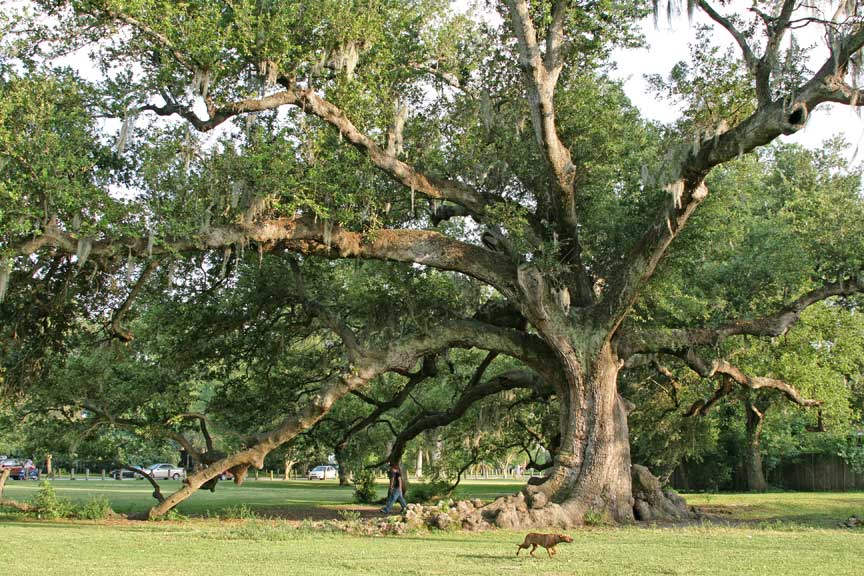
In New Orleans, and especially the neighborhoods surrounding Audubon Park, this oak has been dubbed “The Tree of Life.” Its registered name with the Live Oak Society is the Etienne de Boré Oak. The land on which Audubon Park is located was at one time part of de Boré’s extensive sugarcane plantation.
Registration & Measurements – At just under 35 feet in circumference today, this oak was number 13 on Dr. Edwin Lewis Stephens’ list of 43 original inductee trees into the Live Oak Society and is also in the top 100 oldest surviving oaks on the Society’s member list. Its girth when it was registered (as #21) was 23 feet 1 inch. The oak is located in Audubon Park on the down-river side of the Audubon Zoo, right over the fence from the giraffe habitat. It’s an enormous tree with a broad gnarly base of roots and a crown of limbs more than 160 feet wide.
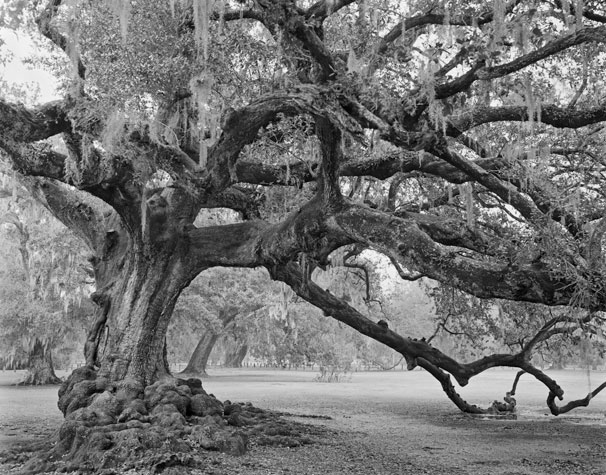
The Live Oak Society estimates that any oak with a girth of 17 feet in circumference (measured at 4 feet off the ground) is probably 100 years of age or older. This is a rough system of estimation developed by the Society’s founder, Dr. Stephens, which is fairly accurate, though soil, rain, and other habitat conditions can affect a tree’s long-term growth. A live oak with a girth of more than 30 feet could be 300 years of age or more. The ages of many of the Society’s oldest and largest trees are only rough guesses, and there’s been much-heated discussion among amateur arborists and other tree-folk over this issue.
History
Jean Etienne de Boré is significant in history as the first French planter in Louisiana to successfully granulate sugarcane into sugar on a large scale, helping to make sugarcane the main crop over indigo and tobacco in antebellum Louisiana. He originally cultivated indigo (a highly valued crop and popular dye); but after several years of drought and insect damage, de Boré decide to gamble the last of his and his wife’s personal funds on growing sugarcane. In 1794, he secured a variety of Cuban sugarcane from Don Antonio Mendez (a Cuban of Spanish descent) who had successfully granulated a small amount of sugar in 1791 (a few barrels or hogsheads – approx. 1000 pounds per barrel) at Magnolia plantation in Saint Bernard Parish, downriver from New Orleans. With the help of Mendez and a Cuban by the name of Antoine Morin who had experience with the sugar granulation process, de Boré succeeded in producing a crop of sugar on his plantation that he sold for $12,000 (quoted from a Times-Picayune story from January 13, 1895).
De Boré was also the first mayor of New Orleans, appointed to the position by Governor William C.C. Claiborne in 1803, the same year Louisiana was transferred from Spain to France. He resigned in 1804 after New Orleans became an American colony through the Louisiana Purchase.

Couple getting married under the limbs of the Etienne de Bore’ oak.
Audubon Park is home to several other member trees of the Live Oak Society. The George and Martha Washington oaks were among the original 43 inductee oaks in the Society along with the de Boré oak. George has passed on but Martha is still alive, in the rhino habitat of the Zoo. There are three other unnamed oaks spread across the Park’s grounds that are elder Society members.

Remains of Martha Washington Oak in Audubon’s Rhino habitat
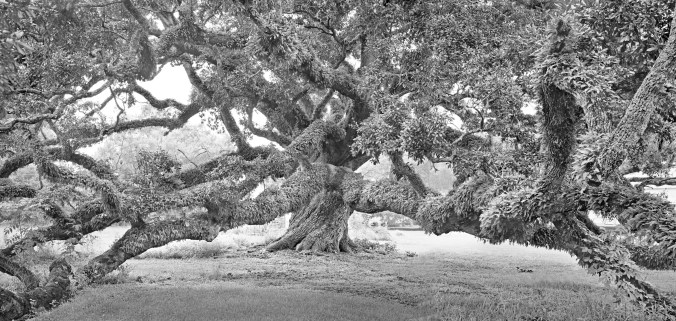 Bacas Oak, West Bank of River Road, Hwy 18 near Edgard
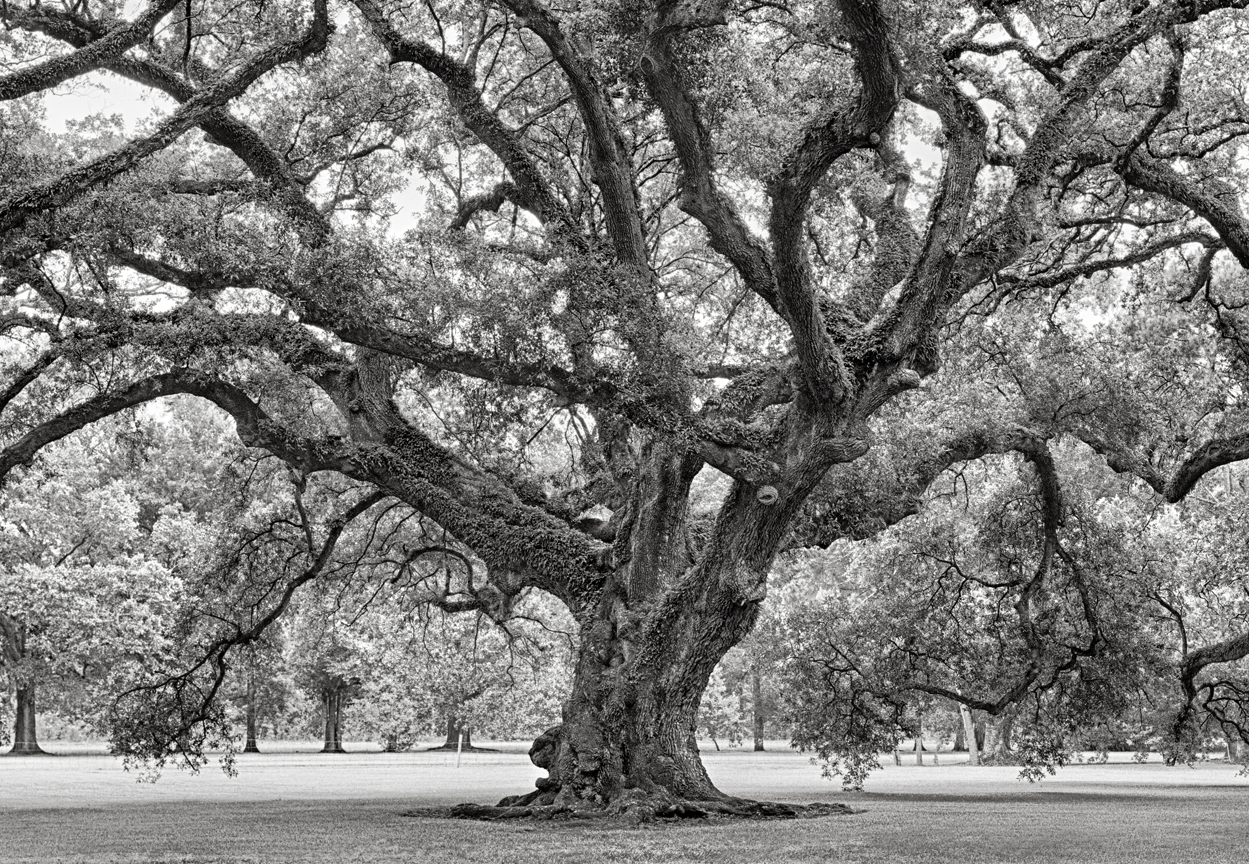
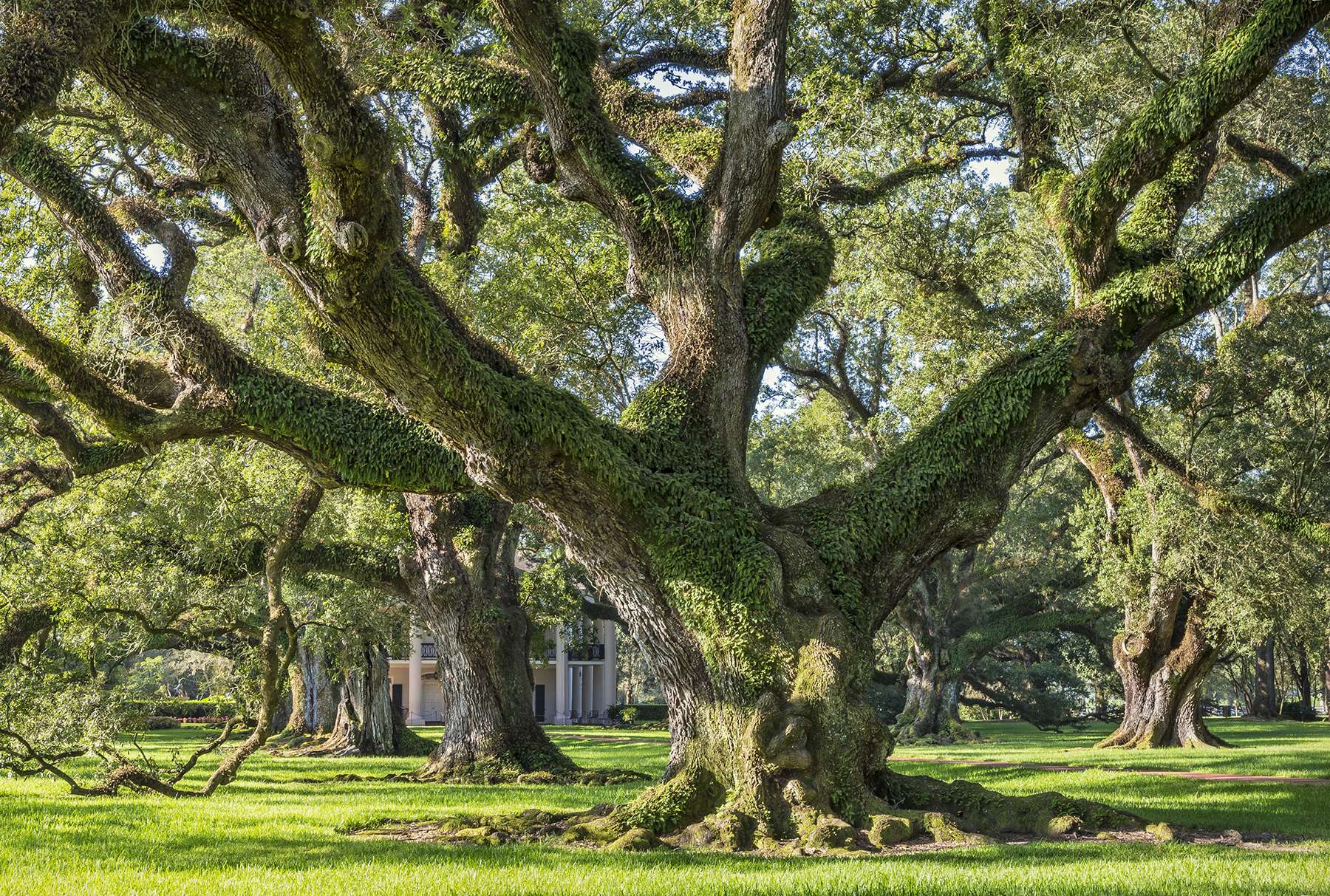


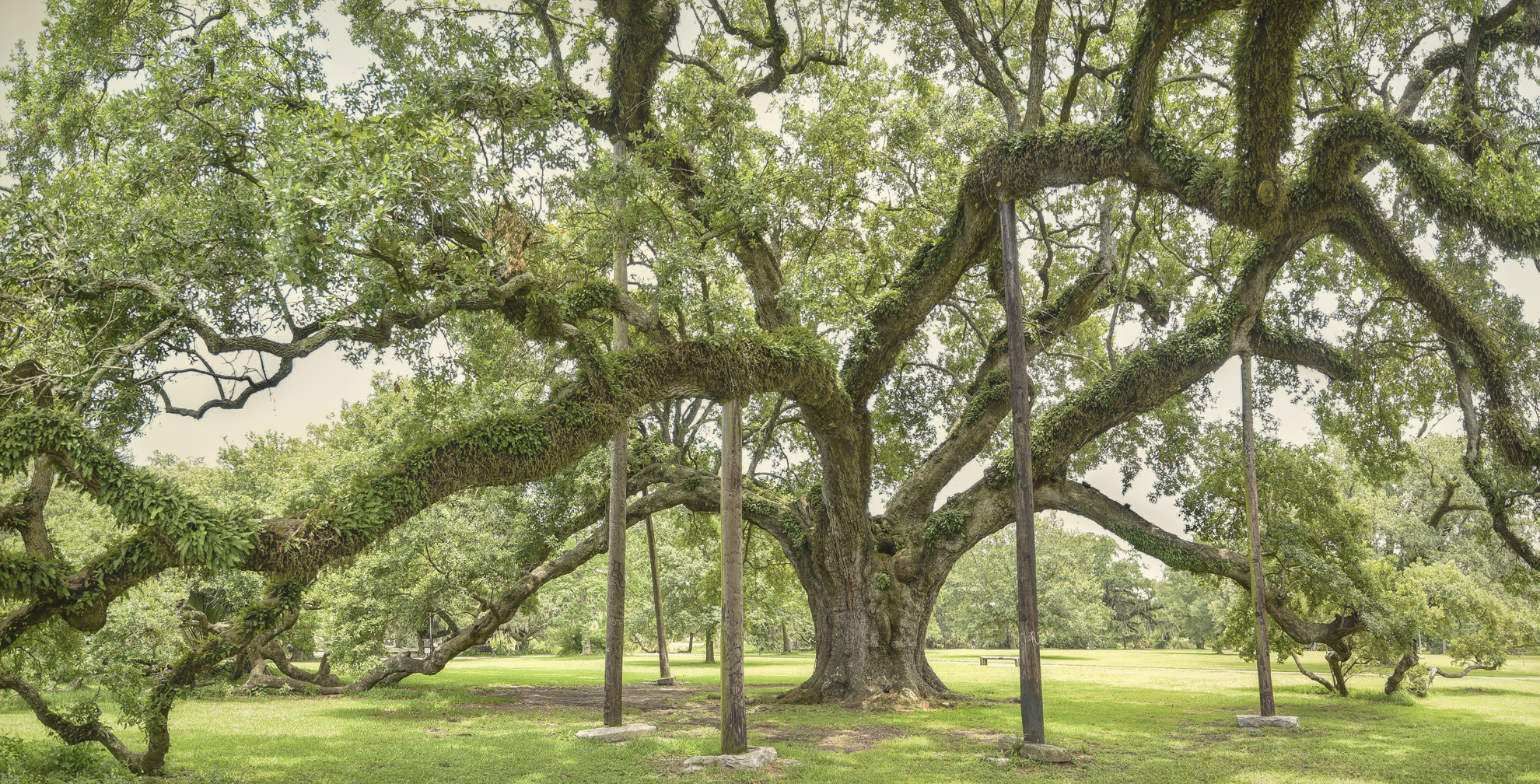 The McDonogh Oak is the largest and oldest
 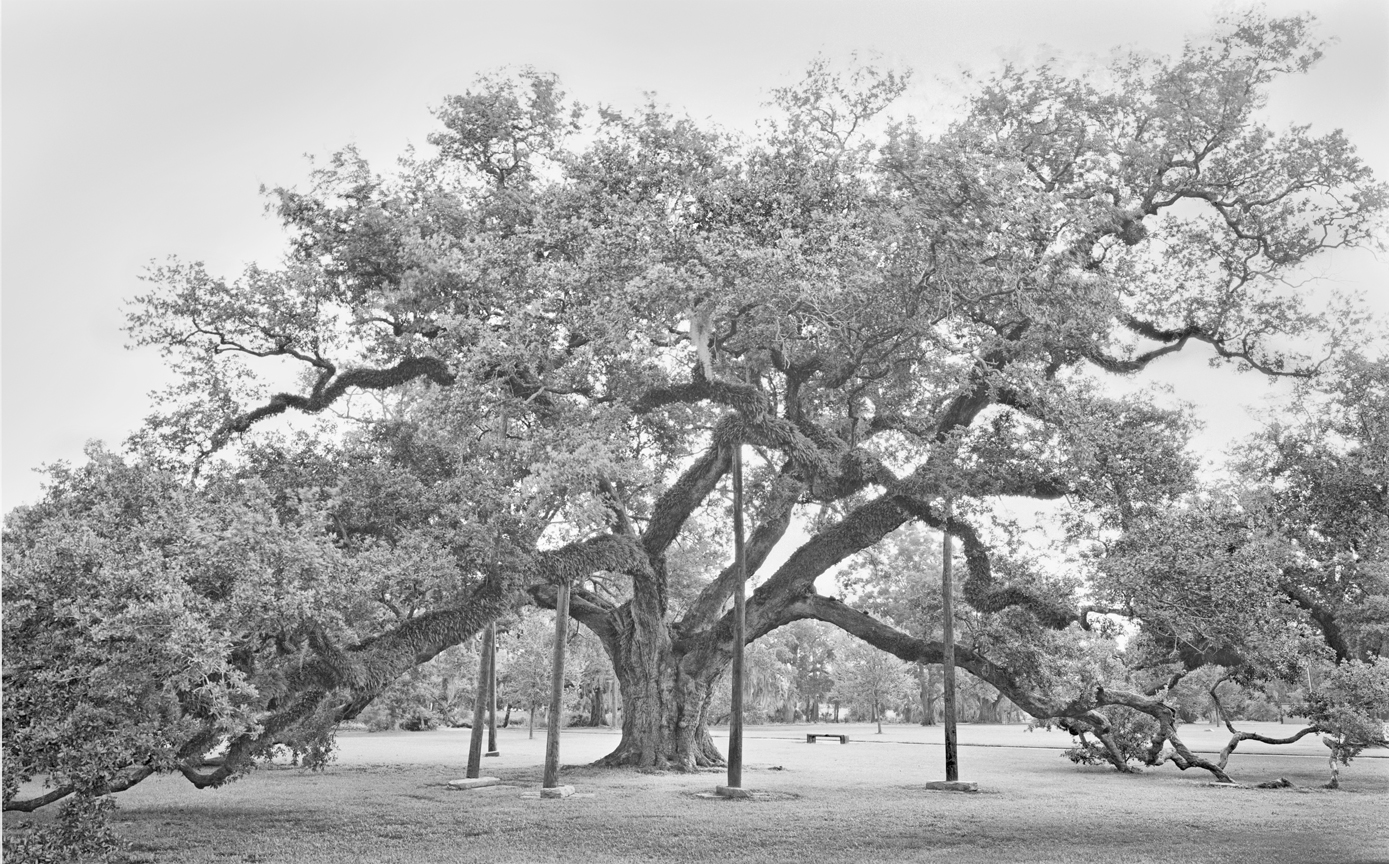 City Park was once part of the Jean Louis Allard Plantation, originally established in the 1770’s, and later purchased in 1845 by shipping magnate and philanthropist John McDonogh. Upon his death in 1850, McDonogh donated the land to the City of New Orleans and in 1854 a large section was designated as a city park. According to park records, in 1958, the National Park and Recreation Convention met in New Orleans and hosted a breakfast for 1,028 convention attendees under the massive canopy of the McDonogh Oak’s limbs.
 100 Oaks Project