 Barrow Oak, near ruins, end of entrance alley
This is another lesser-known old oak and one of my personal favorites. It grows on the grounds of Afton Villa Gardens, in St. Francisville, Louisiana. It is in the 23’ to 24’ circumference range, and was reportedly planted between 1820 and 1839 by Bartholomew Barrow, the first member of the Barrow family to purchase and settle this land. The oak is registered with the Live Oak Society and has a distinctive shape, size and bushy texture formed by the thick resurrection fern growing profusely on its limbs. It’s located in front of the Afton Villa ruins near the end of the ½ mile long alley of oaks leading from Louisiana state Highway 61 to the gardens.

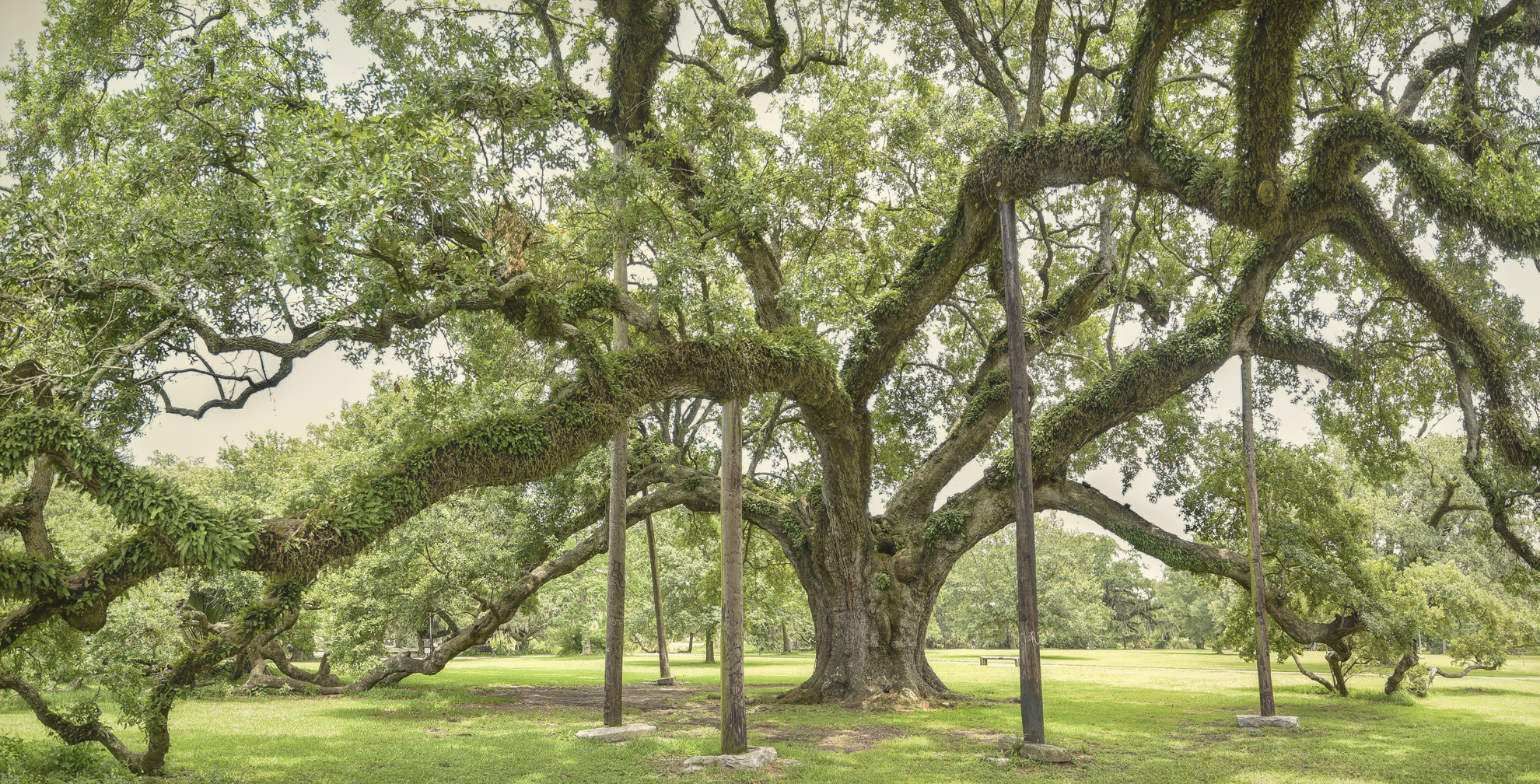 The McDonogh Oak is the largest and oldest
 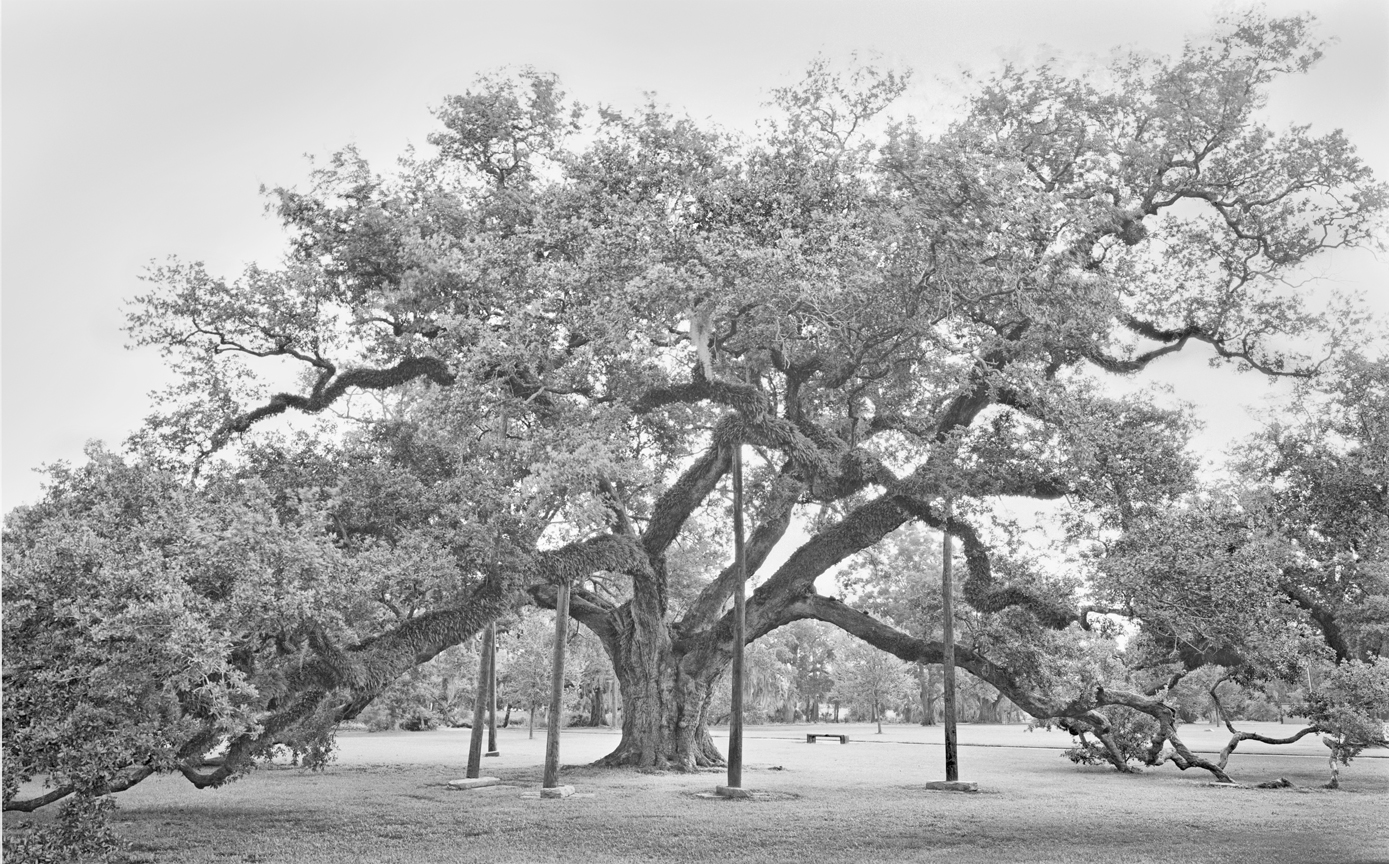 City Park was once part of the Jean Louis Allard Plantation, originally established in the 1770’s, and later purchased in 1845 by shipping magnate and philanthropist John McDonogh. Upon his death in 1850, McDonogh donated the land to the City of New Orleans and in 1854 a large section was designated as a city park. According to park records, in 1958, the National Park and Recreation Convention met in New Orleans and hosted a breakfast for 1,028 convention attendees under the massive canopy of the McDonogh Oak’s limbs.
 100 Oaks Project