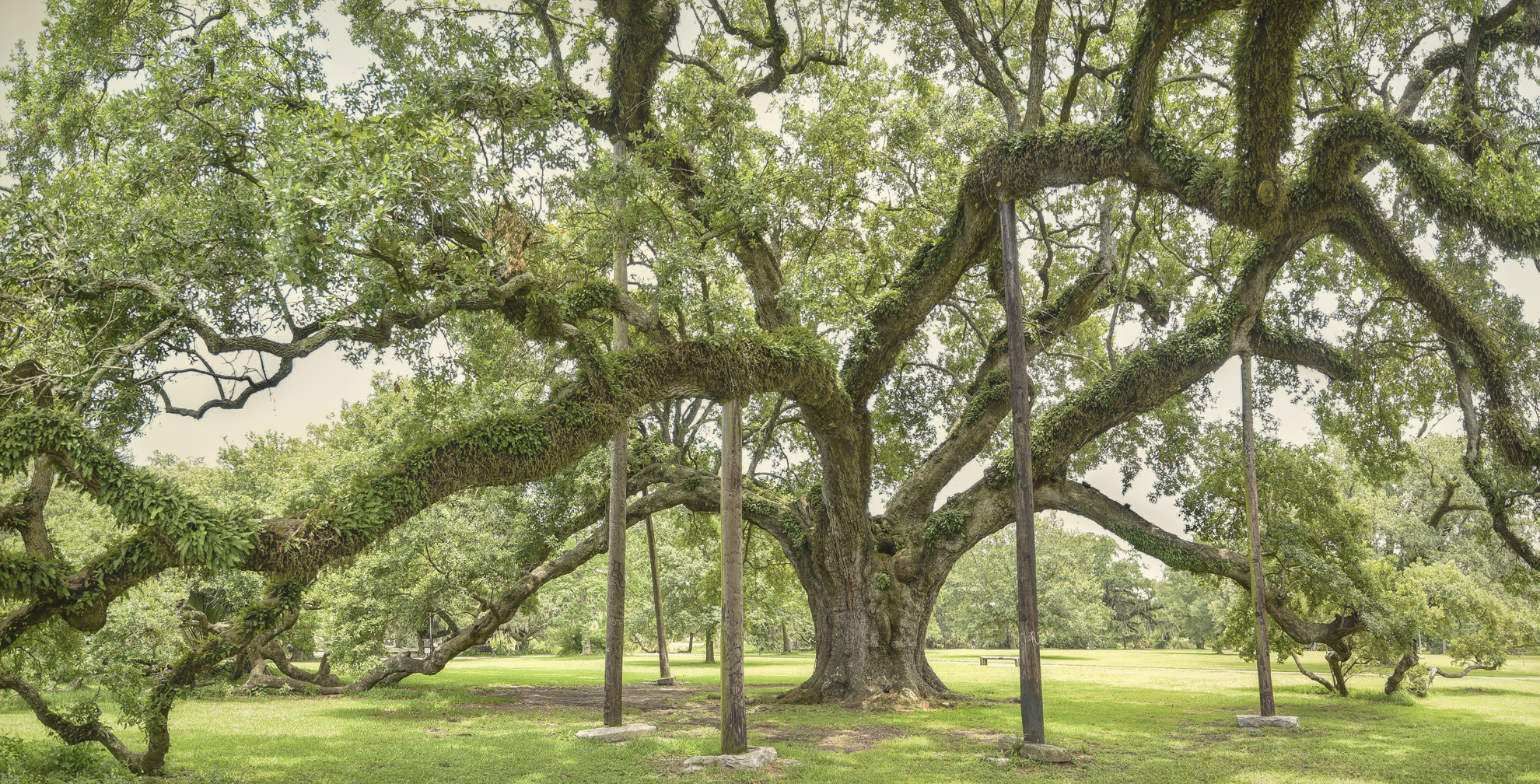
Ascension Parish – The Martin Oak, the John Hudson Oak

Ascension Parish and Upper River Road

Ascension Parish has always been a sort of blank spot on my live oak radar. Before I began this 30-something series, I was unaware of the number of live oaks that live there. So, I’ve been surprised and delighted to have located several old and beautiful trees that have led otherwise low-profile lives in this historic parish.
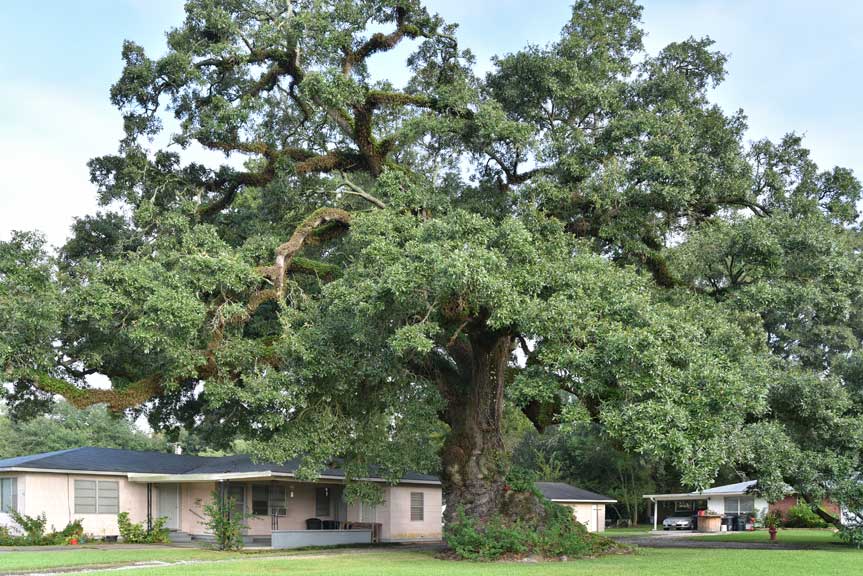
The Martin Oak study 1 – 35' 6" in circumference

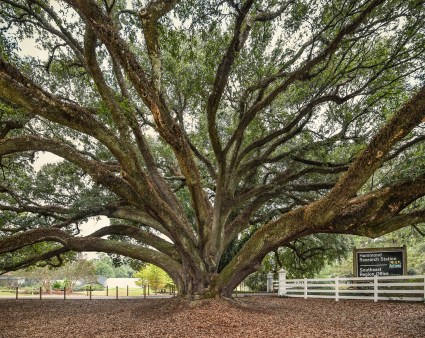
The Martin Oak, Gonzales, LA – 37′ 8″ in circumference

I’m not sure if I’ve emphasized enough in my earlier blogs how rare it is that 30-something-foot girth oaks have survived all of the changes that have taken place on the Louisiana landscape in the past 300 years. In her invaluable reference book, Louisiana Live Oak Lore, Ethelyn G. Orso describes the process of “live oaking,” a fairly common practice in the past in which woodsmen would cut live oaks and sell the wood to supply the wooden ship industries of Britain, France, Spain, and the United States.

The Martin Oak trunk and burls

The Martin Oak trunk and burls

Here’s an excerpt from her book on the subject:

“As early as 1709, shipwrights recognized that the near-impenetrable wood (of the live oak) was perfect for timbers and ‘knees’ for vessels. ‘Knees’ were the angular sections of wood taken from the joints between tree limbs and trunks. Such natural joints were stronger than any artificial joints made by shipwrights, and braced the sides of the ships… For the European governments that controlled Louisiana in that early colonial period, live oak wood was the state’s most prized natural resource.

Having practically deforested the European continent in search of the indispensable oak wood for their fleets, British, French, and Spanish rulers looked with greedy eyes to the vast expanses of live oak forests in the southern parts of what would become the United States. Those European governments that gained control of the part of ‘West Florida’ that today is eastern Louisiana claimed the live oak forests as state-owned resources. That led, by the mid-1770s, to a thriving illicit trade in live oak wood between the inhabitants of the area and whoever would pay for the poached wood. In 1811, after Louisiana had become a part of the United States, Louisiana Governor William C. Claiborne began communicating with the secretary of the navy in Washington, DC, and in 1817 an act was passed giving the president of the U.S. the authority to reserve lands with live oak forests for use by the U.S. Navy.”

It was hard times for large live oaks in those early years of the colony and the oaks that survived the wooden-ship era were still faced with the widespread clearing of lands for farming and ranching as well as eventual urban development. So, when I express respect and even awe at the few oaks that have managed to survive (and flourish in some cases) after 300+ years of cutting and clearing, you can understand why.  Now, on to the 30-something oaks of Ascension Parish:
Martin-Oak-vert-2

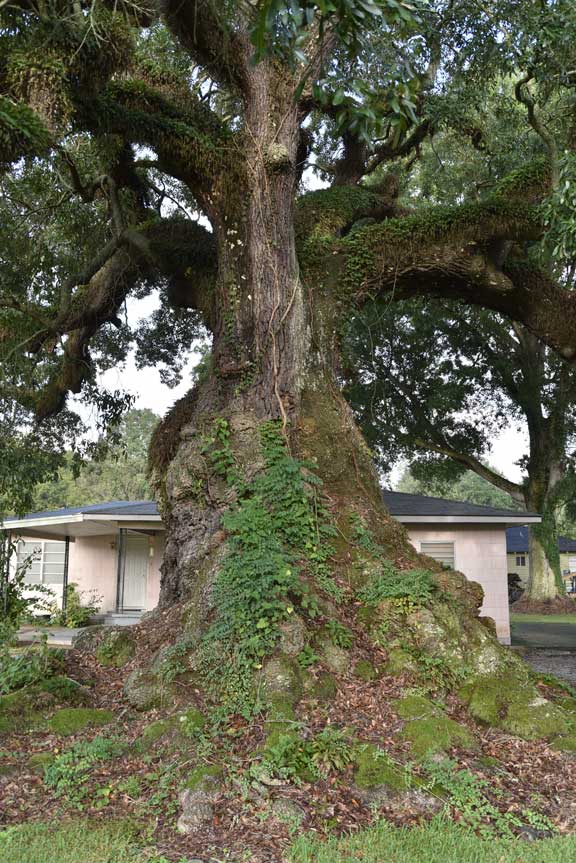
The Martin Oak, vertical view of trunk

The Martin Tree—(See photos above as well) #1405 on the Live Oak Society registry, this tree was registered with a circumference of 34 feet by Ms. Delba E. Martin. She was born in 1906 and passed on in 1995. With help from the Ascension parish assessor’s office, I was able to locate the property that was once owned by Ms. Martin and the tree is still there.

The shape of the tree trunk is similar to the Rebekah Oak and others—it has a very large burled lower trunk that tapers above 5–6 ft. from the ground. Generally, this is above the 4–4.5 ft. line where one would measure the girth, but with trees like this, I take multiple measurements above and below the 4.5 ft. line and make an average measurement. My estimated girth of this oak is approximately 37’-8″ and still growing.

John Hudson Oak, 29'-8" – Prairieville, LA

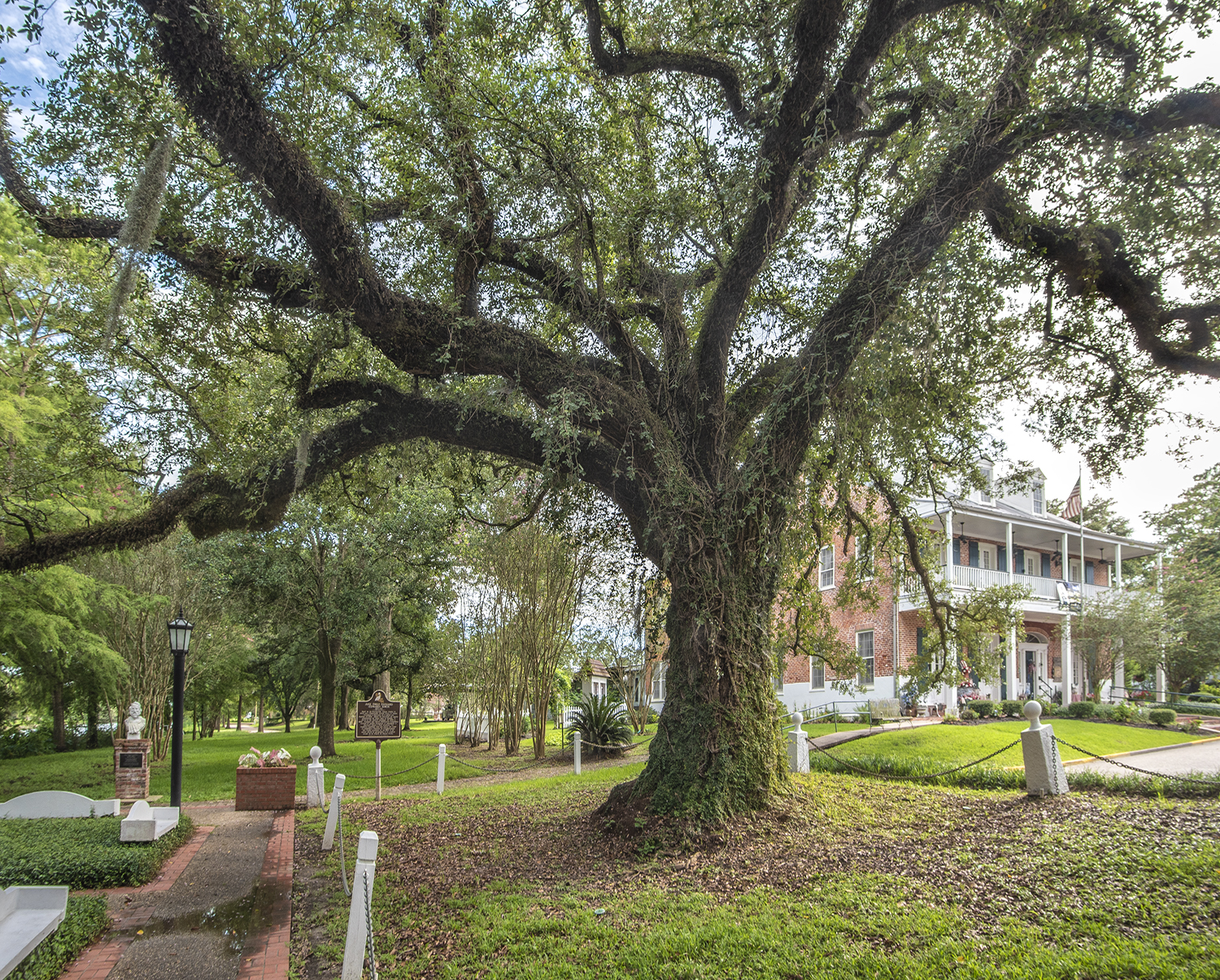
John Hudson Oak, #6350 – 29′-6″ – Prairieville, LA

The John Hudson Oak is located in Prairieville, LA at the Hudson House, a beautiful historic family home that’s been in the Hudson family for several generations. The John Hudson Oak is the largest and most impressive of numerous live oaks on the grounds. It has a lovely sweeping canopy that reaches to the ground on three sides. Mrs. Ellen Hudson Waller says that several other oaks on her property are Live Oak Society members.
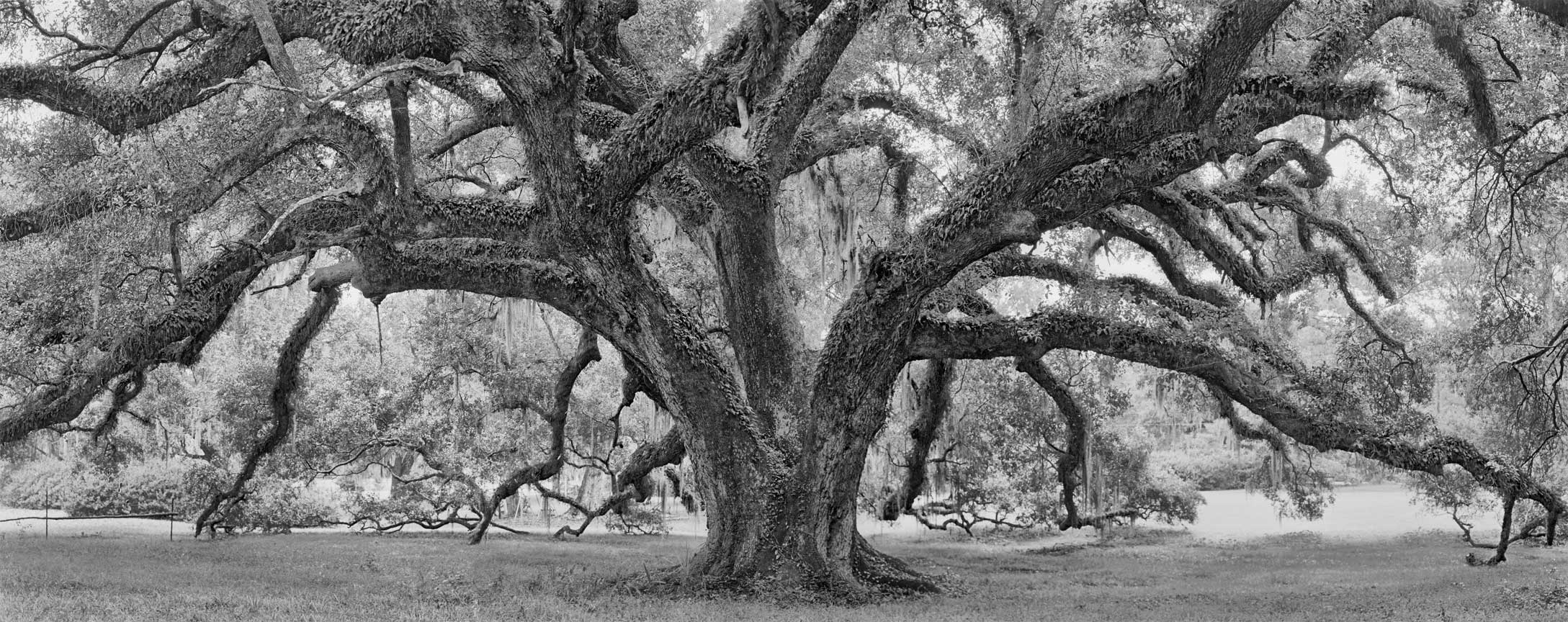
John Hudson Oak, black-and-white study 1

John Hudson Oak, black-and-white study 1

Hudson Oaks; black-and-white infrared study of two other Live Oak Society trees on Hudson property.

The Joseph Romano and Angelle Romano Oaks; Hudson House, Prairieville, LA.

In my next post, I’ll include the rest of the Ascension Parish list of oaks…
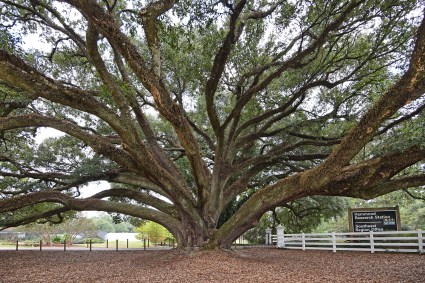
Edna Szymoniak Oak (Hammond) and Lorenzo Dow Oak (Grangeville)

Oaks east of Acadiana
It was while working on the photographs of Trees Acadiana’s top 10 live oaks that I had the inspiration to extend my search from Acadiana to include the largest and oldest live oaks I could locate across Louisiana.

Edna Szymoniak Oak—Number 3 on my 30-something list is the Edna Szymoniak Oak, located at the entrance to the LSU AgCenter Hammond Research Center. Nestled in pine and oak woods about six miles from the city of Hammond, at 21549 Old Covington Highway, the station covers approximately 150 acres of research gardens. It is a beautiful example of a well-cared-for old oak. Its location makes it easy for Research Center visitors to view and it receives the regular protection and care of the AgCenter’s knowledgeable staff.

At 35 ft. 6 inches in circumference, I feel the Edna Szymoniak Oak probably gets far less recognition than it deserves as one of Louisiana’s oldest and largest live oaks. Not much is known about its history prior to the establishment of the Hammond Ag Center, but in this area of the Northshore of Lake Pontchartrain, there are numerous ancient live oaks, including the Seven Sisters Oak in Mandeville. In a recent Times Picayune article of historic live oaks within a short distance of New Orleans, the Edna Oak wasn’t even included.

Edna Szymoniak Oak, 35′-6″; Hammond, LA

The Edna Szymoniak oak is named after the wife of Boleslaus “Bill” Szymoniak, the first superintendent of the research center station. (From their website) “Established in 1922 as the Fruit and Truck Experiment Station, the LSU AgCenter Hammond has traditionally served the strawberry and vegetable industries.

Today, the AgCenter’s focus is landscape horticulture, including plant selection, fertility, weed control and plant growth regulators. Scientists evaluate more than 500 ornamental plants per year and each spring and fall release a list of “Super Plants” that grow well in all parts of Louisiana.

Edna Szymoniak Oak, study #2

Lorenzo Dow Oak—The next oak on my list has an interesting story connected to its name—the Lorenzo Dow Oak, located near Grangeville, LA.

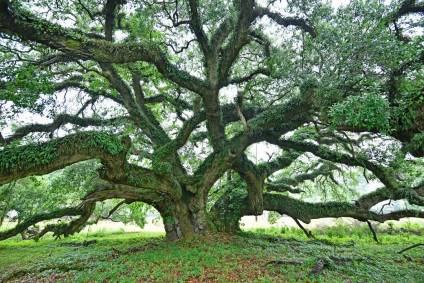
Lorenzo Dow Oak study; 36′-8″; Grangeville, LA

The oak is named after Lorenzo Dow, who (according to Wikipedia) was an eccentric itinerant American preacher who lived between 1777 and 1834. He reportedly preached to more people than any other preacher of his time. Dow traveled widely around the U.S. preaching “against atheism, deism, Calvinism and Universalism.” Though he lived like a pauper, traveling mostly on foot with only the clothes on his back and a box of bibles, Dow was also a successful author. His autobiography was at one time the second most-read book, exceeded only by the bible.

Lorenzo Dow Oak, Masonic Lodge Oak 2 and corner of lodge building.

Dow traveled to this part of the South in 1803–1804 and probably preached in or near the Grangeville area. His dramatic fire-and-brimstone evangelical preaching style (he shouted, screamed, begged, flattered, cried and challenged his listeners and their beliefs) drew crowds wherever he spoke. His wide influence and popularity resulted in many children of this period being named after him as well as this ancient oak.

Lorenzo Dow Oak, black-and-white infrared study.

Because he was often unwelcome in churches, Dow would preach wherever he could—in town halls, farmers’ barns, open fields and possibly even under the overhanging branches of these two old oaks.

Lorenzo Dow Oak in rain

The sprawling and partially overgrown Lorenzo Dow Oak is located on the grounds of the Grangeville Masonic Lodge #231, along with a second neighboring oak that is 27 feet 11 inches in girth.

The lodge is one of the oldest Masonic groups in Louisiana, with a membership that dates back to 1889, and a lodge building that was originally constructed in the 1930s (and is currently being restored).

This oak was especially challenging to find since its location on the Live Oak Society registry was simply “East Feliciana.” Grangeville is actually in St. Helena Parish, a few miles west of Pine Grove in a northeastern corner of Louisiana, east of St. Francisville (though in the early part of the 1900s many people referred to this area of Louisiana as the “Florida Parishes and referred to east and west Feliciana as just the “Felicianas.”  I finally found online snapshots of someone who had visited the Grangeville Masonic Lodge and so wrote a letter to the lodge and finally located the old oak.

NOTE: Though, “northeastern” may not seem accurate to those living around Grangeville, since it is due east of St. Francisville which is in the middle of the state. Grangeville is located in the northeastern corner of the “toe” of Louisiana’s boot shape that sticks into Mississippi and is only a few miles directly south of McComb, MS. Grangeville is positioned where the boot laces would be on the toe of the boot shape.

The Evangeline Oak, St. Martinville

Evangeline_1099Each year, thousands of tourists visit St. Martinville, Louisiana, in search of the roots of Cajun culture—to experience the food, music, and to visit the places associated with the story of Evangeline. The Evangeline oak is undoubtedly the most famous oak in Louisiana, though oddly it’s not a very old or exceptionally large tree. And according to some sources, it’s the third oak in the St. Martinville area that has been designated as the “oak under which the Cajun lovers Emmeline and Louis were reunited” after their long separation when the Acadians were exiled from Canada. (Emmeline and Louis are reported to be the real-life characters upon which Longfellow’s fictitious Evangeline and Gabriel were modeled.)

Evangeline_9458The Evangeline Oak is located on the edge of Bayou Teche at the foot of East Port St., next to the Old Castillo Bed and Breakfast (which I can personally state is very haunted—but that’s another story!).
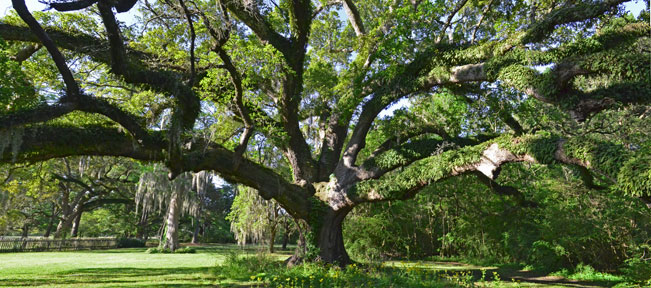
The Gabriel Oak, a lesser known and larger tree, is located in the Longfellow Evangeline State Historic Site, a wonderful historic park well worth visiting, just a mile or so north of St. Martinville on Hwy. 31. The park showcases several historic buildings and gives a broader realistic view of the historic period of the Cajun settlement of Louisiana.

Gabriel Oak, panoramic view

Gabriel Oak, panoramic view

Gabriel Oak, view toward Maison Olivier Creole cottage

Gabriel Oak, view toward Maison Olivier Creole cottage

In the St. Martinville graveyard next to the Catholic Church of St. Martin de Tours, you can find a tomb for Evangeline, topped with a bronze metal statue. The grave bears both the name Evangeline and Emmeline Labiche, but in actuality, the tomb is empty. The statue is modeled after Dolores Del Rio, the Hispanic movie star, who played Evangeline in the 1929 silent movie adapted from Longfellow’s poem. The statue was a gift from the movie cast and crew to the people of St. Martinville after filming was completed.

So what’s true and what’s fiction about the Evangeline story?

The details of this “folk tale” of Evangeline are extracted from two sources—the epic poem by the American poet Henry Wadsworth Longfellow published in 1847, and a subsequent story written in 1907 by Judge Felix Voorheis. The judge, a St. Martinville resident, recounts a story by his grandmother in which she claimed to be the adoptive mother of a girl named Emmeline Labiche. Voorheis claims that it was Emmeline’s life story that Longfellow had heard and reshaped into the poem of Evangeline.

Longfellow’s poem, published under the title, Evangeline, A Tale of Acadie, describes the betrothal of the fictional Cajun girl named Evangeline Bellefontaine and her beloved Gabriel Lajeunesse. The poem recounts their separation when the British forcibly removed the Acadian people from the present-day Canadian provinces of Nova Scotia, New Brunswick, Prince Edward Island and part of the state of Maine—an area also known as Acadie or Acadia.

In Longfellow’s poem, the Acadians were resettled in small numbers in cities across the Eastern seaboard, and Evangeline searches from city to city for her Gabriel. She eventually gives up, settles in Philadelphia, becomes a nun and works at a hospital. Years later, she finally encounters Gabriel again—though he’s now a sick old man. In the poem, he dies in her arms and within a short time, she follows him to the afterlife. In the mid-1800s it was the perfect Romeo and Juliet tale and was hugely popular.

In Judge Voorheis’ account of Emmeline Labiche, the separated lovers reunite not in Philadelphia but in St. Martinville, under a live oak tree whose branches stretched over the dark waters of Bayou Teche. The reunited lovers embrace passionately but then Gabriel (whose actual name was Louis) remembers that he is already married. Eventually, Emmeline (Evangeline) goes insane and dies.

The “Great Expulsion” or Le Grand Derangement (1755–1764) as it was known historically, occurred during the French and Indian War as part of the British military campaign against New France. The British deported approximately 11,500 French Acadians to weaken the resistance to their rule. In the first wave, Acadians were deported to the British colonies (the original 13 colonies of the U.S.). During the second wave, they were deported to Britain and France, from where many migrated to Louisiana. (source: Wikipedia)

A good reference for a more factual history of this area and its settlement by the Acadians can be found at the St. Martinville website.

Bartholomew Barrow Oak, Afton Villa Gardens

8. Afton Villa oakBarrow Oak, near ruins, end of entrance alley

This is another lesser-known old oak and one of my personal favorites. It grows on the grounds of Afton Villa Gardens, in St. Francisville, Louisiana. It is in the 23’ to 24’ circumference range, and was reportedly planted between 1820 and 1839 by Bartholomew Barrow, the first member of the Barrow family to purchase and settle this land. The oak is registered with the Live Oak Society and has a distinctive shape, size and bushy texture formed by the thick resurrection fern growing profusely on its limbs. It’s located in front of the Afton Villa ruins near the end of the ½ mile long alley of oaks leading from Louisiana state Highway 61 to the gardens.

McDonogh Oak, City Park, New Orleans

McDonogh Oak color 2The McDonogh Oak is the largest and oldest oak in New Orleans’ City Park. Along with the Anseman Oak and Suicide Oak, it is part of an ancient oak forest that was possibly hundreds of years old in 1718 when brothers Iberville and Bienville first scouted this area for a portage of bayous connecting the Gulf of Mexico, Lake Pontchartrain, and the Mississippi River. This natural system of waterways was a deciding factor for the brothers’ choice of this location to create the settlement that became New Orleans.
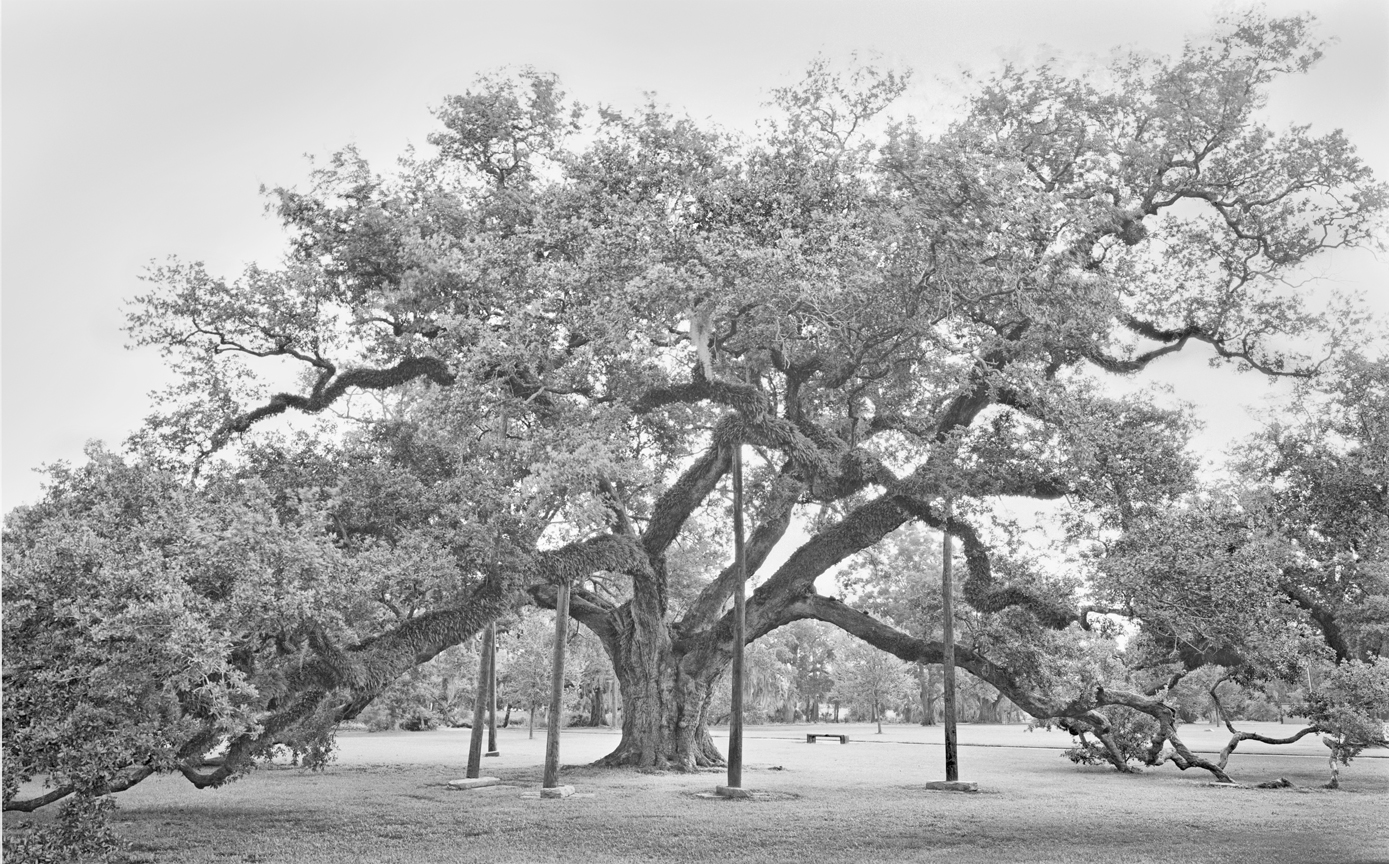
McDonough Oak adjCity Park was once part of the Jean Louis Allard Plantation, originally established in the 1770’s, and later purchased in 1845 by shipping magnate and philanthropist John McDonogh. Upon his death in 1850, McDonogh donated the land to the City of New Orleans and in 1854 a large section was designated as a city park. According to park records, in 1958, the National Park and Recreation Convention met in New Orleans and hosted a breakfast for 1,028 convention attendees under the massive canopy of the McDonogh Oak’s limbs.

In 1981, the ancient oak lost a major branch, causing severe damage. Extensive tree surgery was done and posts were added to help support the remaining main limbs.  In 2015, the McDonogh Oak’s circumference was more than 25 feet, and its crown spread more than 150 feet.