Revisiting the Lorenzo Dow Oak

Lorenzo-Dow_49

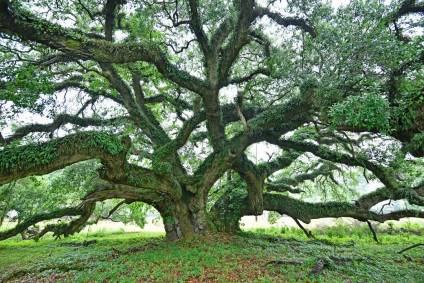
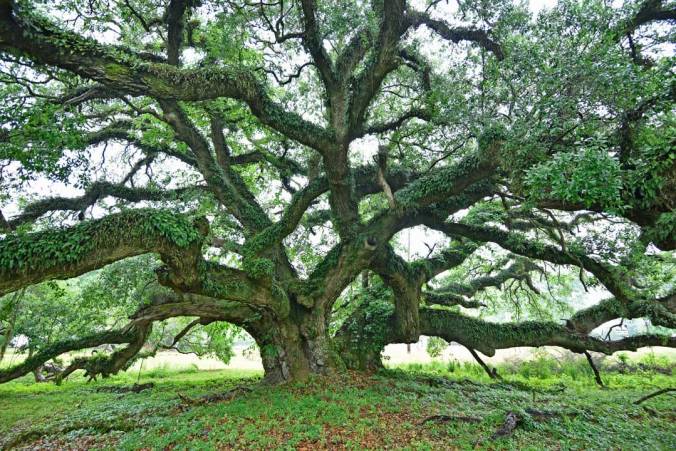
Lorenzo Dow Oak in the rain, Grangeville Masonic Lodge grounds, 35′-8″ girth

Since moving to Bayou Lafourche last December, I regularly consult with the two old oaks in our front yard over photographic work matters. (Cyndi likes to say that I left the corporate world and now I’m employed full-time by the oak trees.) Crazy? Maybe. But the ideas I get when talking to the old oaks are at least as good as those from some of the human supervisors I’ve had over the years.

Last Saturday morning, after checking in with the front-yard oaks and the weather app on my phone, we decided to brave the impending thunderstorms and make a two-hour drive to Grangeville, LA, a postage-stamp-sized town near the Amite River just north and west of Pine Grove. Our objective was to re-photograph the Lorenzo Dow Oak (see my previous blog entry), a 35-foot-plus girth oak located on the grounds of the historic Grangeville Masonic Lodge.
Lorenzo-pano-5

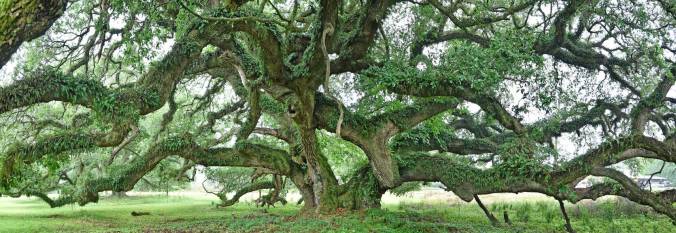
Lorenzo Dow Oak, panoramic view, study 5

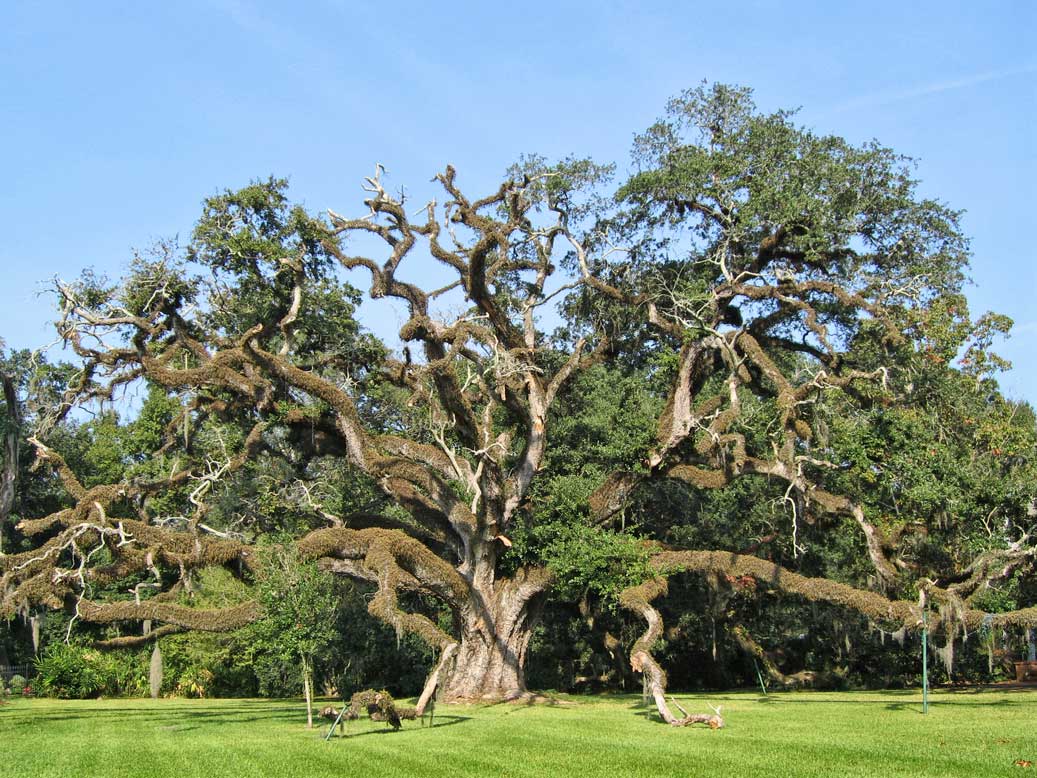
Threatening rain or not, we hit the road and arrived at Grangeville just as the first drops began to fall. I made a flurry of photos, trying to hold my baseball cap over my camera’s wide angle lens to shield it from rain, with a fair amount of success. Since August 2015 when I first photographed the Lorenzo Dow Oak, the Grangeville Masonic Lodge members have cleared away the undergrowth that obscured the trunk and main limbs of the old oak,  revealing the full profile of this huge tree. At 35 ft. 8 in. in girth, this little-known oak is tied with the Randall Oak in New Roads as the second largest and oldest of live oaks in Louisiana.

Lorenzo-IR-panorama-1

Lorenzo Dow Oak, infrared black and white study 1

An interesting side note about this tree that I discovered after my 2015 visit: The Lorenzo Dow Oak was registered tree #261 with the Live Oak Society (LOS). This was probably sometime after 1963, when the LOS became active again after a dormant period of about 16-17 years. Dr. Edwin Lewis Stephens acted as secretary of the Society until his death in November 1938. At that time, his list of member trees included 57 oaks. In 1945, Stanley C. Arthur, executive director of the Louisiana State Museum, assumed responsibility for record keeping, admission of new tree members and continued measurements of tree growth.

In the  Live Oak Society Bulletin, a hand-typed newsletter he produced, Mr. Arthur added another 62 oaks to Dr. Stephens’ registry, including their names, locations, measurements and sponsors. This brought the total of member oaks to 119. In that list, there is an oak named the Dr. E.O. Powers Oak, also located in Grangeville, LA. So, it’s possible the Lorenzo Dow Oak was in the first 119 oaks on the Society registry under a different name and with a different sponsor but was renamed and re-registered 20 years later.

In 1957, the Louisiana Garden Club Federation assumed record keeping responsibility for the Society; and since then the secretary/chairmanship and record keeping responsibilities have passed on continually, slowing adding to the now 8,000-plus roster of senior and junior member live oaks.

Revisiting the Seven Sisters Oak

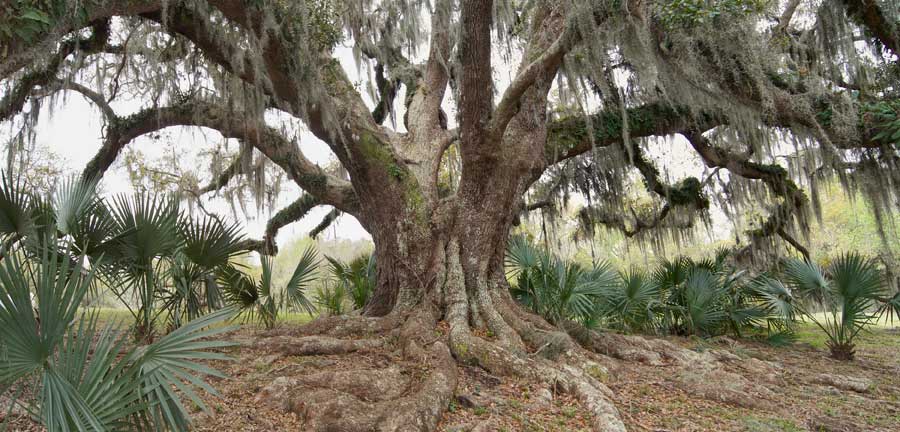
Though I’ve had a couple of other blog posts in the works, I couldn’t leave the 30-something project behind without a nod to the Seven Sisters Oak, the current president of the Live Oak Society and the former national champion live oak tree species in the American Forests’ Big Tree Registry. It’s also top of my 30-something oak list (Louisiana live oaks with a girth of more than 30 feet).

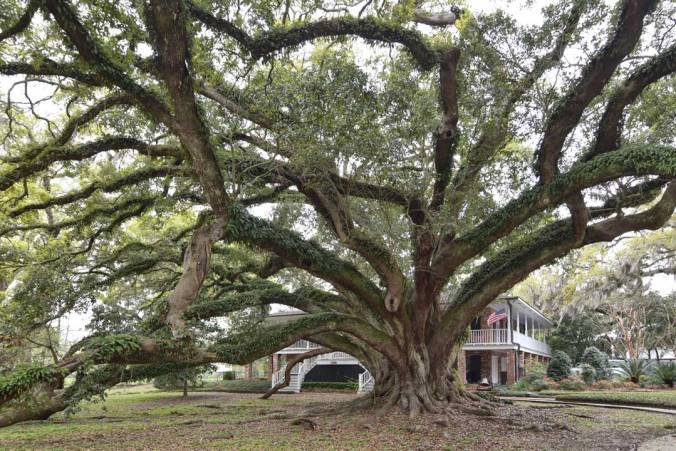
The Seven Sisters Oak – Live Oak Society President and former Champion Tree of the Southern live oak species in American Forest’s Champion Tree List.

Cyndi and I took a drive from Bayou Lafourche to the north shore of Lake Pontchartrain recently to revisit the Seven Sisters Oak, to make some new photographs for the blog and say hello to an old friend.  The sky was overcast, making it possible a good day to photograph in the shadows of a towering old oak.  The recent rains had turned the resurrection fern a lush bright green. (We also made a stop in Ponchatoula to stock up on local strawberries and visit a couple of other local oaks including the Abbot Paul Schaueble Oak.

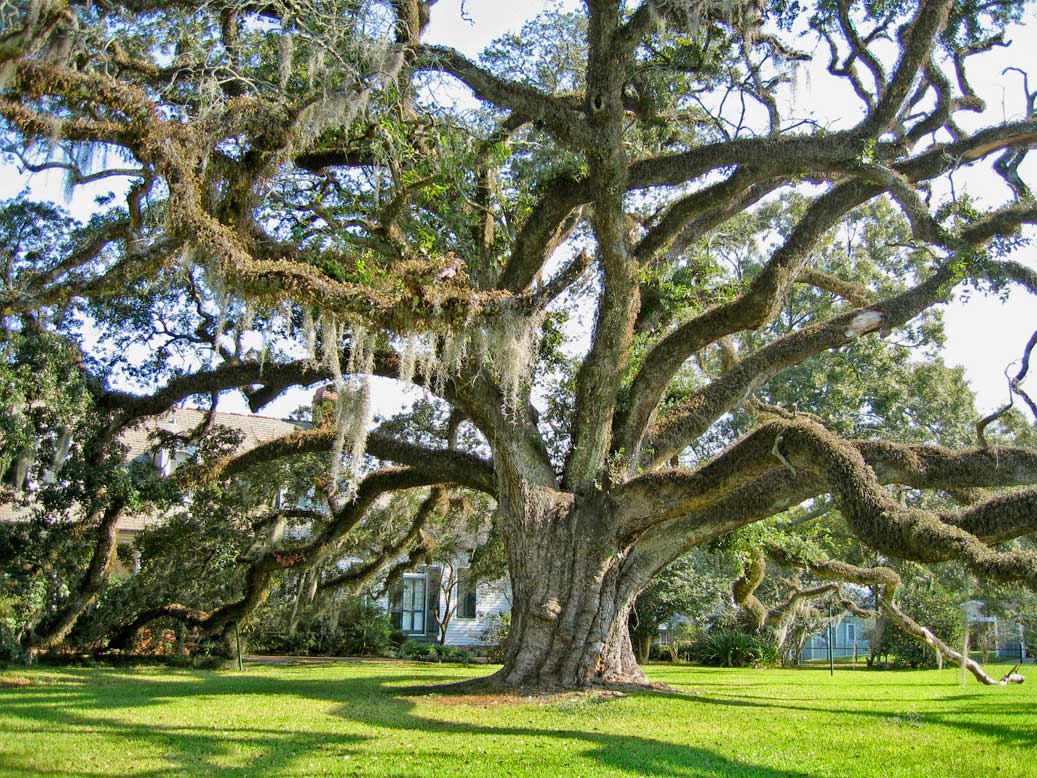
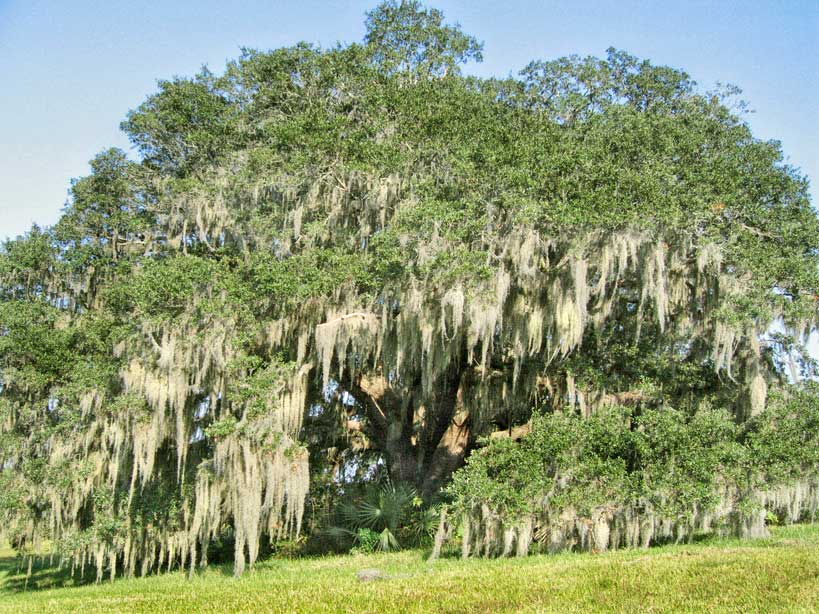
While visiting the tree, we met the current owners, John and Mary Jane Becker. They were welcoming and informative about their term as caretakers of this massive oak (almost 40 feet in circumference).  The Seven Sister’s Oak shades much of the front yard of the Becker’s home in the historic neighborhood of Lewisburg, near the edge of Lake Pontchartrain, in Mandeville.  Mrs. Becker remarked how the old oak was wearing an abundance of new celery green flowers (catkins) when we visited, one indication that the centuries-old tree is still healthy and vital.  She also said that last year the oak produced a bumper crop of acorns.

7-sisters-oak-study-10

Seven Sisters Oak, view toward the Becker’s home.

If you missed our previous blog post on the Seven Sisters, I’ll recap some of its known history (though what we know about the oak dates back less than 100 years and some estimates of the tree’s age put it to between 600 and 1,000 years old).

The Seven Sisters Oak is actually the second live oak to take the status of President of the Live Oak Society.  It replaced the Society’s first president, the Locke Breaux Oak, after its death from air and water pollution (see my previous posts about the Locke Breaux Oak for details).

For years, the eligibility of the Seven Sisters Oak as a society member tree was disputed.  It was argued to be several separate trees growing together rather than a single tree. Then in 1976, after inspection by federal foresters, the multiple tree trunks were found to have a single root system.  It was accepted into the Society—registered (#200)—and in time, was appointed the new Society President, based on its girth, limb spread, and height.

(A short sidebar.  From other sources, I see this is an ongoing argument among tree-measuring folks—whether the circumference of a multi-trunk oak can be compared equally to a single-trunk tree. I take a neutral position on this topic. To me, they’re all very old oaks, and as such deserve to be considered as cultural, historic, and environmental treasures, regardless of the shape or number of trunks.)

7-sisters-study-1

The oak tree’s first sponsor was the Doby family who owned the property on which the tree is located at that time (the 1930s). Mrs. Carole Hendry Doby was one of seven sisters in her family and the tree was named originally named “Doby’s Seven Sisters.” The oak was re-registered (#697) by its next owners, Mr. and Mrs. Milton Seiler.  The Seiler’s renamed the tree simply “The Seven Sisters.”

7-sisters-study-8

Seven Sisters Oak, view from outside of the oak’s canopy, showing new green catkins.

According to the American Forests’ Big Tree Registry, the Seven Sisters Oak had a crown spread of 139 feet, a circumference of 467 inches (approximately thirty-nine feet) and a height of sixty-eight feet when it was last officially measured. Its age has been estimated to be somewhere between 500 and 1200 years old. My most recent measurement (in 2019) puts the circumference closer to 479 inches or 39 feet 11 inches.

Edna Szymoniak Oak (Hammond) and Lorenzo Dow Oak (Grangeville)

Oaks east of Acadiana
It was while working on the photographs of Trees Acadiana’s top 10 live oaks that I had the inspiration to extend my search from Acadiana to include the largest and oldest live oaks I could locate across Louisiana.

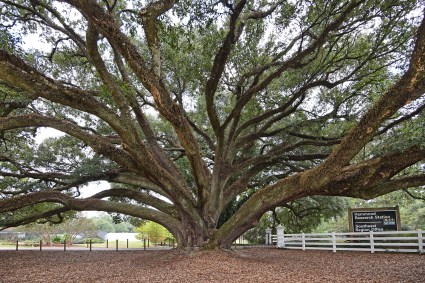
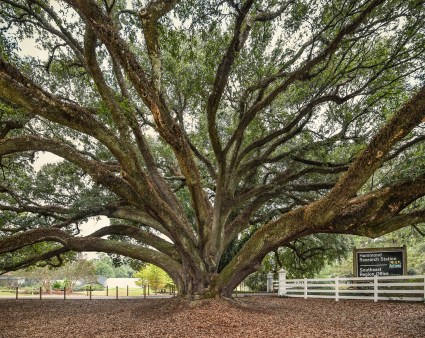
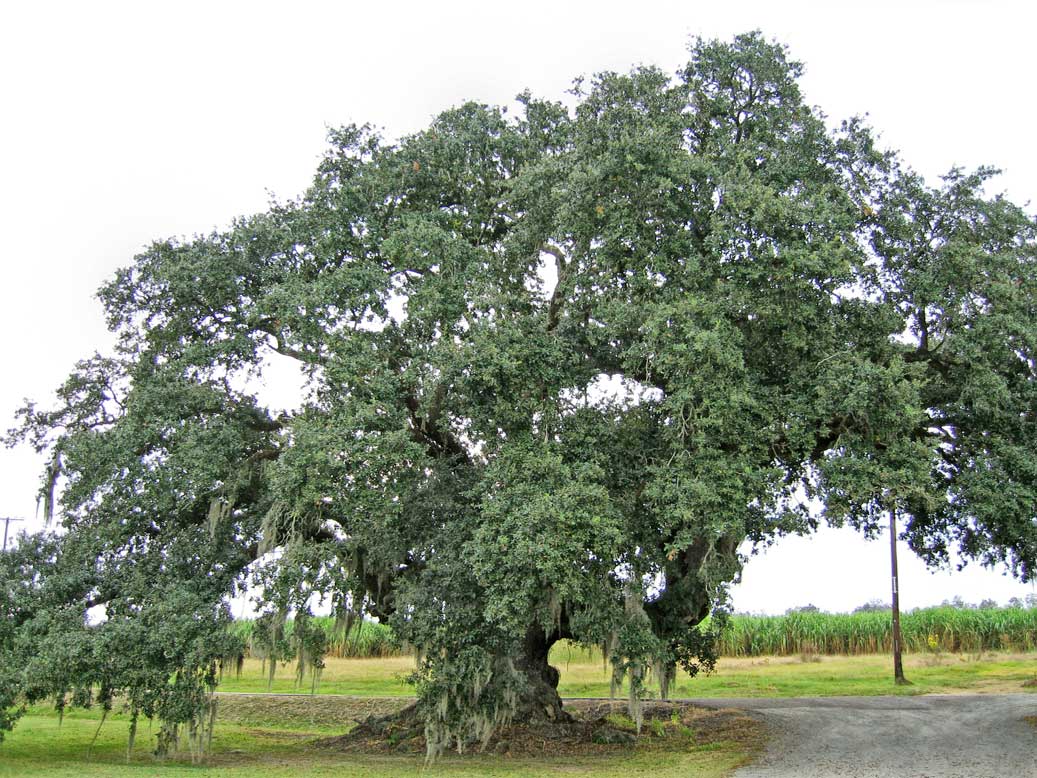
Edna Szymoniak Oak—Number 3 on my 30-something list is the Edna Szymoniak Oak, located at the entrance to the LSU AgCenter Hammond Research Center. Nestled in pine and oak woods about six miles from the city of Hammond, at 21549 Old Covington Highway, the station covers approximately 150 acres of research gardens. It is a beautiful example of a well-cared-for old oak. Its location makes it easy for Research Center visitors to view and it receives the regular protection and care of the AgCenter’s knowledgeable staff.

At 35 ft. 6 inches in circumference, I feel the Edna Szymoniak Oak probably gets far less recognition than it deserves as one of Louisiana’s oldest and largest live oaks. Not much is known about its history prior to the establishment of the Hammond Ag Center, but in this area of the Northshore of Lake Pontchartrain, there are numerous ancient live oaks, including the Seven Sisters Oak in Mandeville. In a recent Times Picayune article of historic live oaks within a short distance of New Orleans, the Edna Oak wasn’t even included.

Edna Szymoniak Oak, 35′-6″; Hammond, LA

The Edna Szymoniak oak is named after the wife of Boleslaus “Bill” Szymoniak, the first superintendent of the research center station. (From their website) “Established in 1922 as the Fruit and Truck Experiment Station, the LSU AgCenter Hammond has traditionally served the strawberry and vegetable industries.

Today, the AgCenter’s focus is landscape horticulture, including plant selection, fertility, weed control and plant growth regulators. Scientists evaluate more than 500 ornamental plants per year and each spring and fall release a list of “Super Plants” that grow well in all parts of Louisiana.

Edna Szymoniak Oak, study #2

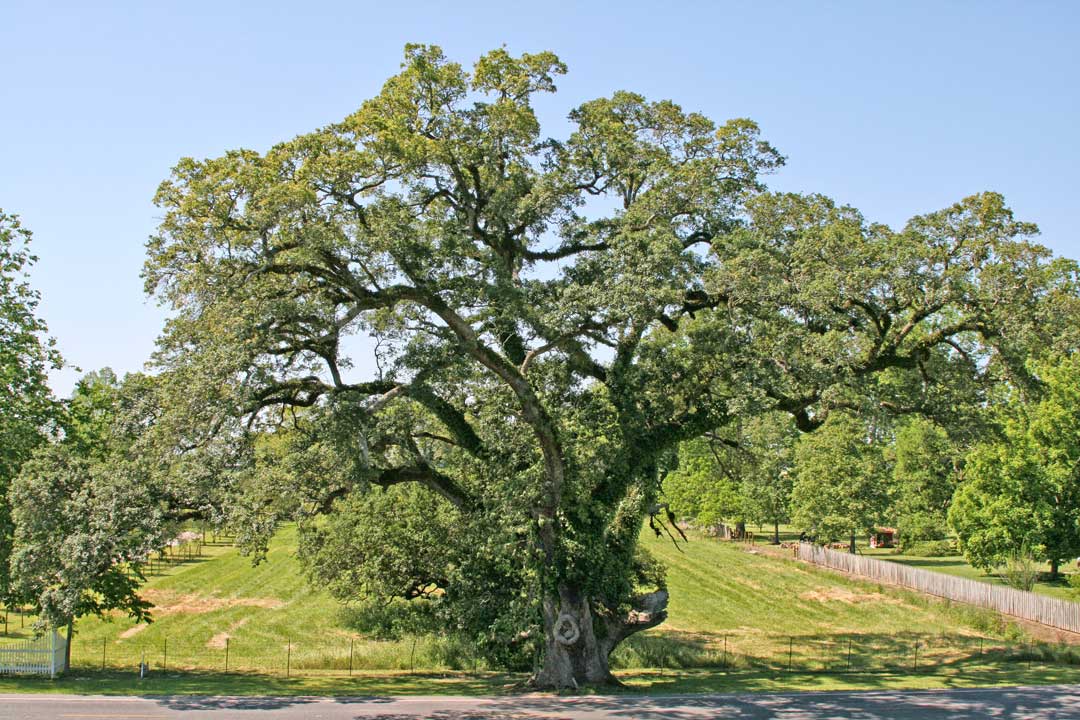
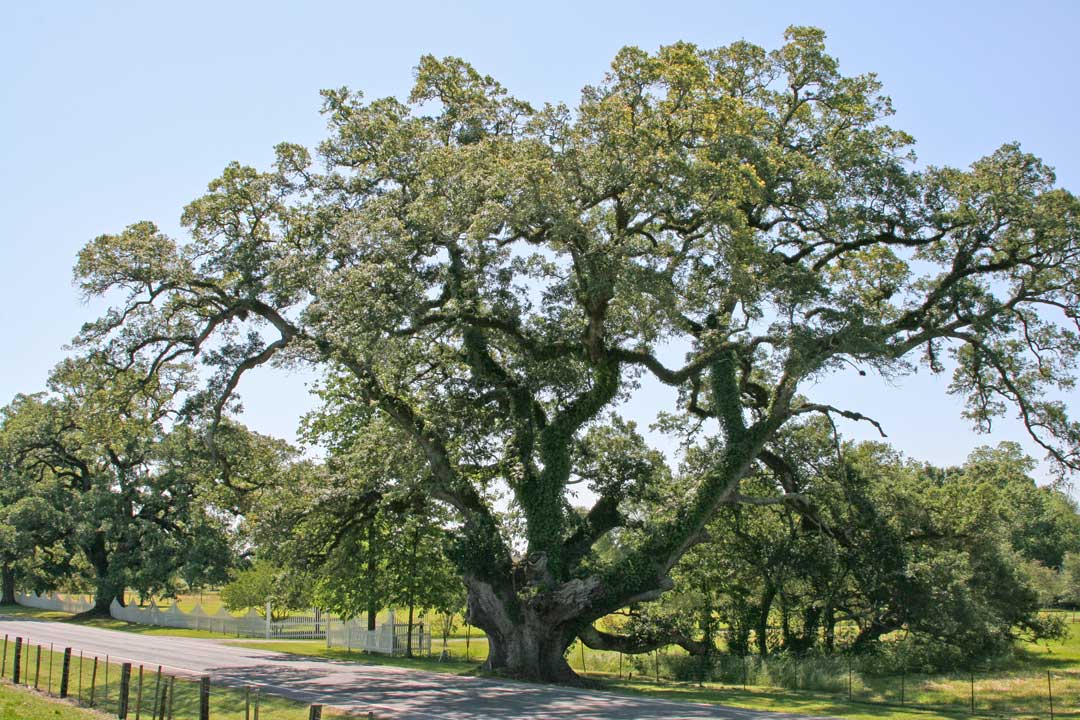
Lorenzo Dow Oak—The next oak on my list has an interesting story connected to its name—the Lorenzo Dow Oak, located near Grangeville, LA.

Lorenzo Dow Oak study; 36′-8″; Grangeville, LA

The oak is named after Lorenzo Dow, who (according to Wikipedia) was an eccentric itinerant American preacher who lived between 1777 and 1834. He reportedly preached to more people than any other preacher of his time. Dow traveled widely around the U.S. preaching “against atheism, deism, Calvinism and Universalism.” Though he lived like a pauper, traveling mostly on foot with only the clothes on his back and a box of bibles, Dow was also a successful author. His autobiography was at one time the second most-read book, exceeded only by the bible.

Lorenzo Dow Oak, Masonic Lodge Oak 2 and corner of lodge building.

Dow traveled to this part of the South in 1803–1804 and probably preached in or near the Grangeville area. His dramatic fire-and-brimstone evangelical preaching style (he shouted, screamed, begged, flattered, cried and challenged his listeners and their beliefs) drew crowds wherever he spoke. His wide influence and popularity resulted in many children of this period being named after him as well as this ancient oak.

Lorenzo Dow Oak, black-and-white infrared study.

Because he was often unwelcome in churches, Dow would preach wherever he could—in town halls, farmers’ barns, open fields and possibly even under the overhanging branches of these two old oaks.

Lorenzo Dow Oak in rain

The sprawling and partially overgrown Lorenzo Dow Oak is located on the grounds of the Grangeville Masonic Lodge #231, along with a second neighboring oak that is 27 feet 11 inches in girth.

The lodge is one of the oldest Masonic groups in Louisiana, with a membership that dates back to 1889, and a lodge building that was originally constructed in the 1930s (and is currently being restored).

This oak was especially challenging to find since its location on the Live Oak Society registry was simply “East Feliciana.” Grangeville is actually in St. Helena Parish, a few miles west of Pine Grove in a northeastern corner of Louisiana, east of St. Francisville (though in the early part of the 1900s many people referred to this area of Louisiana as the “Florida Parishes and referred to east and west Feliciana as just the “Felicianas.”  I finally found online snapshots of someone who had visited the Grangeville Masonic Lodge and so wrote a letter to the lodge and finally located the old oak.

NOTE: Though, “northeastern” may not seem accurate to those living around Grangeville, since it is due east of St. Francisville which is in the middle of the state. Grangeville is located in the northeastern corner of the “toe” of Louisiana’s boot shape that sticks into Mississippi and is only a few miles directly south of McComb, MS. Grangeville is positioned where the boot laces would be on the toe of the boot shape.

The Live Oak Society—the original 43 member trees

The first 43
I recently received copies of two articles written by Dr. Edwin Lewis Stephens (founder of the Live Oak Society) for the Louisiana Conservation Review (a discontinued publication of the Louisiana Department of Conservation). Many thanks to Dr. Bruce Turner and Jane Vidrine of the Special Collections Division at the Edith Garland Dupré Library at the University of Louisiana, Lafayette for their help in getting copies of these articles. (They are posted under the “Pages” heading in the right table of contents column of the blog. When the page opens just click on the title and it will open a photocopy of the original article.)

The first article titled, “I Saw In Louisiana a Live Oak Growing,” contains the original proposal by Dr. Stephens to establish an organization comprised entirely of live oak trees that were 100 years of age or older (now called The Live Oak Society). The article’s title is borrowed from a Walt Whitman poem of the same name. This article, dated April 1934, marks the founding of the Live Oak Society in Louisiana and the South.

Stonaker Oak, New Roads vicinity (29' 6

Stonaker Oak or St. Maurice Oak, New Roads vicinity (29′ 6″) #16 of 43

Stonaker-Oak-#1

Stonaker Oak, view #2

The second article is titled “The Live Oak Society.” In it, Dr. Stephens discusses the reactions and comments he received from his previous article and recommendation to form the Live Oak Society.

Stephens’ appreciation for live oaks grew over many years of living in Louisiana and from frequent motor trips he took with his wife along the back roads and byways through Cajun country. Influenced by his background as a science teacher, he observed, measured, photographed, and collected data on the oaks, taking special interest in the oldest and largest of the species.

Parks Oak #1; 25+ feet (#10 of 43)

From his perspective as a scholar and poet, he recognized the deeper truth of this Southern icon—that more than any other aspect of the landscape, the live oak symbolically reflects the most memorable and distinctive characteristics of the cultures and people that settled this rich alluvial region: strength of character, forbearance, longevity, and a hearty nature.

Stephens wrote, “To my mind the live oak is the noblest of all our trees, the most to be admired for its beauty, most to be praised for it strength, most to be respected for its majesty, dignity and grandeur, most to be cherished and venerated for its age and character, and most to be loved with gratitude for its beneficence of shade for all the generations of man dwelling within its vicinity.

…I suggest that the members of the Association shall consist of trees whose age is not less than a hundred years. I at present number among my personal acquaintance forty-three such live oaks in Louisiana, eligible to qualify for charter membership.” Seventy-four years later, the Live Oak Society counts more than 7,000 member oaks on its registry in 14 states (and now includes Junior League trees with a girth of at least eight feet).

Gebert-Oak-#3

Gebert Oak, study 3, #43 of original 43 inductee oaks

Gebert_Oak#1

Gebert Oak, study 1, New Iberia, LA

In 2008, I wrote an article for the American Forests magazine in which I attempted to locate and photograph as many of the original Live Oak Society inductees as I could locate. Using Dr. Stephens’’ 74-year-old article as a guide, I began retracing his drives across South Louisiana, along bayous with names like Teche, Lafourche, Maringouin, Grosse Tete, and Terrebonne—French and native American names that evoke romantic images of moss-draped trees, Cajun fisherman in flatboats, sultry heat, and white-columned plantation homes. Dr. Stephens listed the 43 charter oaks in order of their size—large to less large—noting their circumference, name (usually that of a sponsor), and general location.

Avery Island Oak number 2; 24' 1" (#21 of 43)

Avery Island Oak number 2; 24′ 1″ (#21 of 43)

I quickly realized that I was naïve about the degree of change that can occur in a landscape over 74 years. Plantation homes have faded away, changed names, been parceled off and subdivided, or simply torn down. Properties have changed owners and entire families have died or moved away.

Avery Island Oak number 2; 24' 1" (#21 of 43)

Avery Island Oak number 2; 24′ 1″ (#21 of 43)

In some cases, oaks have been registered more than once, and by different owners, adding to the confusion between Dr. Stephens description of a tree’s location and the current landscape. Some oak names were familiar to a few locals and were not particularly difficult to find. Others required extensive research through libraries, the Internet, books and the kind assistance of many local librarians, chambers of commerce, sheriff’s deputies and Louisiana Garden Club members across the state.

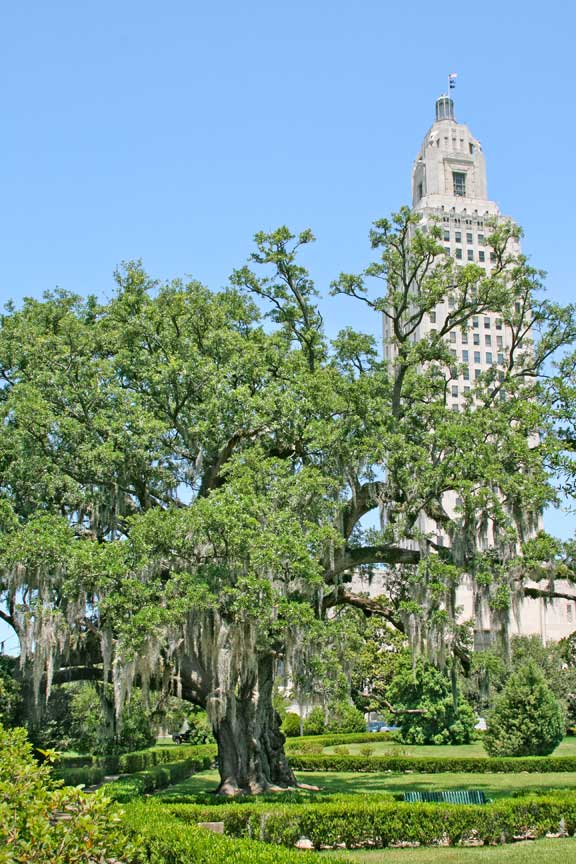
Thomas Boyd Oak and state capital; 20' 6" (#38 of 43) tree fell down in Hurricane Gustave and has been removed.

Thomas Boyd Oak and state capital; 20′ 6″ (#38 of 43) the tree fell down in Hurricane Gustave and has been removed.

I confirmed that in just 74 years four of the inductees had died including the top three. I suspected that six more were deceased possibly due to urban growth and development (a total of 14%). Of the original 43, I found nineteen oaks (45%) alive and well. I was unable to locate or accurately confirm the identity of fourteen more (but suspect they are still alive).

Since 2008 when I wrote the American Forests article, I continued my search for the rest of the 43 whenever I’m photographing in an area where they were located.  At some point soon, I will publish an update that will include any other of the original inductees I have been able to accurately identify and document.