For this brief owner’s guide to live oak care, I consulted with two professional arborists: horticulturist, arborist, and instructor, Jim Foret, who has extensive experience with old live oaks in the New Iberia area and teaches at the University of Louisiana at Lafayette; and Bob Thibodaux of Bob’s Tree Preservation in Church Point and Scott, LA. I asked them to address the importance of this distinctive tree species for Louisiana and to focus on its proper care and conservation. I’ve distilled their guidance into the following principles for live oak owners and caretakers.
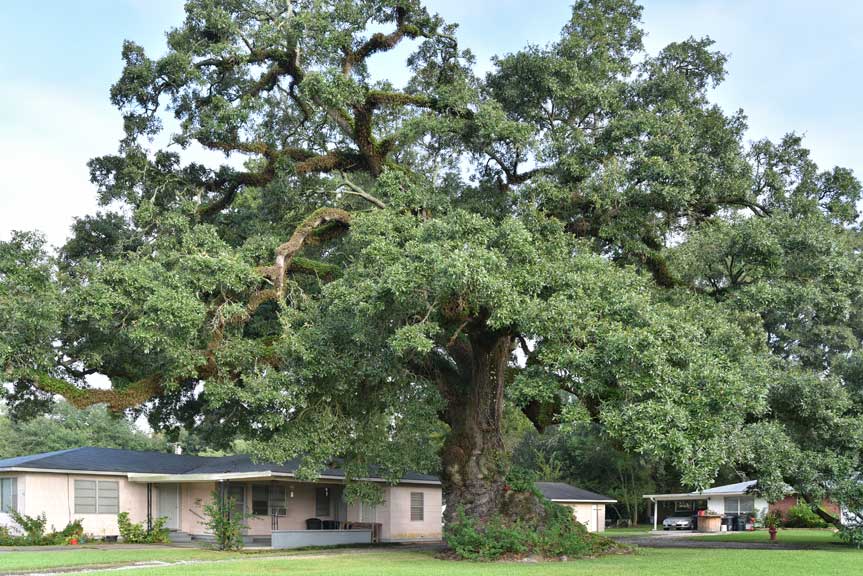
 Roots and soil—It takes room to grow a healthy tree, so don’t crowd your oak. Few people grasp just how large the functioning root system of a live oak really is—your oak’s roots do not stop at the end of its branches but generally extend one-and-a-half to two times the full spread of its crown.
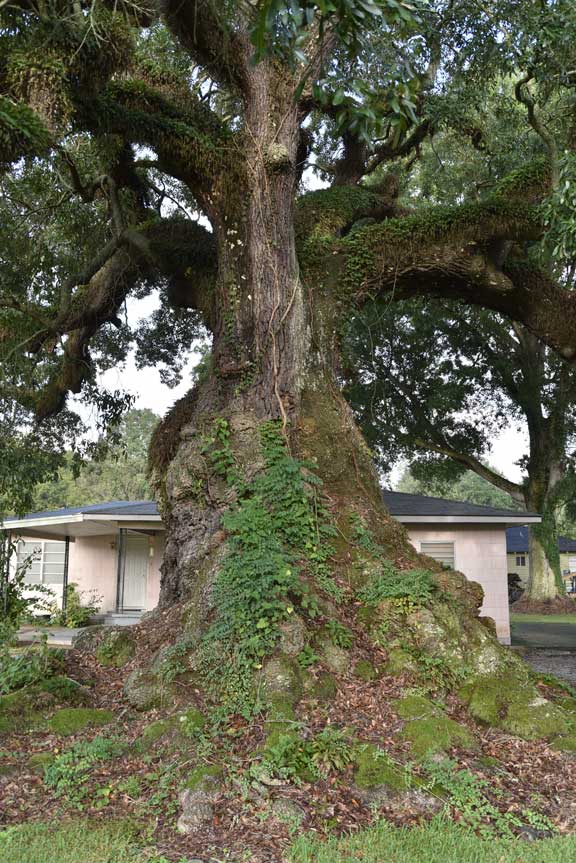
Healthy root zone—Caring for your oak tree begins with creating the best conditions for a healthy root zone and lower trunk. Every square foot of undisturbed, uncompacted soil in an oak’s root zone is GOLDEN to the health of the tree. Caring for the “lower trunk” means keeping the above-ground root flare clear of leaves and soil that can eventually accumulate and weaken the root system.
Don’t fertilize and don’t use weed killers—Live oaks rarely, if ever, need any kind of fertilizer. What they do need is healthy soil. Using weed killers like Roundup or similar products kills more than weeds. These dangerous chemicals kill the fungi and microorganisms living in the soil that help the tree roots absorb and process nutrients and water. If you’re going to give the tree anything, add “mycorrhizal fungi” to the soil in the oak’s root zone. Mycorrhizae are nature’s root boosters, tiny fungi that work to help the tree roots absorb more moisture and nutrients.
Oaks don’t like soggy or compacted soil. They may tolerate it for a short time, but these two conditions block oxygen in the soil that an oak needs to thrive, and compacted soil makes it harder for oak roots to breathe and grow. Over time, these conditions can literally smother a tree. Don’t park automobiles or other heavy equipment under your oak. The weight will seriously compact the soil and kill vital root structures near the surface. And please, don’t slice large above-ground roots when mowing grass around your oak. This injures the root system and the wounds open the tree to infection and disease.
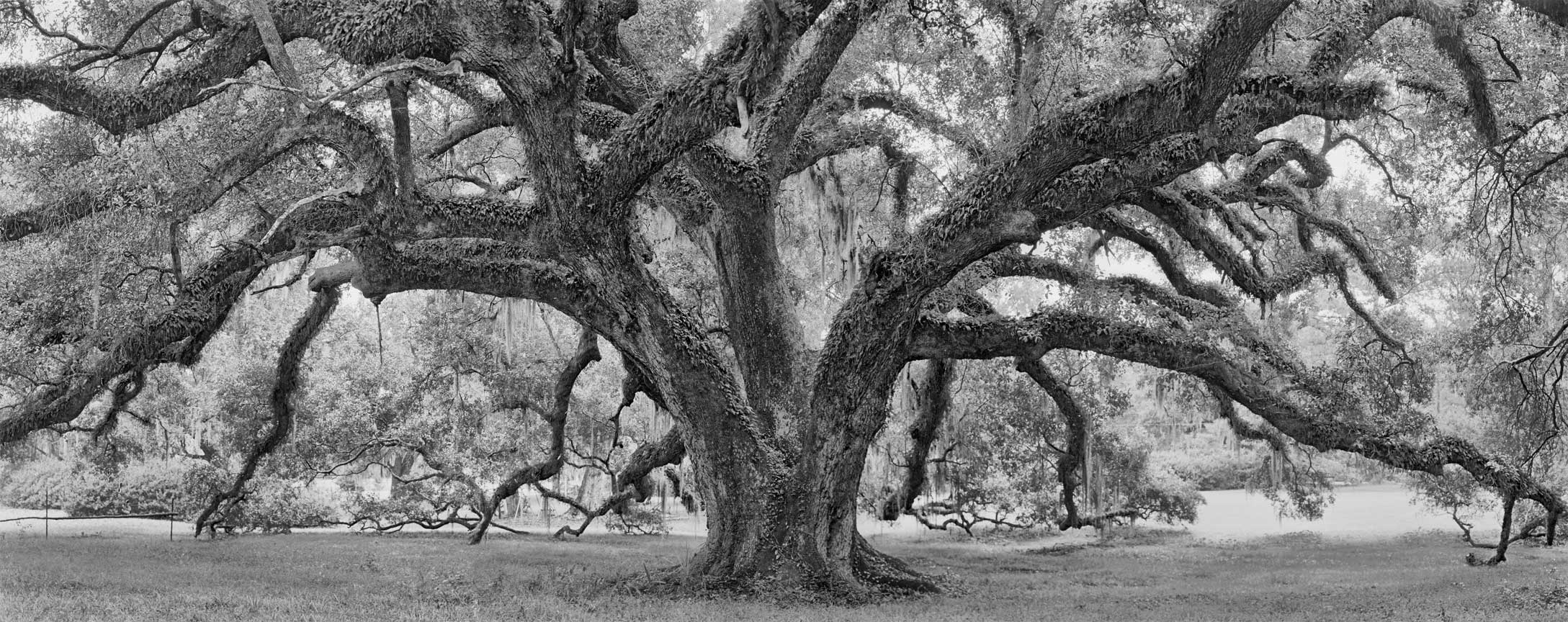
Balance—Live oaks are amazingly strong, within certain limits. The Creator designed them to grow in forests but people have stripped the forests. Today they are living along city streets, crowded between sidewalks and street paving, or they grow in groves where they can spread much wider, with multiple major limbs. You’ll also find them alone in fields of sugarcane, where they’re subjected to a variety of toxic fertilizers, weed killers, and other harmful chemicals. As a live oak grows, its long-spreading branches can become massive and sometimes can create an unbalanced, poorly rooted trunk structure.
Pruning—A balanced shape can improve an oak’s life span. Prune oak limbs (ideally when they’re young) to avoid imbalance, lopsidedness, and excessive limb length and weight that might literally pull the tree apart or uproot it as it grows. Prune dead wood seasonally, ideally during the dormant winter months when the oak is less active, NOT during the summer when untrained tree trimmers like to scout neighborhoods looking to make a quick profit from needless over-trimming of your oaks. Remember, never remove more than 10 to 15 percent of branch growth a year to prevent over-stressing and weakening your tree.
Leave the leaves on the tree—Your oak’s leaves, as with other plants, convert light (radiant energy) to chemical energy. Every leaf is important and necessary to your oak’s vitality. Leaves on the outside of the canopy are designed to absorb bright direct sunlight, while leaves growing inside the oak’s canopy are designed to extract the most energy from filtered light. Both types of leaves are crucial for your oak’s health. So prune carefully and cautiously and leave the healthy limbs and leaves on your tree.
Inspect your oak regularly—Look for signs of stress, bark lifting off in places, leaves dropping out of season, and crotches where limbs branch apart and might create pockets that can collect leaves and water that will eventually rot and weaken the joint.
If you’re fortunate enough to live in the company of live oaks, your life is blessed. And if you don’t live near a live oak, I strongly urge you to plant one, or maybe two or three.



 100 Oaks Project