The Stonaker Oak was #18 on Dr. Edwin Stephens list of the first 43 inductee trees in the Live Oak Society in 1934. It’s an old oak with lots of stories. It was named for J.S. Stonaker who in 1934 owned the property on which the old tree was growing. The photo below was made by Dr. Stephens and is from the University of Lafayette archives, probably around 1930-1935.
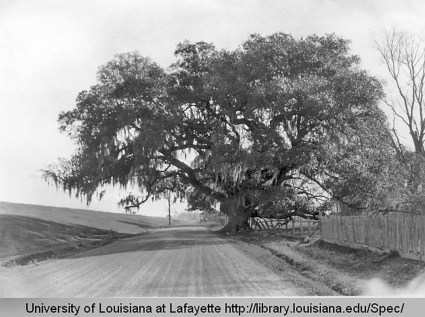
Yet, for years prior to 1934, the old oak was known locally as the St. Maurice Oak. The Labatut brothers, whose family has lived next to the old oak since the early 1800s, still call the old tree the St. Maurice Oak.

This has always puzzled me. So, where did the St. Maurice name come from? A topographical map of Pointe Coupee Parish shows a small Island, or “towhead,” named the St. Maurice Towhead, located directly offshore from the spot where the St. Maurice/Stonaker Oak grows. Thus, the St. Maurice Oak. But, from where did the Towhead name originate? It’s a mystery.
According to a 1932 article from the Louisiana Conservation News magazine, when the oak was measured by Stanley C. Arthur in September 1929, the tree’s girth was 22 ft. 4 in.; The canopy from north to south was 157 ft, and the east to west spread was 166 ft. 4 in. However, before the large limb was removed that hung over the road alongside the oak, its spread was 217 ft.

In the previously mentioned Louisiana Conservation News magazine, there was a curious story about naturalist and artist, John James Audubon and the St. Maurice Oak. Audubon was hired in 1821 by Mr. and Mrs. James Pirrie, owners of Oakley Plantation, on the east bank of the river near St. Francisville, to teach their daughter Eliza to draw. It was during his time as tutor for Eliza that he became especially interested in drawing and painting birds.
According to the Audubon State Historic Site, while at Oakley “Audubon began work on at least thirty-two of his famed paintings of wild North American birds. He supposedly crossed the river frequently via the Bayou Sara ferry to hunt birds on the Pointe Coupee-side of the river. The Point Coupee ferry landing was located about a mile downriver from the St. Maurice Oak, and Audubon was a welcome guest at the Labatut home (located still just a few hundred feet upriver from the old oak). According to the Louisiana Conservation News article, Audubon “undoubtedly sheltered under the St. Maurice Oak on hot days,” and was fond of the old tree and its wide-spreading branches.
So, was the St. Maurice Oak, Audubon’s favorite live oak? It’s possible…

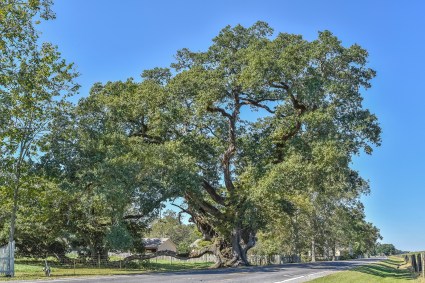

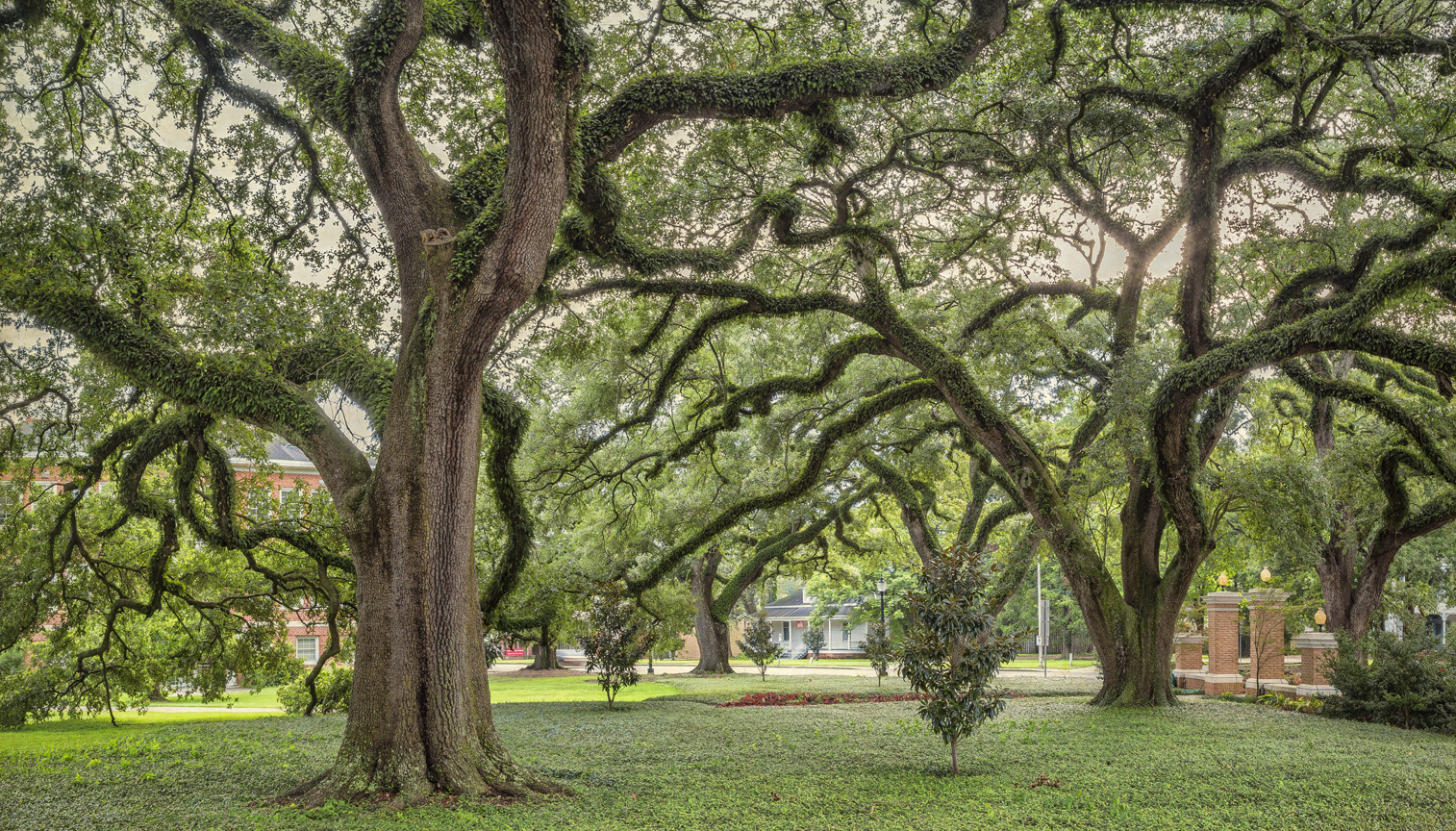 On New Year’s Day 1901, Dr. Edwin Stephens, the first president of Southwestern Louisiana Institute (now the University of Louisiana at Lafayette), planted 18 young live oak trees near the campus entrance, at the intersection of Johnston Street and University Avenue. Stephens named them the Twentieth Century Oaks since they were planted in the first year of the new century.
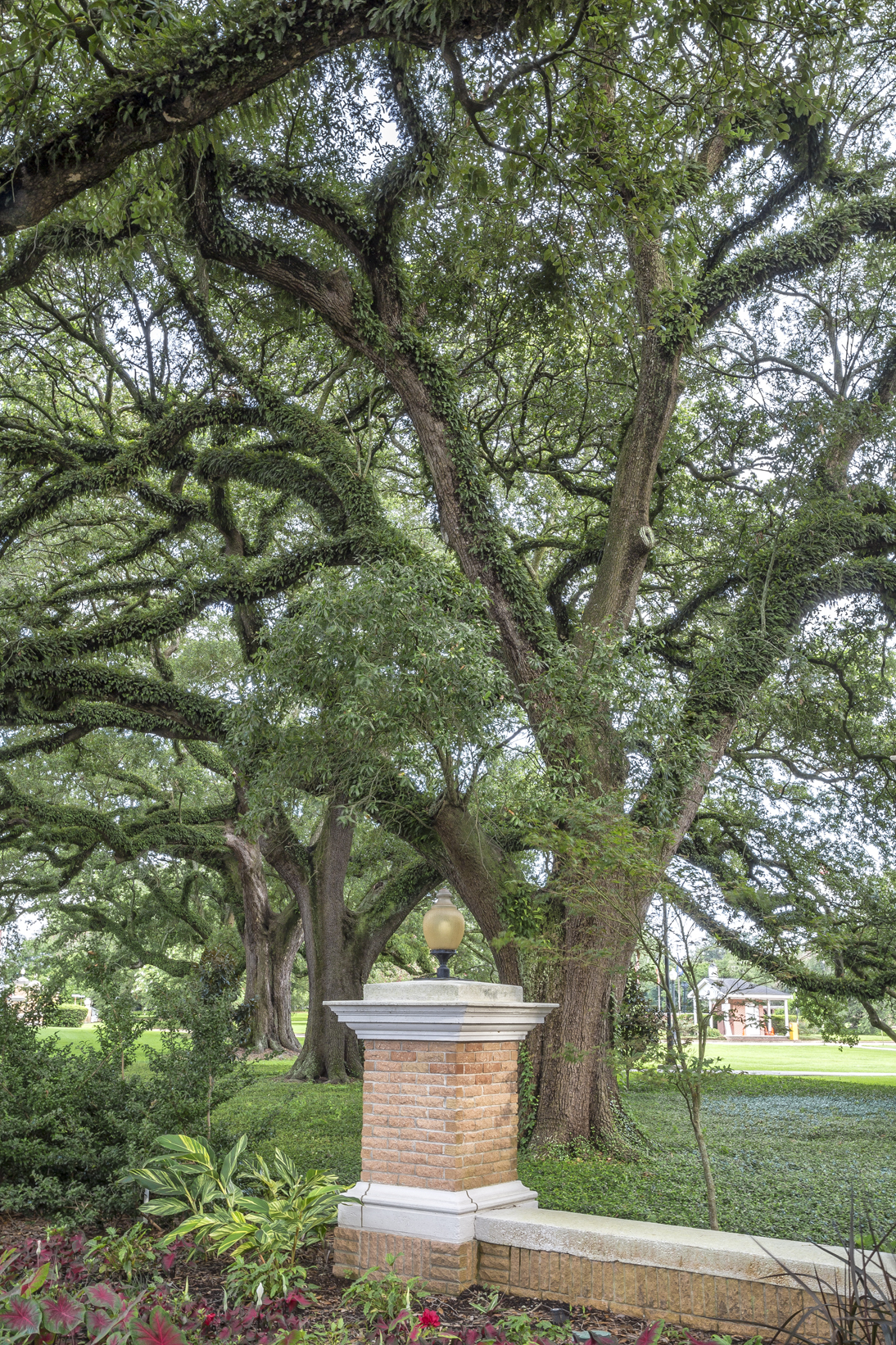 In 1934, Stephens authored an article for the Louisiana Conservation Review that launched the Live Oak Society – a unique organization whose members are all live oak trees. The society’s goal was to promote the appreciation and conservation of senior members of the live oak species (Quercus virginiana)
 In 2014, a life-sized bronze statue of Dr. Stephens was erected near the Century Oaks and Girard Hall in honor of his 38-year tenure as president and his legacy as the founder of the Live Oak Society. The statue, standing more than six feet tall holds an acorn in its right hand, symbolic of Stephens’ connection to Louisiana’s iconic live oaks.


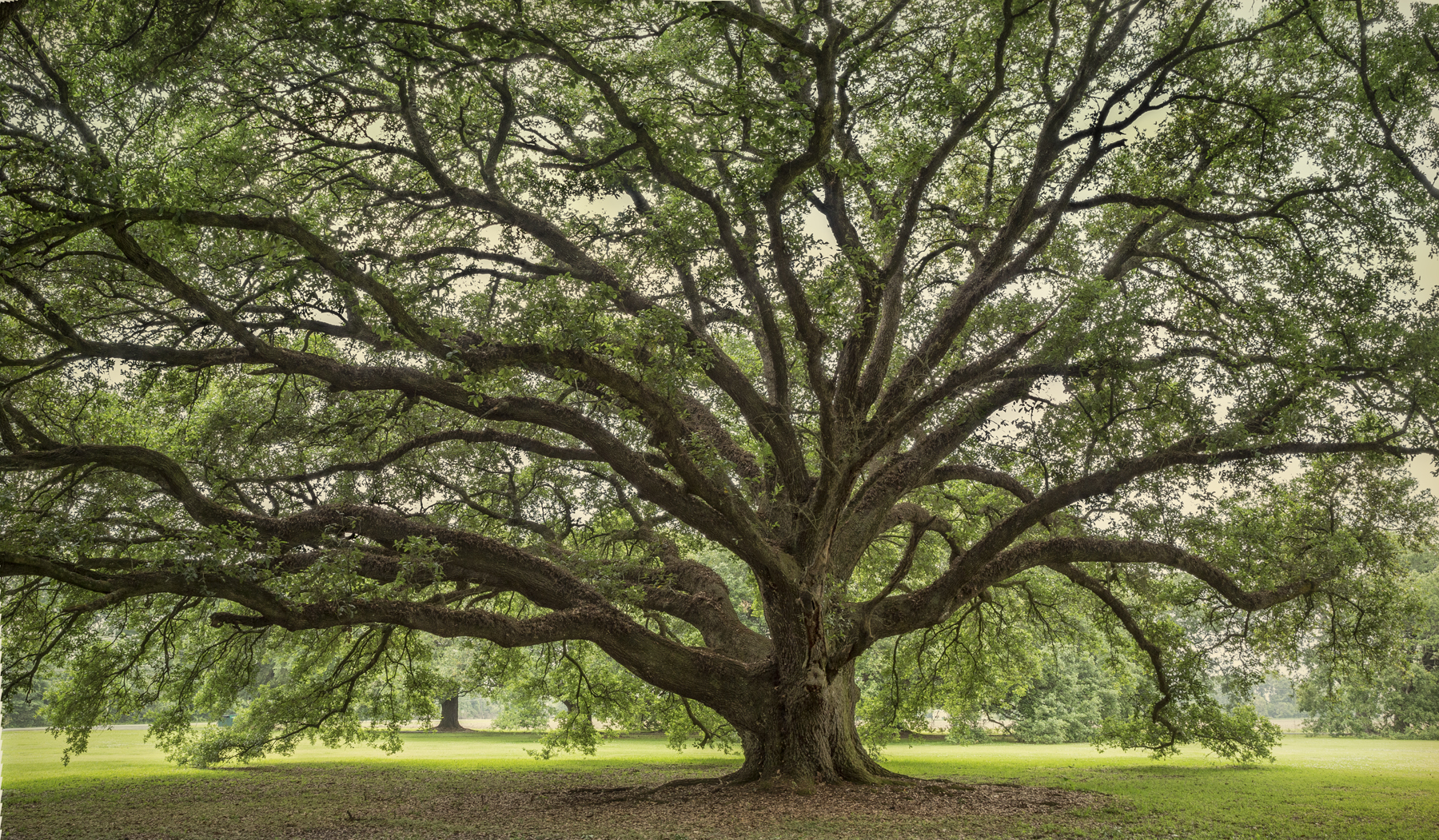 Roots and soil—It takes room to grow a healthy tree, so don’t crowd your oak. Few people grasp just how large the functioning root system of a live oak really is—your oak’s roots do not stop at the end of its branches but generally extend one-and-a-half to two times the full spread of its crown.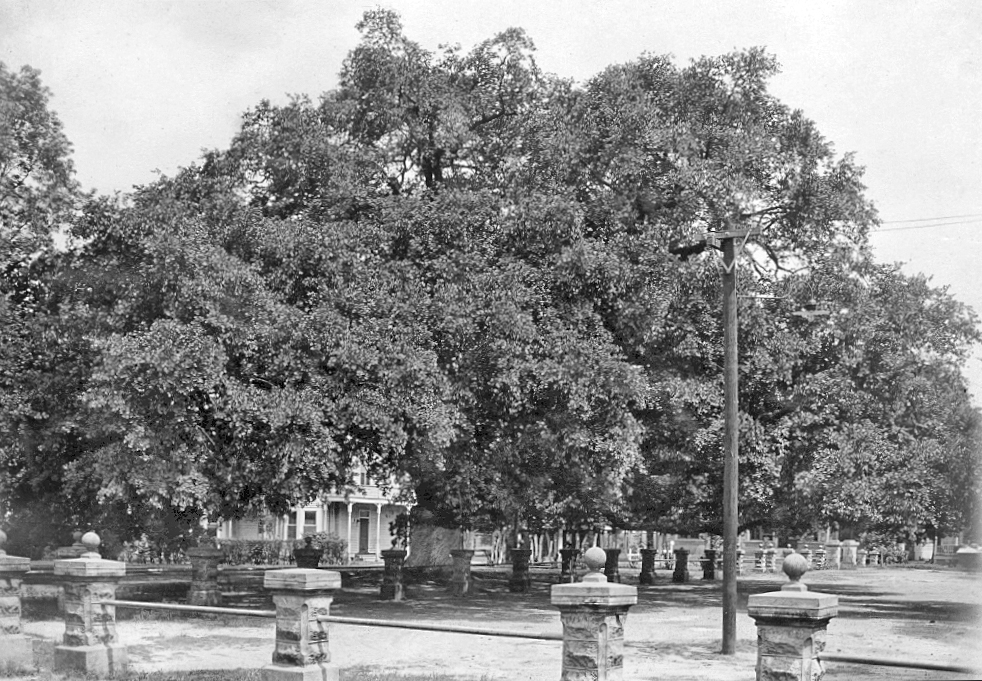


 100 Oaks Project