Coulon Plantation Oaks

The Coulon Plantation Oaks are on the Bayou Lafourche  Live Oak Tour, a project I’ve been working on for the Bayou Lafourche Cajun Bayou Tourism.  There is a beautiful group of oaks on the property, located at the intersection of LA. Hwy. 308 and Hwy. 3266, in north Thibodaux.  Most of the oaks are just under 100 years of age, but the oldest oak on the property, located to the right rear of the Coulon House, is approximately 300 years of age.
Coulon_old oak 1a

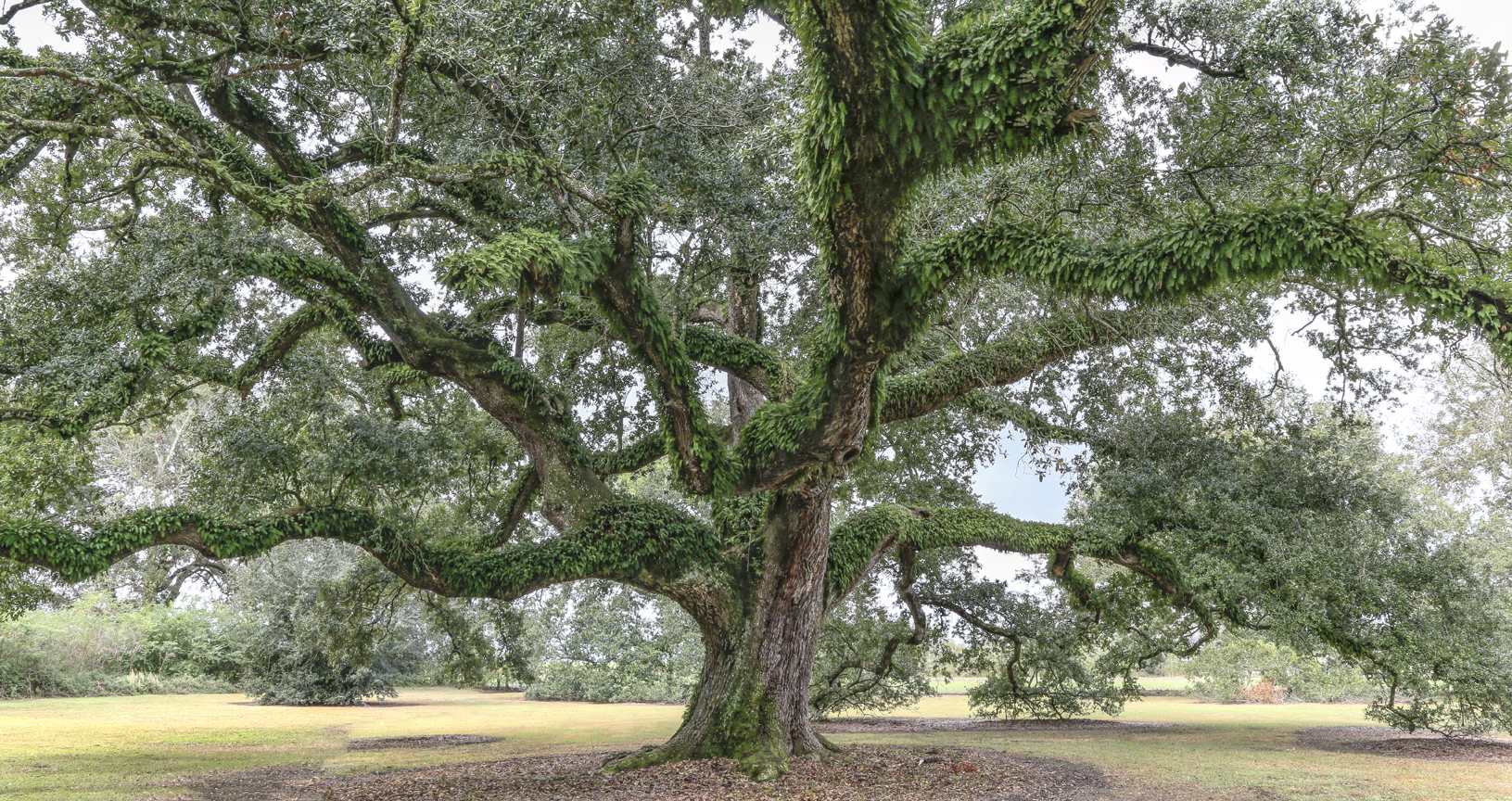
Oldest Coulon Oak,  color study 1

However, the most photogenic oaks at Coulon are along the entry road and across the massive front lawn stretching from Hwy. 308 to the Coulon House.

Front yard oak 4_Coulon

Front yard oak, study 2, Coulon

According to the current owner, there was once a matching oak to the right front of the house (similar to the one in the left front corner as shown below. The oldest oak can be seen to the right in this photo.), but it was lost to either lightning or disease.
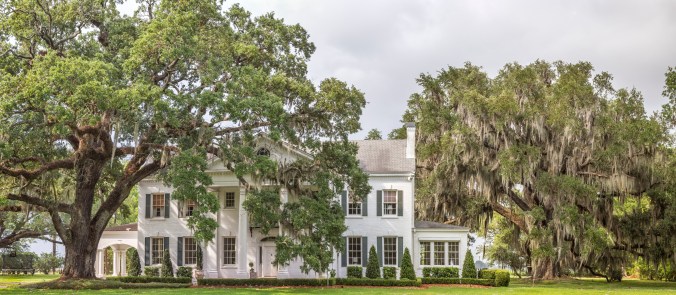
Coulon House and two oaks_front_3

Near view of Coulon house and two oaks

Coulon Plantation was named for Victor Coulon, who may have owned the property but probably only grew crops there. It was not uncommon during that time for plantation land to be owned by wealthy families who lived elsewhere. Coulon’s primary residence was in Jefferson Parish, according to an 1830 census.

Coulon entry 2

Oaks along entry road

In 1835, Victor Coulon sold the plantation to Thomas Bibb, who also purchased Rienzi Plantation in that same year – 1835.  Bibb served as the second governor of the state of Alabama between 1820 and 1821 and likely kept a home on Bayou Lafourche as a second or third residence. Bibb’s main residence was in Alabama.  Local land records show that the property was purchased circa 1880 by Edward J. Gay, who acquired plantations as a function as a creditor for owners unable to pay off their debts. The land was later sold to a Beattie family.
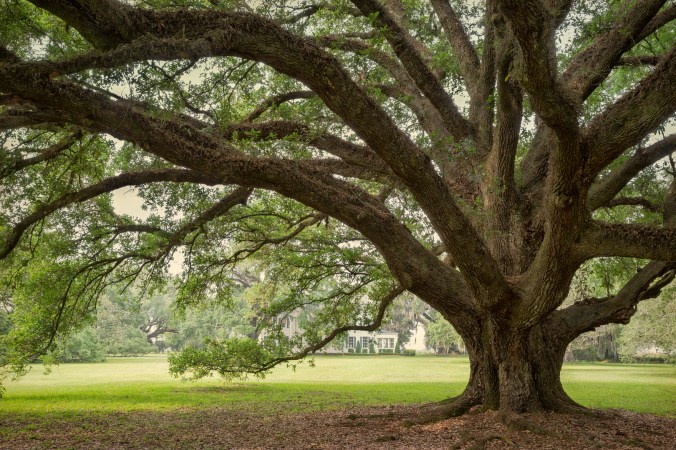
Front yard oak_1_Coulon

Front yard oak with Coulon home in background

According to information from descendants of the Leche and Caldwell families, the Coulon House was built around 1940–1941 by John (Jean) Leche for his wife Albertine P. Leche. Leche bought Coulon plantation from E.G. Robichaux and Thomas H. Rogers, possibly in the 1930s. The Greek Revival architectural style of the home is reminiscent of antebellum plantations.
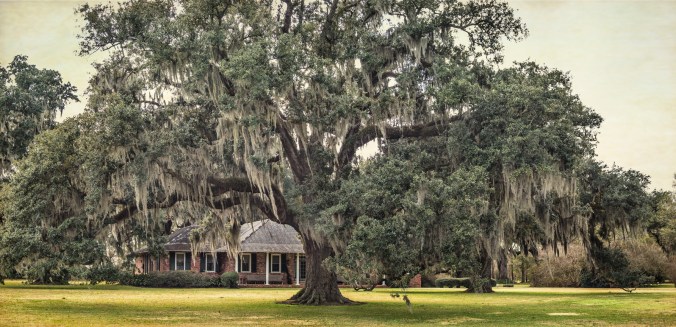


Leighton Plantation Oaks

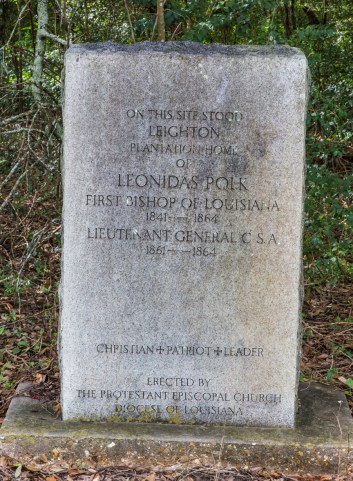
(The Leighton Plantation Oaks are located at 1801-1811 LA Hwy. 1 (St. Mary Street) about 2.5 miles north of downtown Thibodaux. The oaks are on the property between Leighton Road and Leighton Quarters Road. Turn onto Leighton Quarters Road to get the best view of the trees. The oaks range in age and size, the oldest and largest dating back to the early 1800s. There is a historic marker to Leonidas Polk at the St. Johns Episcopal Church in Thibodaux, and another (small and on the roadside) about a hundred feet north of the Leighton Quarters Road on the west side of Hwy 1.)

leighton-plantation-oaks-1

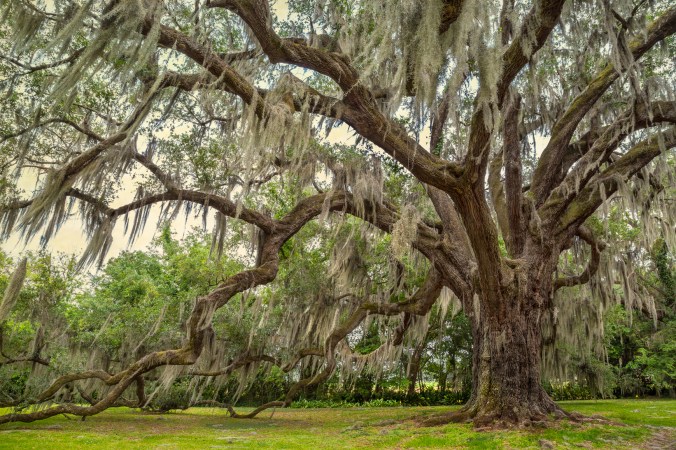
Oaks in front of current home at Leighton

There is a story that 22 of the oaks at Leighton Plantation belonged to the King of Spain in the late 1700s. As the story goes, the land grant for the property contained a stipulation that the King of Spain (Charles IV) could claim these “Royal Oaks” whenever he needed them for construction and repair of his royal navy. At the time, Spain was at war with England (1796–1808), and the wood from Louisiana’s live oaks was known worldwide to be strong enough to deflect an English cannonball.

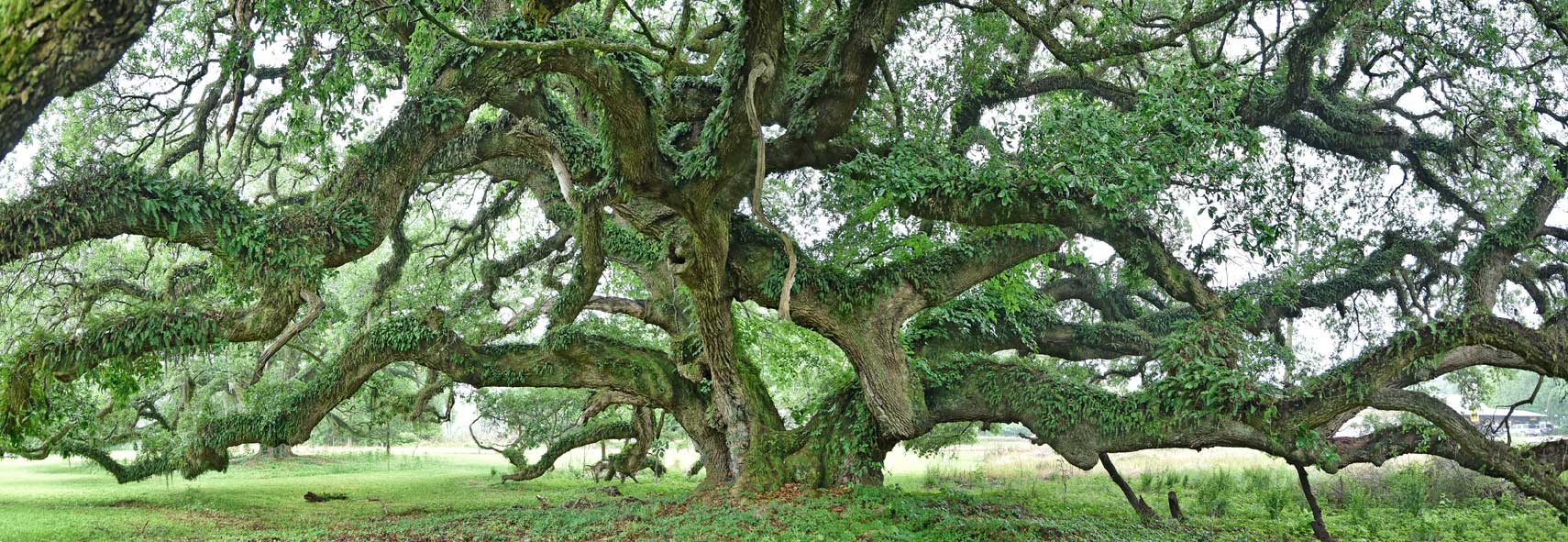
leighton-oaks-pano-5

Leighton Oaks and back entry road to home

In the early 1800s, Leighton Plantation was owned by Leonidas Polk (April 10, 1806 – June 14, 1864), an Episcopal Bishop and American Confederate General. Polk was a graduate of the University of North Carolina at Chapel Hill and of the U.S. Military Academy at West Point (1827). After graduation from West Point, he received special permission to resign his new commission in the U.S. Army and attend the Virginia Theological Seminary where he was ordained as an Episcopal priest. He went on to become Missionary Bishop of the Southwest in 1838 and was elected Bishop of the Episcopal Diocese of Louisiana in 1841.

leighton-oaks-pano-study-2_layers

Oak grove behind the home, Leighton Plantation

Bishop Polk established Leighton Plantation to be closer to his work as he frequently traveled between Thibodaux and New Orleans where he administered the Louisiana Episcopal Diocese from Christ Cathedral, New Orleans’ first Protestant Episcopalian church. During his tenure as bishop, he personally established St. Johns Episcopal Church in Thibodaux, Christ Church in Napoleonville, the Church of the Ascension in Donaldsonville, the Church of the Holy Communion in Plaquemine, and Trinity Church in Natchitoches. Through his crusading evangelical efforts, the Protestant Episcopal religion made a significant foothold in the predominantly Roman Catholic Louisiana.

l_polk-stone

Historic roadside marker for Leonidas Polk

Bishop Polk strongly believed in states’ rights and that the South was a “distinct cultural entity.” So after Louisiana seceded from the Union in January of 1861 and the Civil War began, he resigned as Bishop of Louisiana and took command of Confederate forces in western Tennessee. His most notable contribution to the Army of Tennessee was his calm ability to inspire confidence and religious beliefs, earning him the nickname, the “Fighting Bishop.” Polk was killed in battle in June 1864 at Pine Mountain, Georgia.

This is a mirror post from the Lafourche Live Oak Tour – which was created through the generous support of the Bayou Lafourche Convention & Visitors Bureau. View more of this blog site and share it with friends at www.liveoaktour.com.

The Lafourche Historic Live Oak Tour

New Hope Plantation Oak, Matthews, LA

Dear readers, I’ve been hard at work on an entirely separate (but equal) blog site that grew out of my work on the 100 Oaks Project. In August, I was awarded a grant through the Bayou Lafourche Convention and Visitors Bureau to create a self-guided driving tour of the historic oaks along Bayou Lafourche.

beauregard-oak-11_8

General P.G.T Beauregard Oak, 20 ft. 2 in. in girth, located on LA Hwy. 1, at the E.D. White Memorial Home site.

For this grant project, I’m photographing historic live oaks around the parish and writing about the history of the people and events that have occurred around these old oaks for a website and brochure. I’m also creating and posting “waymarker signs” (like the image above) that will be located close to the oaks’ locations, near the two main highways that run on either side of Bayou Lafourche (LA Hwy. 1 and Hwy. 308).

boudreaux-oak-study-2-copy

Boudreaux Oak, 29 ft. 2 in. in girth, located near the community of St. Charles, LA Hwy 1

These way-marker signs will have numbers that a visitor can follow using a brochure, or the Tour website. The brochures and website will contain photographs of the trees (like those above) and provide a brief explanation of the significance of their location to the history of the parish. Visitors can take a self-guided driving tour along Bayou Lafourche and learn about the history of the parish through the location of our historic live oaks.

I will begin mirror-posting the Live Oak Tour site pages here, on the 100 Oaks Project site, since they are all part of the same work.  Enjoy!  And if you’d like to see the other site in its entirety, just go to https://liveoaktour.com.

Jamie Oak, Hwy. 308, near Thibodaux

Revisiting the Lorenzo Dow Oak

Lorenzo-Dow_49

Lorenzo Dow Oak in the rain, Grangeville Masonic Lodge grounds, 35′-8″ girth

Since moving to Bayou Lafourche last December, I regularly consult with the two old oaks in our front yard over photographic work matters. (Cyndi likes to say that I left the corporate world and now I’m employed full-time by the oak trees.) Crazy? Maybe. But the ideas I get when talking to the old oaks are at least as good as those from some of the human supervisors I’ve had over the years.

Last Saturday morning, after checking in with the front-yard oaks and the weather app on my phone, we decided to brave the impending thunderstorms and make a two-hour drive to Grangeville, LA, a postage-stamp-sized town near the Amite River just north and west of Pine Grove. Our objective was to re-photograph the Lorenzo Dow Oak (see my previous blog entry), a 35-foot-plus girth oak located on the grounds of the historic Grangeville Masonic Lodge.

Lorenzo-pano-5

Lorenzo Dow Oak, panoramic view, study 5

Threatening rain or not, we hit the road and arrived at Grangeville just as the first drops began to fall. I made a flurry of photos, trying to hold my baseball cap over my camera’s wide angle lens to shield it from rain, with a fair amount of success. Since August 2015 when I first photographed the Lorenzo Dow Oak, the Grangeville Masonic Lodge members have cleared away the undergrowth that obscured the trunk and main limbs of the old oak,  revealing the full profile of this huge tree. At 35 ft. 8 in. in girth, this little-known oak is tied with the Randall Oak in New Roads as the second largest and oldest of live oaks in Louisiana.

Lorenzo-IR-panorama-1

Lorenzo Dow Oak, infrared black and white study 1

An interesting side note about this tree that I discovered after my 2015 visit: The Lorenzo Dow Oak was registered tree #261 with the Live Oak Society (LOS). This was probably sometime after 1963, when the LOS became active again after a dormant period of about 16-17 years. Dr. Edwin Lewis Stephens acted as secretary of the Society until his death in November 1938. At that time, his list of member trees included 57 oaks. In 1945, Stanley C. Arthur, executive director of the Louisiana State Museum, assumed responsibility for record keeping, admission of new tree members and continued measurements of tree growth.

In the  Live Oak Society Bulletin, a hand-typed newsletter he produced, Mr. Arthur added another 62 oaks to Dr. Stephens’ registry, including their names, locations, measurements and sponsors. This brought the total of member oaks to 119. In that list, there is an oak named the Dr. E.O. Powers Oak, also located in Grangeville, LA. So, it’s possible the Lorenzo Dow Oak was in the first 119 oaks on the Society registry under a different name and with a different sponsor but was renamed and re-registered 20 years later.

In 1957, the Louisiana Garden Club Federation assumed record keeping responsibility for the Society; and since then the secretary/chairmanship and record keeping responsibilities have passed on continually, slowing adding to the now 8,000-plus roster of senior and junior member live oaks.