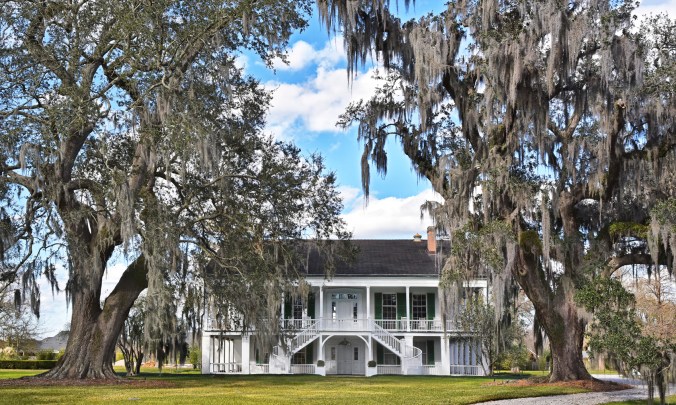
Rienzi Plantation Oaks, Thibodaux, LA

rienzi-and-two-oaks

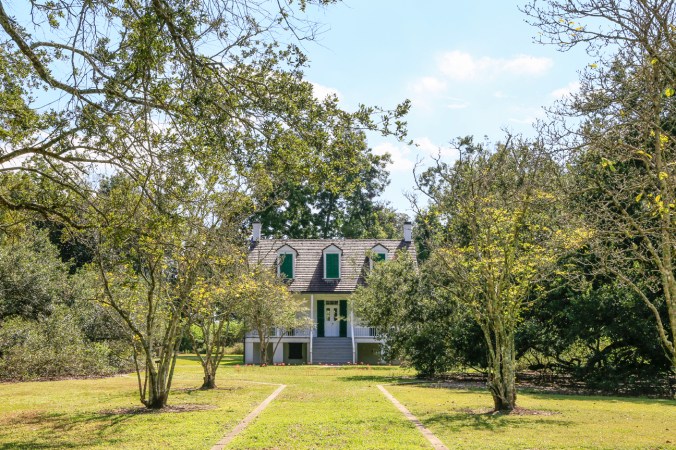
Rienzi Plantation house flanked by two giant live oaks

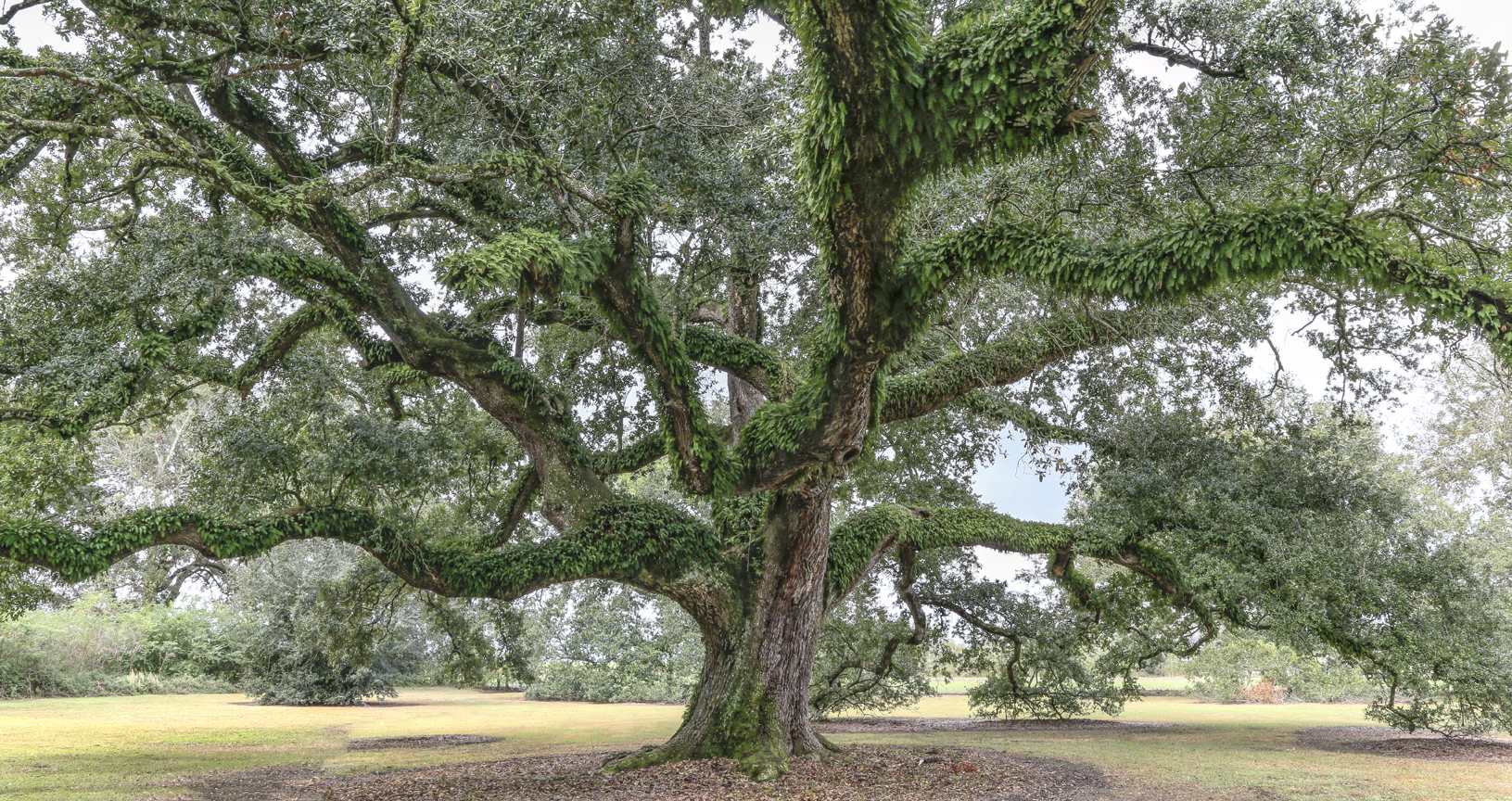
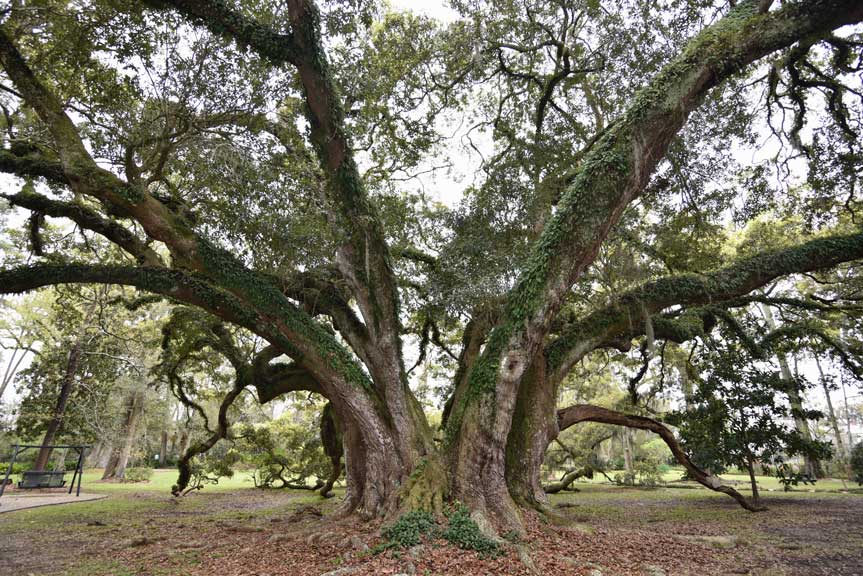
Rienzi Plantation Oaks—Two of the oaks on the grounds at Rienzi are registered with the Live Oak Society and one, named “The Pilgrimage Oak,” is one of the Live Oak Society’s original 119 member trees compiled by Dr. Edwin Lewis Stephens before his death. (Read about the Live Oak Society here.) Rienzi’s oaks were probably planted around 1800, making them at least 200 years old and possibly older.

pilgrimmage-oak-1

Pilgrimage Oak, study 1

About Rienzi Plantation—Around 1794, Henry Schuyler Thibodeaux received a Spanish land grant on Bayou Lafourche for property east of the Bayou where he built a home for his wife Félicité and developed a plantation he named Saint Bridget. In time, he accumulated more land including property on the west bank of the bayou.

rienzi-house-and-oaks-west-corner

Rienzi Plantation House and oak, west corner

Three Governors who lived at Rienzi—Besides being an area planter, Henry S. Thibodaux became the namesake for the city of “Thibodeauxville” when he donated land for development of the village center, now downtown Thibodaux. Henry S. Thibodeaux (he later shortened the spelling to Thibodaux) became a local Justice of the Peace, served in the Louisiana territorial legislature, and as a state senator. In 1824 while serving as president of the state senate, Thibodaux stepped in as the acting fourth governor of Louisiana when the third governor, Thomas B. Robertson, resigned to accept an appointment as a federal judge.

dscn1215

Jane Amundson Lafargue Oak, b&w study

Henry S. Thibodaux sold his plantation around 1814 to William Fields, a businessman and architect who is attributed with building the current plantation home. In 1824, William Fields sold the house and property to Henry Johnson, an attorney, and politician who was elected the fifth governor of Louisiana that same year, replacing acting Governor Henry S. Thibodaux. Eleven years later in 1835, Johnson sold the property to Thomas Bibb, who had been the second governor of Alabama from 1820 to 1821. It’s under Bibb’s ownership that the plantation was first called “Rienzi.” The name supposedly came from a novel and Wagner opera popular during the 1840s about a 14th-century Italian patriot.
reinzi-panorama-1

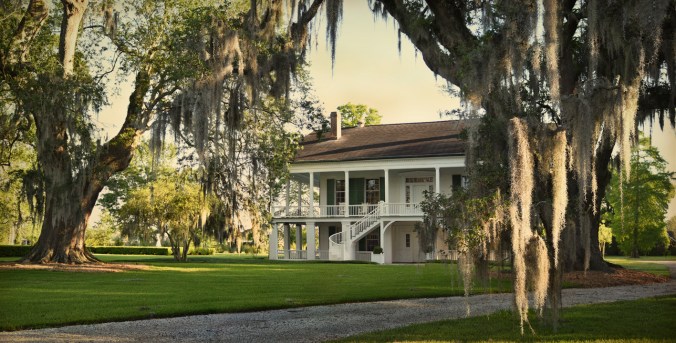
Rienzi Plantation House and two oaks, east corner

The next owner, Juan Ignacio de Egana, was possibly the source of a romantic legend which grew over time about the Rienzi home and the origin of its unusual design. The legend states that the house was constructed by Spanish architects at the request of Spanish Queen Maria Louisa as a possible retreat for her in the event of a Spanish defeat in the Napoleonic Wars. The legend states that her agent, Juan Ygnacio de Egana, took possession of the home, after Louisiana was ceded to France and sold to the United States, and lived there for nearly fifty years. (source: Wikipedia)

Architecturally, Rienzi’s design is unusual for plantation homes of the period. It has cruciform (crossing) hallways on both the first and second floor and brick walls throughout (inner and outer walls). Also, the walls of the home are aligned to the four cardinal directions. Since being purchased by the current owner in 2012, the home has undergone significant restoration and is not open for tours.

E.D. White Memorial Oaks, near Thibodaux


The E.D. White Historic Site is located close to the northern end of Lafourche Parish and is the furthest marker on the driving tour of historic Lafourche Parish live oaks. There are eight oaks on the grounds that are registered with the Live Oak Society. The oldest, the E.D. White Oak is more than 25 feet in girth. The tour materials claim that the old oak is more than 400 years of age.

gen_beauregard-oak-5

P.G.T. Beauregard Oak and home

The historic Creole-style raised cottage was built around 1790 by Edward Douglas White Sr., Judge of Lafourche Interior Territory and the seventh governor of Louisiana. The home is also where his son, Edward Douglass White, Jr. (who added another “s” to his middle name), Louisiana’s most famous jurist lived. E.D. White, Jr. served on the Louisiana Supreme Court, as a member of the U.S. Senate, and as a justice of the U.S. Supreme Court for nearly three decades, 11 of those years as chief justice.

_mg_6217

Front view of E.D. White Home

For many years the home was owned by the Thibodaux chapter of the Knights of Columbus, but in 1923 it was donated to the Louisiana State Parks and Recreation Commission. Today, the historic home and grounds are part of the Louisiana State Museum system, is on the National Register of Historic Places, and has been designated a National Historic Landmark. The house and grounds are open for free tours Tuesdays through Saturdays, 10 a.m. – 4:30 p.m., and closed Sundays, Mondays, and state holidays.

The Lafourche Historic Live Oak Tour

New Hope Plantation Oak, Matthews, LA

Dear readers, I’ve been hard at work on an entirely separate (but equal) blog site that grew out of my work on the 100 Oaks Project. In August, I was awarded a grant through the Bayou Lafourche Convention and Visitors Bureau to create a self-guided driving tour of the historic oaks along Bayou Lafourche.

beauregard-oak-11_8

General P.G.T Beauregard Oak, 20 ft. 2 in. in girth, located on LA Hwy. 1, at the E.D. White Memorial Home site.

For this grant project, I’m photographing historic live oaks around the parish and writing about the history of the people and events that have occurred around these old oaks for a website and brochure. I’m also creating and posting “waymarker signs” (like the image above) that will be located close to the oaks’ locations, near the two main highways that run on either side of Bayou Lafourche (LA Hwy. 1 and Hwy. 308).

boudreaux-oak-study-2-copy

Boudreaux Oak, 29 ft. 2 in. in girth, located near the community of St. Charles, LA Hwy 1

These way-marker signs will have numbers that a visitor can follow using a brochure, or the Tour website. The brochures and website will contain photographs of the trees (like those above) and provide a brief explanation of the significance of their location to the history of the parish. Visitors can take a self-guided driving tour along Bayou Lafourche and learn about the history of the parish through the location of our historic live oaks.

I will begin mirror-posting the Live Oak Tour site pages here, on the 100 Oaks Project site, since they are all part of the same work.  Enjoy!  And if you’d like to see the other site in its entirety, just go to https://liveoaktour.com.

Jamie Oak, Hwy. 308, near Thibodaux

The Effects of Flooding on Live Oaks

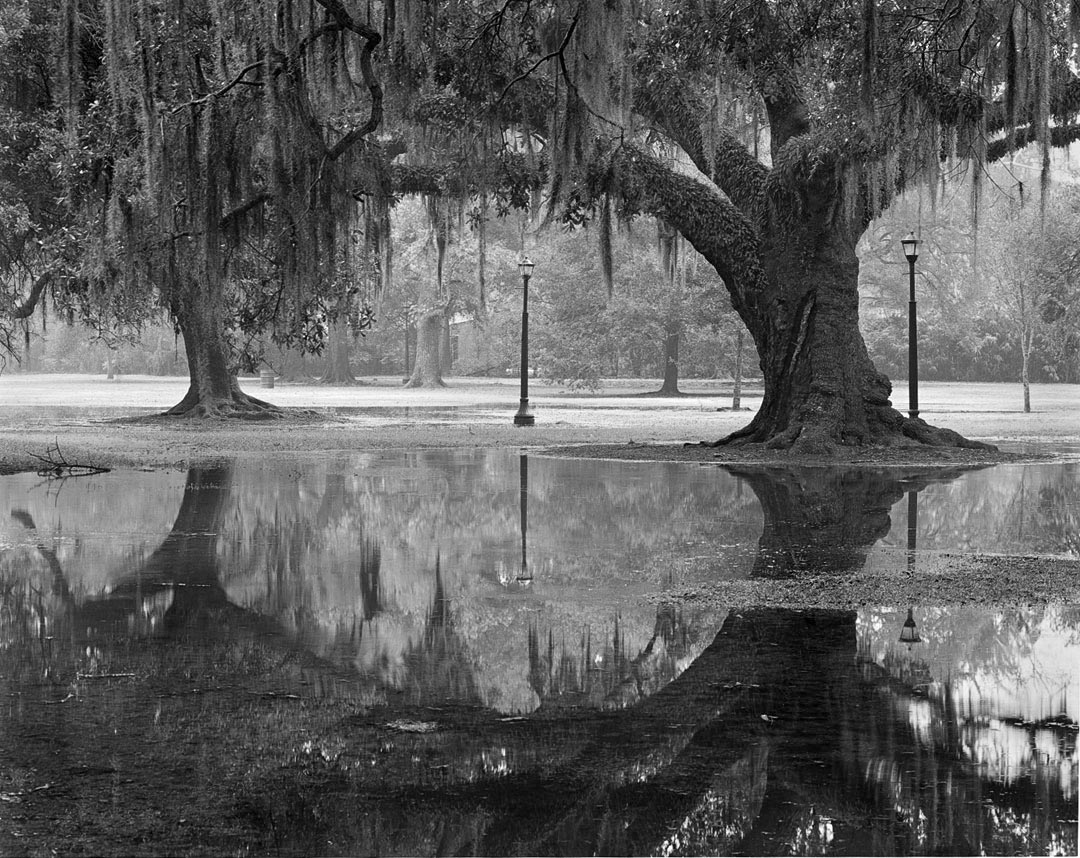
2oaks-and-reflection_Audubon-copy

In general, live oaks have a high tolerance to storms and floods. But I’ve received questions from several friends concerned about how the recent flooding in Louisiana might affect their live oaks. Most centenarian (100 years +) live oaks in Louisiana have weathered multiple storms in its lifetime. The Seven Sisters Oak in Mandeville, being the oldest live oak in the South, has probably weathered hundreds of storms and several floods.I asked several arborists/ horticulturists who I know and whose opinions I respect to provide some answers about the effects of flooding on live oaks.  Here’s what they had to say:

Carefully watch the oaks: Arborist Jim Foret (The Tree Guy) from St. Martinville, teaches at ULL and has years of experience with old live oaks in the Acadiana area. He says that short-term flooding, as we’ve experienced recently, is likely to have little effect on healthy live oaks. Jim advises to watch your trees closely after the floodwater subsides to see if they begin dropping leaves, which could be an indication of root damage. If there’s indication of root damage, the tree may require mulch and a microbial boost (mycorrhiza). He believes in this case that the oaks can pretty much take care of themselves with minimum help from human caregivers.

Help the roots dry: An article by Dan Gill, the Times Picayune garden columnist and LSU AgCenter horticulturist says to “remove all mulches to allow the soil to dry out more rapidly. Then replace them. (read the full article below)

Speaking of mulch: Church Point arborist Bob Thibodaux (Bob’s Tree Preservation) who has worked with oak live oaks for decades believes that live oaks prefer mulch made from other live oaks. He manufactures and uses an “eco-mulch” made from local vegetation composed mostly of live oak compost and recommends it over other types of mulches.

Bruce Verdun, another arborist from Gray (Organicure) who is especially interested in the care and maintenance of old oaks, says that ideally you should have a skilled arborist look at and evaluate the impact of flood waters fairly soon after a flood. Each tree is different he emphasizes, and each needs to be examined and evaluated individually.

Pollutants in the waters? One serious problem with flooding is contaminants in the water that might stay in the soil and slowly affect the health of the tree.  A soil sample can help determine the amount of pollution and what needs to be done to rebalance soil post-flood. Contact your local LSU agent or an arborist to have a soil sample evaluation.

Allen Owings from the LSU Ag Center in Hammond (where they had floods) passed along an article by Dan Gill published right after the flooding. I’ll quote it in its entirely.

08/16/16) BATON ROUGE, La. – Root damage through drowning or root rot is the greatest danger to landscape plants caused by flooding. And even if a property didn’t have standing water, it likely has been saturated. And the longer the soil stays saturated, the more damage occurs.

Plant roots get the oxygen they need from air spaces in the soil, said LSU AgCenter horticulturist Dan Gill. When these spaces are filled with water, roots are deprived of the oxygen and may drown. “Initially, the roots stop functioning properly,” Gill said. “When the bright sun comes out, it’s not unusual for plants to wilt because the roots quit absorbing water.”

If floodwaters remain for several days, shrubs and herbaceous plants may be extensively damaged or killed. “Carefully assess shrubs that may appear dead,” Gill said. Scrape the bark in several areas. Green tissue under the bark indicates the shrubs are still alive and may recover.

Don’t be too hasty in removing landscape plants. Some plants that appear dead may begin to send out new growth a few weeks after the water recedes, Gill said. But shrubs that show no green tissue below the bark are likely dead. Floodwaters carry silt and debris that may be deposited on lawns as well as low-growing plants, such as shrubs, ground covers, annuals and perennials. It’s important to remove the debris as soon as possible, using a rake to remove most of the larger material and then a hose to wash off the remainder.

Also remove all mulches to allow the soil to dry out more rapidly. Then replace them. Even if fruit and vegetable plants are still alive, do not consume any fruits, vegetables or herbs that were or could have been touched by flood waters, Gill said. Remove and discard any produce.

You may, however, eat any fruit from trees, shrubs and vines in the future. And you may also generally eat the new growth of herbs and vegetables produced after the floodwaters recede. If a lawn is damaged or killed, a new lawn can be established or an existing lawn can be repaired using sod, plugs or seed.

Hope this helps – Best, Bill


Revisiting the Seven Sisters Oak

Though I’ve had a couple of other blog posts in the works, I couldn’t leave the 30-something project behind without a nod to the Seven Sisters Oak, the current president of the Live Oak Society and the former national champion live oak tree species in the American Forests’ Big Tree Registry. It’s also top of my 30-something oak list (Louisiana live oaks with a girth of more than 30 feet).

The Seven Sisters Oak – Live Oak Society President and former Champion Tree of the Southern live oak species in American Forest’s Champion Tree List.

Cyndi and I took a drive from Bayou Lafourche to the north shore of Lake Pontchartrain recently to revisit the Seven Sisters Oak, to make some new photographs for the blog and say hello to an old friend.  The sky was overcast, making it possible a good day to photograph in the shadows of a towering old oak.  The recent rains had turned the resurrection fern a lush bright green. (We also made a stop in Ponchatoula to stock up on local strawberries and visit a couple of other local oaks including the Abbot Paul Schaueble Oak.

While visiting the tree, we met the current owners, John and Mary Jane Becker. They were welcoming and informative about their term as caretakers of this massive oak (almost 40 feet in circumference).  The Seven Sister’s Oak shades much of the front yard of the Becker’s home in the historic neighborhood of Lewisburg, near the edge of Lake Pontchartrain, in Mandeville.  Mrs. Becker remarked how the old oak was wearing an abundance of new celery green flowers (catkins) when we visited, one indication that the centuries-old tree is still healthy and vital.  She also said that last year the oak produced a bumper crop of acorns.

7-sisters-oak-study-10

Seven Sisters Oak, view toward the Becker’s home.

If you missed our previous blog post on the Seven Sisters, I’ll recap some of its known history (though what we know about the oak dates back less than 100 years and some estimates of the tree’s age put it to between 600 and 1,000 years old).

The Seven Sisters Oak is actually the second live oak to take the status of President of the Live Oak Society.  It replaced the Society’s first president, the Locke Breaux Oak, after its death from air and water pollution (see my previous posts about the Locke Breaux Oak for details).

For years, the eligibility of the Seven Sisters Oak as a society member tree was disputed.  It was argued to be several separate trees growing together rather than a single tree. Then in 1976, after inspection by federal foresters, the multiple tree trunks were found to have a single root system.  It was accepted into the Society—registered (#200)—and in time, was appointed the new Society President, based on its girth, limb spread, and height.

(A short sidebar.  From other sources, I see this is an ongoing argument among tree-measuring folks—whether the circumference of a multi-trunk oak can be compared equally to a single-trunk tree. I take a neutral position on this topic. To me, they’re all very old oaks, and as such deserve to be considered as cultural, historic, and environmental treasures, regardless of the shape or number of trunks.)

7-sisters-study-1

The oak tree’s first sponsor was the Doby family who owned the property on which the tree is located at that time (the 1930s). Mrs. Carole Hendry Doby was one of seven sisters in her family and the tree was named originally named “Doby’s Seven Sisters.” The oak was re-registered (#697) by its next owners, Mr. and Mrs. Milton Seiler.  The Seiler’s renamed the tree simply “The Seven Sisters.”

7-sisters-study-8

Seven Sisters Oak, view from outside of the oak’s canopy, showing new green catkins.

According to the American Forests’ Big Tree Registry, the Seven Sisters Oak had a crown spread of 139 feet, a circumference of 467 inches (approximately thirty-nine feet) and a height of sixty-eight feet when it was last officially measured. Its age has been estimated to be somewhere between 500 and 1200 years old. My most recent measurement (in 2019) puts the circumference closer to 479 inches or 39 feet 11 inches.